


Practical Difficulties in Estimating The Prevalence of Primary Infertility in Iran
- PMID: 31037921
- PMCID: PMC6500078
- DOI: 10.22074/ijfs.2019.5583
Practical Difficulties in Estimating The Prevalence of Primary Infertility in Iran
Abstract
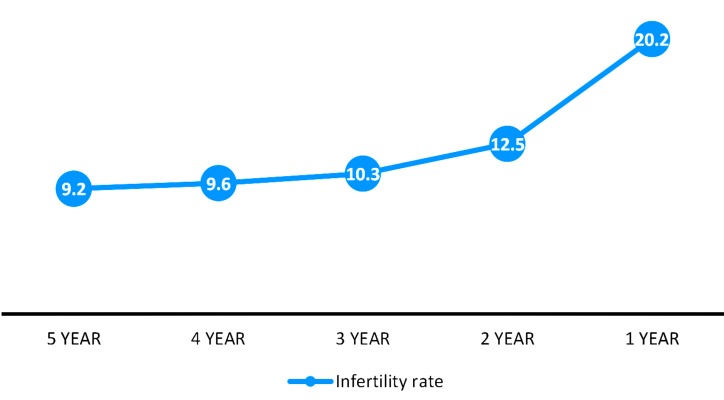
Background: According to the World Health Organization (WHO)'s clinical, epidemiological and demographic definitions, infertility is an inability to become pregnant within one, two or five years of exposure to pregnancy, respectively. Inconsistent infertility-related definitions and various methodological approaches make it difficult to compare quantitative data in this regard and consequently, have negatively influenced estimating the prevalence of infertility. The present study reviewed the results of a large population-based survey on how the clinical, epidemiological and demographic definitions of infertility produce different results in terms of infertility prevalence in Iran and subsequently, compared the findings in order to find the right time of treatment-seeking by couples.
Materials and methods: This community-based, cross-sectional study was carried out by Avicenna Research Institute in the urban and rural parts of Iran between 2010 and 2011. Using cluster sampling, the reproductive history of 17,187 married women aged 20-40 years, was recorded. Totally, 1011 clusters were randomly selected according to post office codes, proportional to the population of the province. Descriptive and inferential statistical analysis of the data was carried out by SPSS statistical software.
Results: The prevalence of primary infertility based on the WHO's clinical, epidemiological and demographic definitions were 20.2, 12.8 and 9.2%, respectively. In addition, secondary infertility rate was 4.9%.
Conclusion: Infertility estimates over a two-year exposure period made a 50% decrease in infertility rate; however, increasing exposure period to five years made no significant difference in infertility rate. The findings showed that most of the couples will get pregnant within two years of unprotected sexual intercourse and thus, need no treatment. Due to practical difficulties in estimating the prevalence of primary infertility, the reference limit for time to pregnancy, should be reconsidered and giving more time to younger women to become pregnant, seems reasonable.
Keywords: Epidemiology; Infertility; Iran; Prevalence; Reproduction.
Copyright© by Royan Institute. All rights reserved.
Conflict of interest statement
The authors declare no conflicts of interest.
Figures
References
-
- Jesse DE, Walcott-McQuigg J, Mariella A, Swanson MS. Risks and protective factors associated with symptoms of depression in low-income African American and Caucasian women during pregnancy. J Midwifery Womens Health. 2005;50(5):405–410. - PubMed
-
- Larsen U, Menken J. Measuring sterility from incomplete birth histories. Demography. 1989;26(2):185–201. - PubMed
LinkOut - more resources
Full Text Sources