


Pathophysiology of internal hemorrhoids
- PMID: 31040623
- PMCID: PMC6479658
- DOI: 10.20524/aog.2019.0355
Pathophysiology of internal hemorrhoids
Abstract
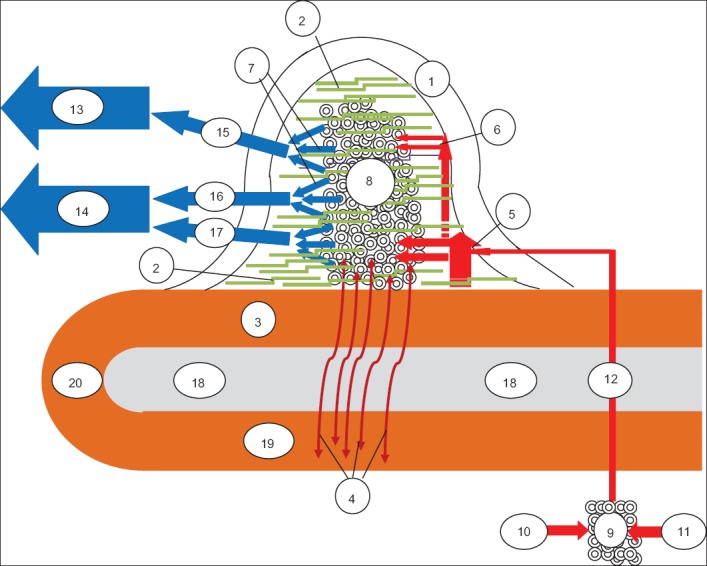
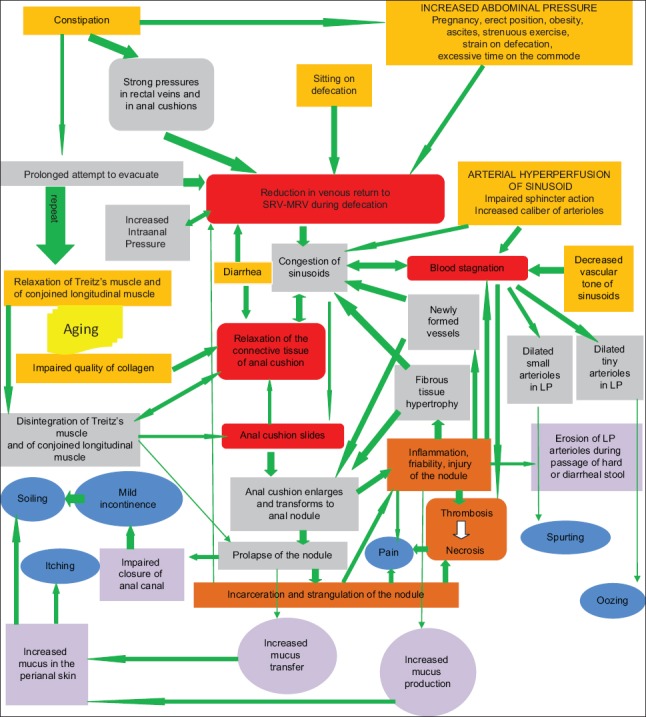
Hemorrhoidal disease is a fairly common and debilitating clinical entity. Despite centuries' of attempts to shed light on its pathophysiology, to cure those affected and to improve sufferers' quality of life, many aspects of the disease remain elusive. Individual beliefs and historical legends, accompanied by undocumented theories, have established and perpetuated the confusion regarding the mechanisms leading to the development of the disease and the rules governing its treatment. Hemorrhoids are classified as internal or external and are viewed as a disease when they become symptomatic. Returning to basic medical sciences, this mini-review focuses on internal hemorrhoids and aims to define the histology and anatomy of the normal and abnormal internal hemorrhoidal plexus and to encourage clinicians to comprehend the pathophysiology of the disease. If doctors can understand the pathophysiology of hemorrhoidal disease, they will be able to clarify the nature of the associated symptoms and complications and to make the correct therapeutic decision.
Keywords: Internal hemorrhoids; anal cushions; anal nodules; prolapse; sliding anal canal.
Conflict of interest statement
Conflict of Interest: None
Figures
References
-
- Holley CJ. History of hemorrhoidal surgery. South Med J. 1946;39:536–541. - PubMed
-
- Senagore AJ. Surgical management of hemorrhoids. J Gastrointest Surg. 2002;6:295–298. - PubMed
-
- Ellesmore S, Windsor AC. Surgical history of haemorrhoids. In: Charles MV, editor. Surgical treatment of haemorrhoids. London: Springer; 2002. pp. 1–4.
-
- Thomson WH. The nature of haemorrhoids. Br J Surg. 1975;62:542–552. - PubMed
Publication types
LinkOut - more resources
Full Text Sources
Medical