


Therapeutic strategies in the early stages of Parkinson's disease: a cross-sectional evaluation of 15 years' experience with a large cohort of Romanian patients
- PMID: 31040682
- PMCID: PMC6454997
- DOI: 10.2147/NDT.S197630
Therapeutic strategies in the early stages of Parkinson's disease: a cross-sectional evaluation of 15 years' experience with a large cohort of Romanian patients
Abstract
Introduction: In patients older than 70 years there is no valid alternative to progressively introduced substitution therapy. The antiparkinsonian drugs introduced in the last decade to treat Parkinson's disease, especially in its early phases, promised a comparable efficacy in reducing symptoms to levodopa. In younger patients and/or patients with mild symptoms we hoped to delay the motor complications by postponing the start of levodopa therapy. While these assumptions may not be true for all patients, probably the most important current challenge is the optimal starting moment of levodopa therapy. The aim of the study was to analyze the therapeutical choices during the early phase of Parkinson's disease in the Neurological Departments of Târgu Mures¸ County Hospital.
Materials and methods: We examined data obtained from hospitalized Parkinson's disease patients during a 15-year period. According to the duration of the disease we split the patients into two groups, patients with Parkinson's disease for less than or equal to 5 years and patients with disease duration longer than 5 years, and then analyzed only the former group.
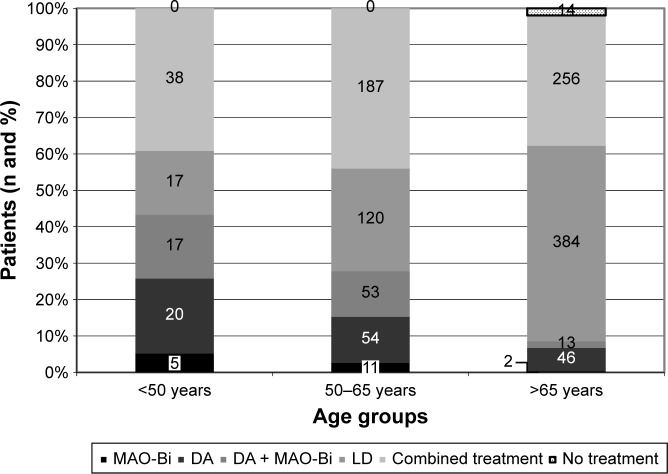
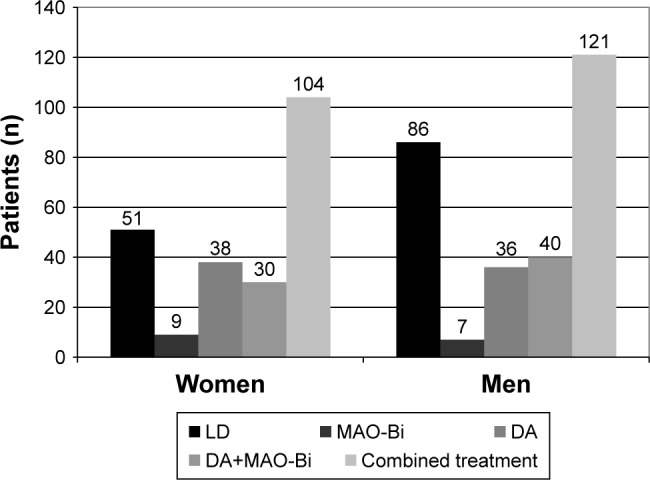
Results: During the examined period, 2,379 patients with Parkinson's disease were hospitalized, and 1,237 patients had a disease duration shorter than 5 years. In this group, 18 patients had monoamine oxidase inhibitor monotherapy. Also, 665 patients received dopamine agonists, in 120 cases as monotherapy and in 83 patients associated with monoamine oxidase inhibitors. In 521 patients we found only levodopa treatment. A further 481 patients received combined therapy (levodopa with dopamine agonists and/or monoamine oxidase inhibitors).
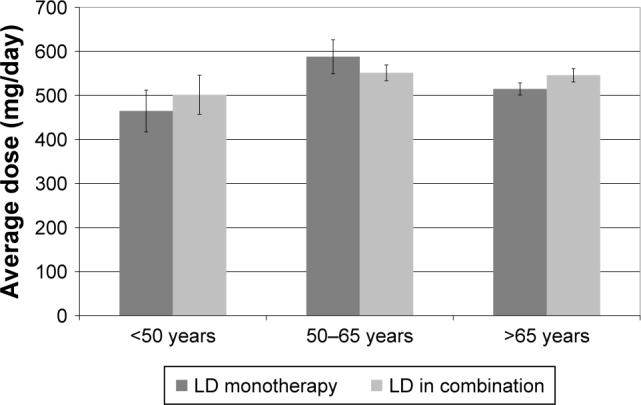
Conclusion: Treatment strategies for the early stages of Parkinson's disease in our group were comparable to results from other studies. However, the authors feel that neurologists should use levodopa-sparing drugs with greater courage. Furthermore, if the clinical context is appropriate, physicians should combine substitution therapy with other antiparkinsonian drugs in order to reduce levodopa doses.
Keywords: Parkinson’s disease; dopamine agonist; levodopa.
Conflict of interest statement
Disclosure Szász JA reports consultancy for and speaking honoraria from Abbvie, Novartis, Boehringer-Ingelheim, UCB, Lund-beck, GSK, Pfizer. Constantin VA reports speaking honoraria for Abbvie. The authors report no conflicts of interest in this work.
Figures
References
-
- Szász J, Constantin V, Fazakas P, et al. The role of selective monoamine oxidase B inhibitors in the therapeutic strategy of Parkinson’s disease in the neurology clinics of Tirgu Mures county emergency clinical hospital [A szelektív monoaminoxidáz-B-gátlók helye a Parkinson-kór kezelési straté] Orv Hetil. 2017;158:2023–2028. doi: 10.1556/650.2017.30914. - DOI - PubMed
-
- Horstink M, Tolosa E, Bonuccelli U, et al. Review of the therapeutic management of Parkinson’s disease. Report of a joint task force of the European federation of neurological societies (EFNS) and the movement disorder society-European section (MDS-ES). Part II: late (complicated) Parkinson’s disease. Eur J Neurol. 2006;13(11):1186–1202. doi: 10.1111/j.1468-1331.2006.01548.x. - DOI - PubMed
LinkOut - more resources
Full Text Sources
