Molecular Pathophysiology of Ossification of the Posterior Longitudinal Ligament (OPLL)
- PMID: 31042677
- PMCID: PMC6609106
- DOI: 10.4062/biomolther.2019.043
Molecular Pathophysiology of Ossification of the Posterior Longitudinal Ligament (OPLL)
Abstract
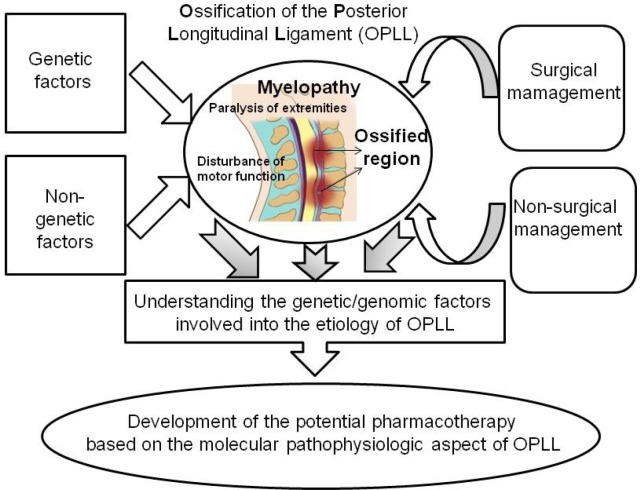
Ossification of the posterior longitudinal ligament (OPLL) can be defined as an ectopic ossification in the tissues of spinal ligament showing a hyperostotic condition. OPLL is developed mostly in the cervical spine and clinical presentations of OPLL are majorly myelopathy and/or radiculopathy, with serious neurological pathology resulting in paralysis of extremities and disturbances of motility lowering the quality of life. OPLL is known to be an idiopathic and multifactorial disease, which genetic factors and non-genetic factors including diet, obesity, physical strain on the posterior longitudinal ligament, age, and diabetes mellitus, are involved into the pathogenesis. Up to now, surgical management by decompressing the spinal cord is regarded as standard treatment for OPLL, although there might be the risk of development of reprogression of ossification. The molecular pathogenesis and efficient therapeutic strategy, especially pharmacotherapy and/or preventive intervention, of OPLL has not been clearly elucidated and suggested. Therefore, in this review, we tried to give an overview to the present research results on OPLL, in order to shed light on the potential pharmacotherapy based on molecular pathophysiologic aspect of OPLL, especially on the genetic/genomic factors involved into the etiology of OPLL.
Keywords: Novel therapeutic approach; OPLL; Pathophysiology.
Conflict of interest statement
The authors have no conflict of interest to declare.
Figures
References
Publication types
LinkOut - more resources
Full Text Sources