


Effect of a semirigid thoracolumbar orthosis on gait and sagittal alignment in patients with an osteoporotic vertebral compression fracture
- PMID: 31043773
- PMCID: PMC6469477
- DOI: 10.2147/CIA.S199853
Effect of a semirigid thoracolumbar orthosis on gait and sagittal alignment in patients with an osteoporotic vertebral compression fracture
Abstract
Background: An important goal in the treatment of osteoporotic vertebral compression fractures (OVCFs) is the prevention of new vertebral fractures and the subsequent progression to global sagittal malalignment. Current conservative treatment is multimodal and comprises analgesics, medication for osteoporosis, and physical therapy. However, little is known about the value of orthoses in the treatment of OVCFs.
Aims: The primary purpose of this study was to examine the direct effect of a semirigid thoracolumbar orthosis on gait in patients suffering from an OVCF. The secondary purpose was to evaluate changes in gait, radiographic sagittal alignment, pain, and quality of life over time.
Methods: Fifteen postmenopausal patients with an OVCF were treated with a semirigid thoracolumbar orthosis. At baseline, after 6 weeks, and after 6 months, gait analysis was performed with a dual belt-instrumented treadmill with a 180° projection screen providing a virtual environment (computer-assisted rehabilitation environment) combined with clinical and radiographic assessments.
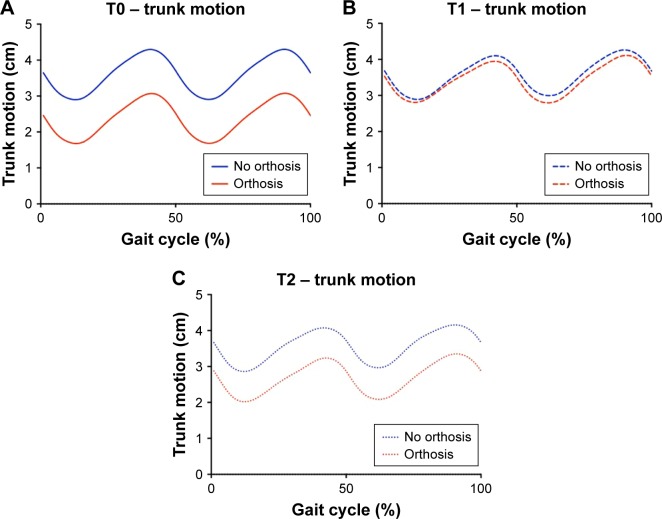
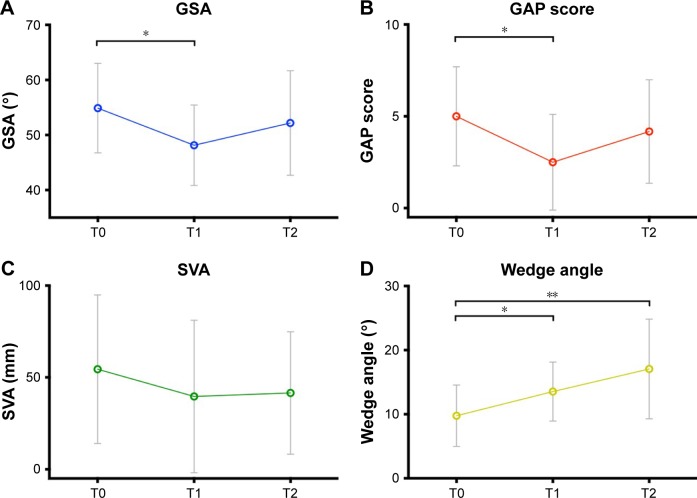
Results: At baseline, bracing caused a significantly more upright posture during walking and patients walked faster, with larger strides, longer stride times, and lower cadence compared to walking without orthosis. After 6 weeks, radiographic and dynamic sagittal alignment had improved compared to baseline. The observed effect was gone after 6 months, when the orthosis was not worn anymore.
Conclusion: A semirigid thoracolumbar orthosis seems to have a positive effect on gait and stability in patients suffering from an OVCF, as was shown by a more upright posture, which may result in decreased compressive loading of the vertebrae. For studying the true effectiveness of dynamic bracing in the treatment of OVCFs, a prospective, randomized controlled trial will be needed.
Keywords: computer assisted rehabilitation environment; dynamic bracing; gait analysis; orthosis; osteoporotic vertebral compression fracture (OVCF); sagittal alignment; trunk motion.
Conflict of interest statement
Disclosure For the execution of or materials supplied for this study, no funding was received. CM was funded by the Kootstra Talent Fellowship awarded by the Centre for Research Innovation, Support, and Policy (CRISP) and by the NUTRIM Graduate Programme, both of Maastricht University Medical Center+. The other authors report no conflicts of interest in this work.
Figures
References
-
- Lindsay R, Silverman SL, Cooper C, et al. Risk of new vertebral fracture in the year following a fracture. JAMA. 2001;285(3):320–323. - PubMed
MeSH terms
LinkOut - more resources
Full Text Sources
Medical
