


Prevalence and Correlates of Medical Financial Hardship in the USA
- PMID: 31044413
- PMCID: PMC6667570
- DOI: 10.1007/s11606-019-05002-w
Prevalence and Correlates of Medical Financial Hardship in the USA
Abstract
Background: High patient out-of-pocket (OOP) spending for medical care is associated with medical debt, distress about household finances, and forgoing medical care because of cost in the USA.
Objective: To examine the national prevalence of medical financial hardship domains: (1) material conditions from increased OOP expenses (e.g., medical debt), (2) psychological responses (e.g., distress), and (3) coping behaviors (e.g., forgoing care); and factors associated with financial hardship.
Design and participants: We identified adults aged 18-64 years (N = 68,828) and ≥ 65 years (N = 24,614) from the 2015-2017 National Health Interview Survey. Multivariable analyses of nationally representative cross-sectional survey data were stratified by age group, 18-64 years and ≥ 65 years.
Main measures: Prevalence of material, psychological, and behavioral hardship and hardship intensity.
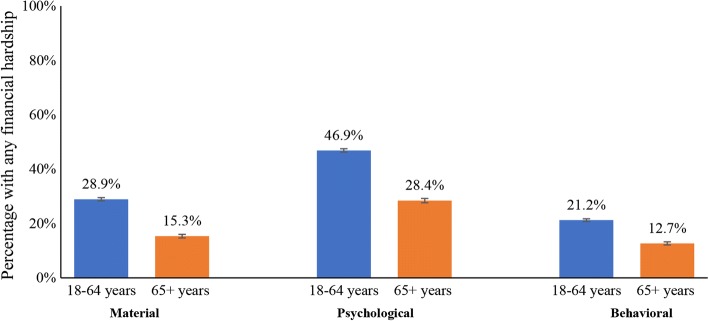
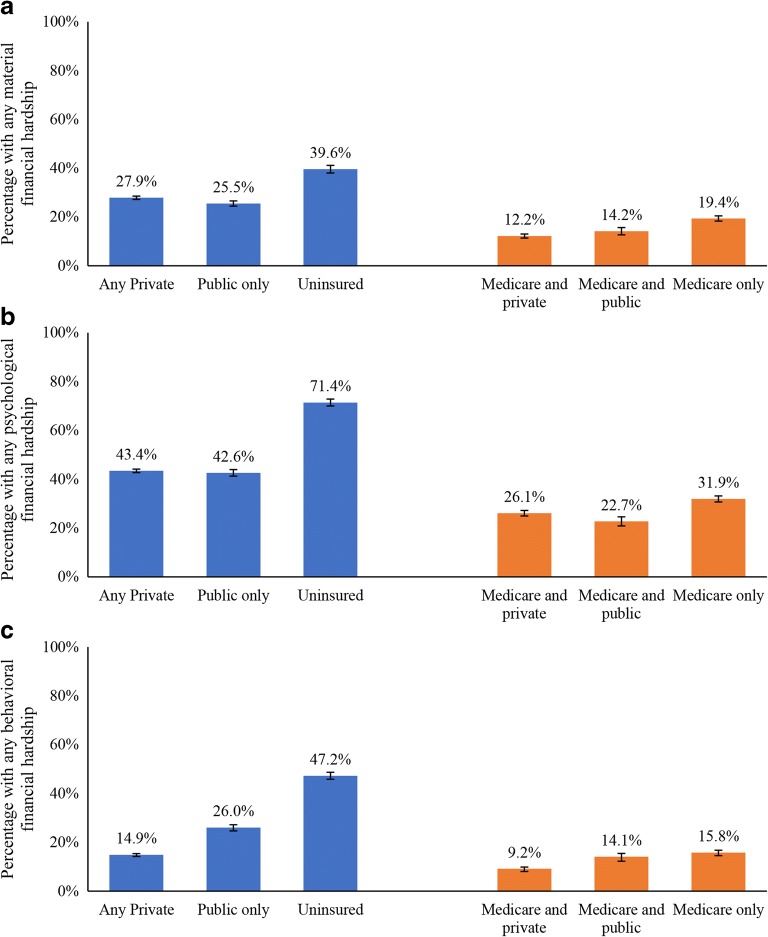
Key results: Approximately 137.1 million (95% CI 132.7-141.5) adults reported any medical financial hardship in the past year. Hardship is more common for material, psychological and behavioral domains in adults aged 18-64 years (28.9%, 46.9%, and 21.2%, respectively) than in adults aged ≥ 65 years (15.3%, 28.4%, and 12.7%, respectively; all p < .001). Lower educational attainment and more health conditions were strongly associated with hardship intensity in multivariable analyses in both age groups (p < .001). In the younger group, the uninsured were more likely to report multiple domains of hardship (52.8%), compared to those with some public (26.5%) or private insurance (23.2%) (p < .001). In the older group, individuals with Medicare only were more likely to report hardship in multiple domains (17.1%) compared to those with Medicare and public (12.1%) or Medicare and private coverage (10.1%) (p < .001).
Conclusions: Medical financial hardship is common in the USA, especially in adults aged 18-64 years and those without health insurance coverage. With trends towards higher patient cost-sharing and increasing health care costs, risks of hardship may increase in the future.
Keywords: National Health Interview Survey; access to care; health insurance; medical debt; medical financial hardship; out-of-pocket spending; prescription drug nonadherence.
Conflict of interest statement
The authors declare that they do not have a conflict of interest.
Figures
References
-
- Cohen RA, Kirzinger WK. Financial burden of medical care: a family perspective. NCHS Data Brief 2014. Accessed January 15, 2019. - PubMed
MeSH terms
LinkOut - more resources
Full Text Sources
Medical
Miscellaneous
