


Between a shock and a hard place: challenges and developments in HIV latency reversal
- PMID: 31048093
- PMCID: PMC6819240
- DOI: 10.1016/j.coviro.2019.03.004
Between a shock and a hard place: challenges and developments in HIV latency reversal
Abstract
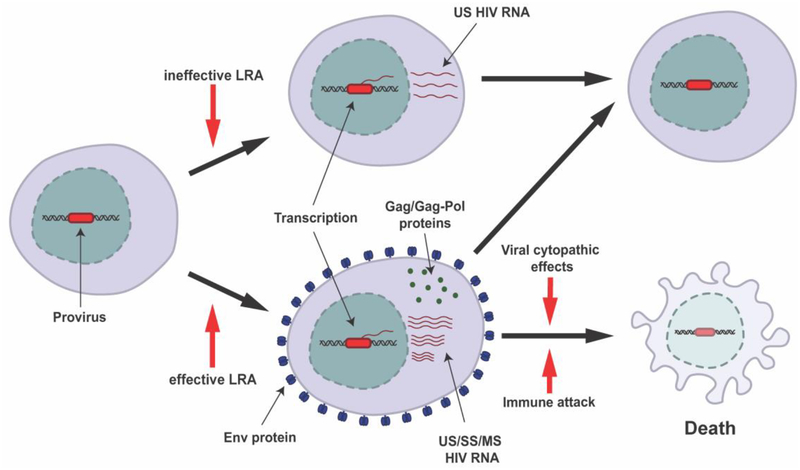
Latently infected cells that persist in HIV-infected individuals on antiretroviral therapy (ART) are a major barrier to cure. One strategy to eliminate latency is by activating viral transcription, commonly called latency reversal. Several small non-randomised clinical trials of latency reversing agents (LRAs) in HIV-infected individuals on ART increased viral production, but disappointingly did not reduce the number of latently infected cells or delay time to viral rebound following cessation of ART. More recent approaches aimed at reversing latency include compounds that both activate virus and also modulate immunity to enhance clearance of infected cells. These immunomodulatory LRAs include toll-like receptor agonists, immune checkpoint inhibitors and some cytokines. Here, we provide a brief review of the rationale for transcription-activating and immunomodulatory LRAs, discuss recent clinical trials and some suggestions for combination approaches and research priorities for the future.
Copyright © 2019 Elsevier B.V. All rights reserved.
Conflict of interest statement
Conflict of interest
SRL’s institution has received funding from the National Health and Medical Research Council (NHMRC) of Australia, National Institutes for Health, American Foundation for AIDS Research; Merck, Viiv and Gilead for investigator-initiated research; Merck, Viiv and Gilead for educational activities. She is on the advisory board of Abivax and Innivirax.
Figures
References
Publication types
MeSH terms
Substances
Grants and funding
LinkOut - more resources
Full Text Sources
Medical
