Structural analysis of ischemic stroke thrombi: histological indications for therapy resistance
- PMID: 31048352
- PMCID: PMC7012484
- DOI: 10.3324/haematol.2019.219881
Structural analysis of ischemic stroke thrombi: histological indications for therapy resistance
Abstract
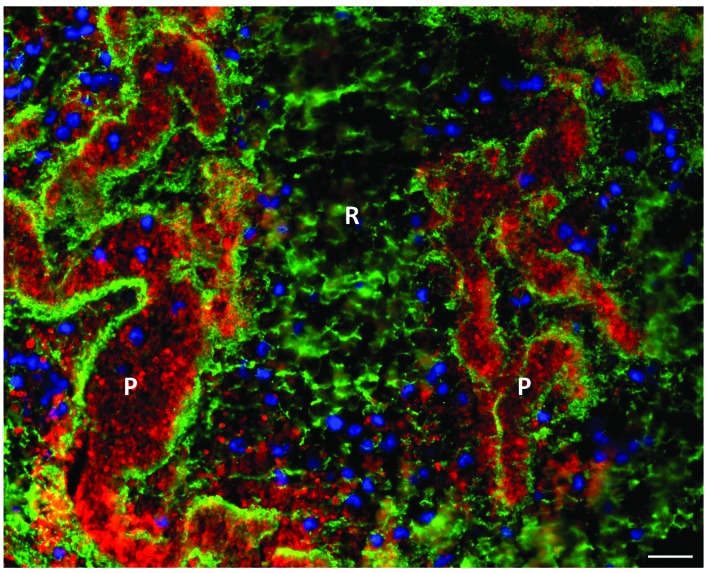
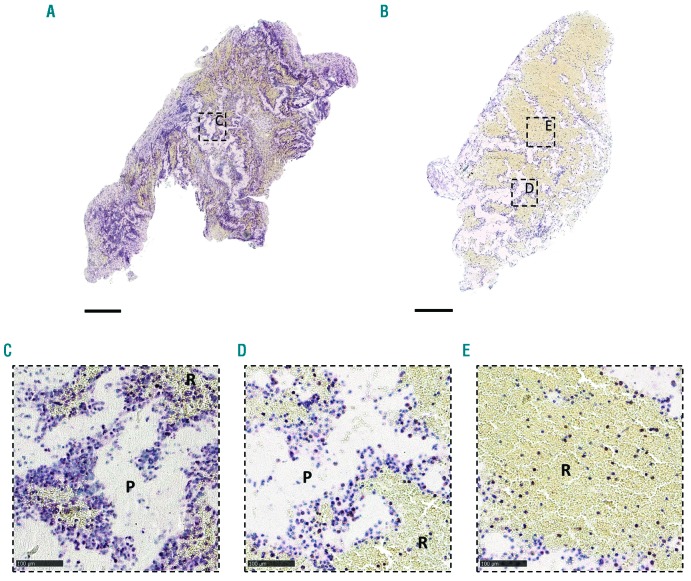
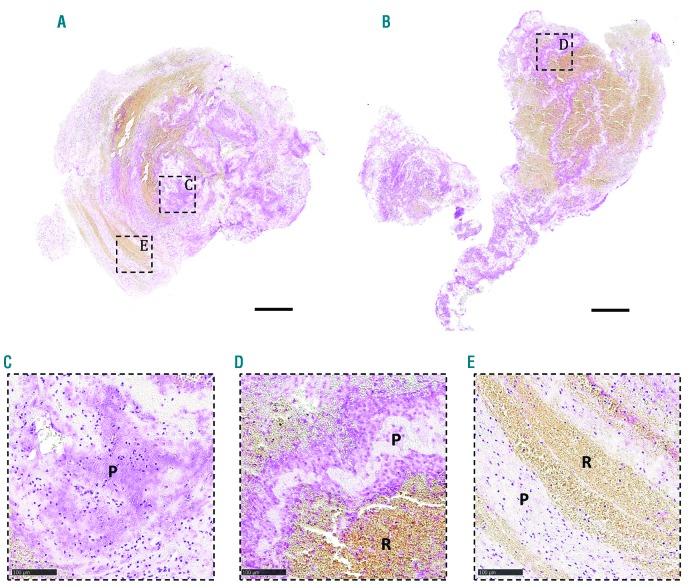
Ischemic stroke is caused by a thromboembolic occlusion of cerebral arteries. Treatment is focused on fast and efficient removal of the occluding thrombus, either via intravenous thrombolysis or via endovascular thrombectomy. Recanalization, however, is not always successful and factors contributing to failure are not completely understood. Although the occluding thrombus is the primary target of acute treatment, little is known about its internal organization and composition. The aim of this study, therefore, was to better understand the internal organization of ischemic stroke thrombi on a molecular and cellular level. A total of 188 thrombi were collected from endovascularly treated ischemic stroke patients and analyzed histologically for fibrin, red blood cells (RBC), von Willebrand factor (vWF), platelets, leukocytes and DNA, using bright field and fluorescence microscopy. Our results show that stroke thrombi are composed of two main types of areas: RBC-rich areas and platelet-rich areas. RBC-rich areas have limited complexity as they consist of RBC that are entangled in a meshwork of thin fibrin. In contrast, platelet-rich areas are characterized by dense fibrin structures aligned with vWF and abundant amounts of leukocytes and DNA that accumulate around and in these platelet-rich areas. These findings are important to better understand why platelet-rich thrombi are resistant to thrombolysis and difficult to retrieve via thrombectomy, and can guide further improvements of acute ischemic stroke therapy.
Copyright© 2020 Ferrata Storti Foundation.
Figures
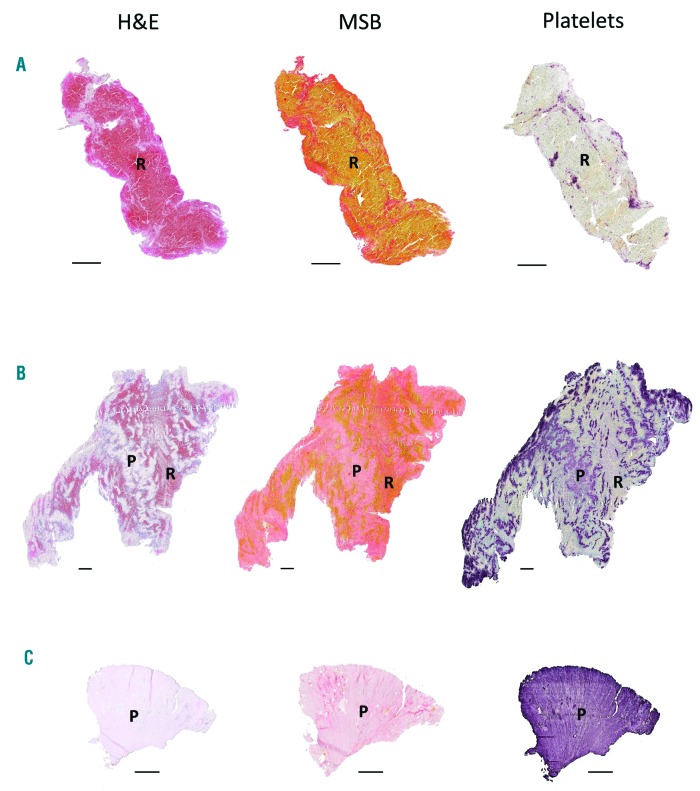
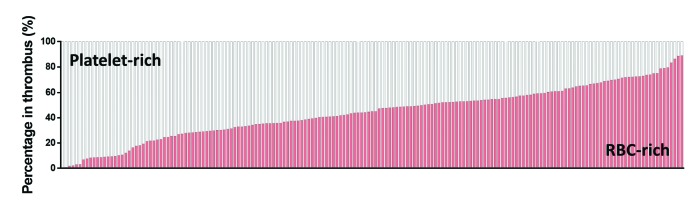
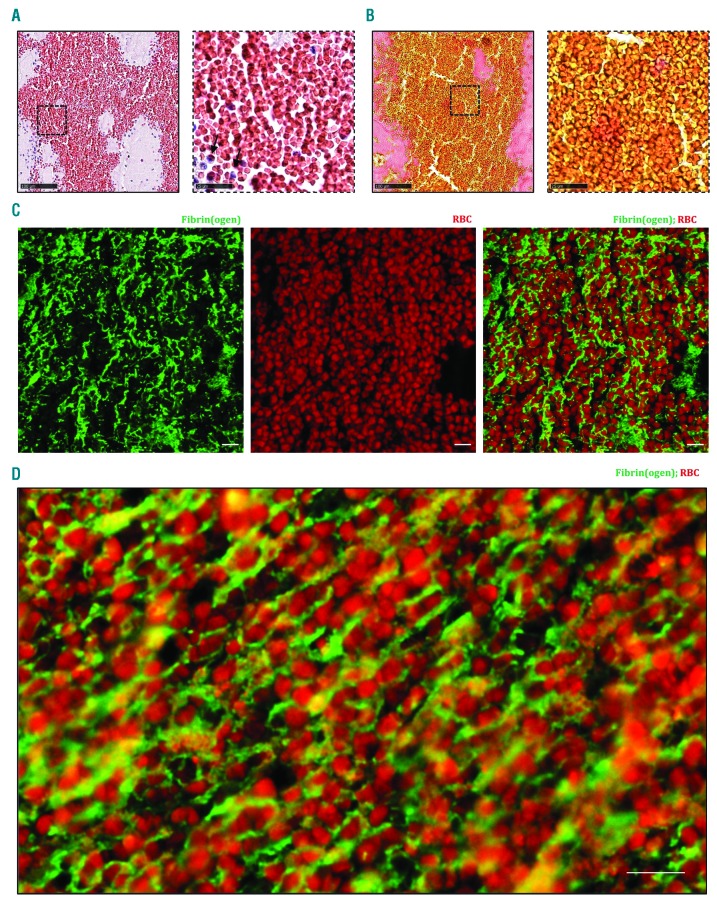
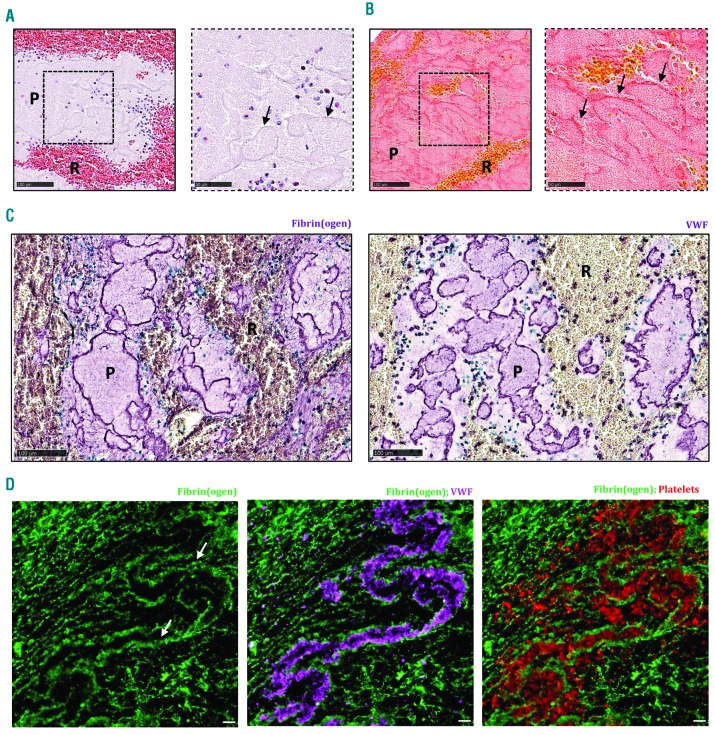
Comment in
-
Insights into the composition of stroke thrombi: heterogeneity and distinct clot areas impact treatment.Haematologica. 2020 Jan 31;105(2):257-259. doi: 10.3324/haematol.2019.238816. Print 2020. Haematologica. 2020. PMID: 32005654 Free PMC article. No abstract available.
-
A large-scale histological investigation gives insight into the structure of ischemic stroke thrombi.Platelets. 2021 Feb 17;32(2):147-150. doi: 10.1080/09537104.2020.1869713. Epub 2021 Jan 11. Platelets. 2021. PMID: 33427010 No abstract available.
References
-
- Prabhakaran S, Ruff I, Bernstein RA. Acute Stroke Intervention: A Systematic Review. JAMA. 2015;313(14):1451–1462. - PubMed
-
- Vanacker P, Lambrou D, Eskandari A, et al. Improving the Prediction of Spontaneous and Post-thrombolytic Recanalization in Ischemic Stroke Patients. J Stroke Cerebrovasc Dis. 2015;24(8):1781–1786. - PubMed
-
- Berkhemer OA, Fransen PSS, Beumer D, et al. A randomized trial of intraarterial treat ment for acute ischemic stroke. N Engl J Med. 2015;372(1):11–20. - PubMed
-
- Riedel CH, Zimmermann P, Ulf J-K, Stingele R, Deuschl G, Jansen O. The importance of size: successful recanalization by intravenous thrombolysis in acute anterior stroke depends on thrombus length. Stroke. 2011;42(6):1775–1777. - PubMed
Publication types
MeSH terms
LinkOut - more resources
Full Text Sources
Medical
Miscellaneous