Review
. 2019 Aug;19(8):503-516.
doi: 10.1038/s41577-019-0168-x.

New insights into the immune functions of complement

Affiliations
Review

New insights into the immune functions of complement

Edimara S Reis et al. Nat Rev Immunol. 2019 Aug.

Abstract

The recognition of microbial or danger-associated molecular patterns by complement proteins initiates a cascade of events that culminates in the activation of surface complement receptors on immune cells. Such signalling pathways converge with those activated downstream of pattern recognition receptors to determine the type and magnitude of the immune response. Intensive investigation in the field has uncovered novel pathways that link complement-mediated signalling with homeostatic and pathological T cell responses. More recently, the observation that complement proteins also act in the intracellular space to shape T cell fates has added a new layer of complexity. Here, we consider fundamental mechanisms and novel concepts at the interface of complement biology and immunity and discuss how these affect the maintenance of homeostasis and the development of human pathology.


Figures
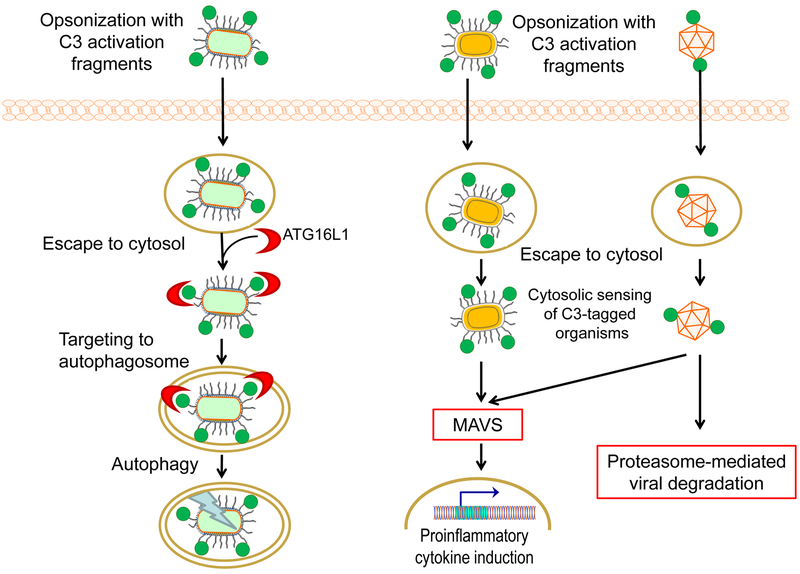
Figure 1.
Figure 1.. Intracellular interactions and fates of microbes opsonized with C3 in the extracellular milieu.
Left panel: Targeting of C3-opsonized bacteria to the autophagy pathway. Upon internalization, C3-coated bacteria are detected in the cytosol by the autophagy protein ATG16L1, which interacts directly with C3. This interaction initiates ATG16L1-dependent autophagy, which leads to the targeting of the bacteria to autophago-lysosomes for degradation. Right panel: Cytosolic sensing of C3-coated microbes triggers host defense. Bacteria and nonenveloped viruses that had been opsonized with C3 activation fragments in the extracellular setting can be sensed in the cytosol in a C3-dependent manner. This detection induces mitochondrial anti-viral signaling (MAVS), resulting in the activation of proinflammatory responses. Cytosolic detection of C3-opsonized viruses can, moreover, lead to proteasome-mediated viral degradation.
Figure 2.
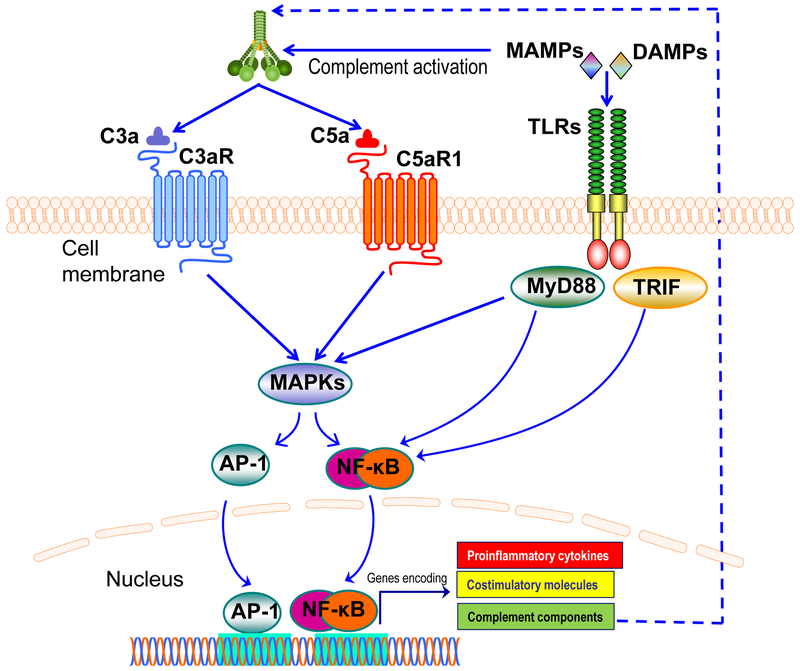
Figure 2.. Synergistic interactions between complement and TLRs.
Complement and TLRs are co-activated in response to microbial infection. Certain microbe-associated molecular patterns (MAMPs), e.g., zymosan, LPS, and CpG (agonists of TLR2, TLR4, and TLR9, respectively) can activate both TLRs and complement. Complement anaphylatoxin receptor signaling stimulated by C3a or C5a synergizes with TLR-MyD88 signaling, induced either by MAMPs or endogenous danger-associated molecular patterns (DAMPs; e.g., biglycan, hyaluronan fragments, and heparan sulfate fragments). This synergy leads to enhanced activation of MAPKs and transcription factors, such as NF-κB and AP-1, resulting in upregulated expression of proinflammatory cytokines and co-stimulatory molecules. TLR activation can also upregulate the expression of complement proteins via a TRIF pathway (induced by TLR3 or TLR4 signaling), thereby generating a feed-forward loop that further amplifies inflammatory responses.
Figure 3.
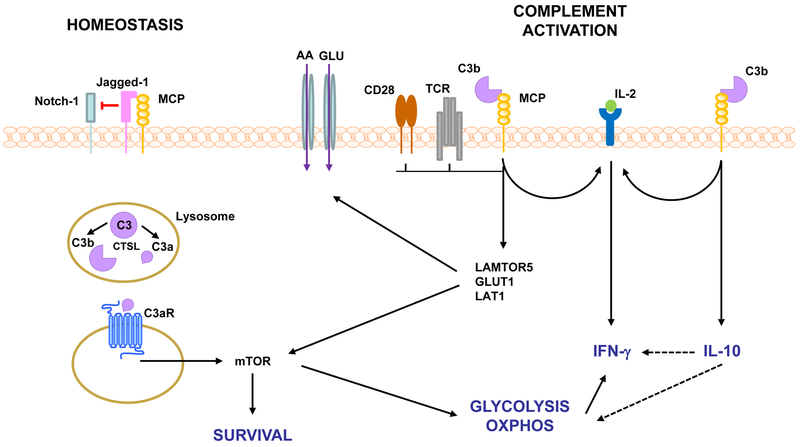
Figure 3.. Complement-mediated T cell activation.
Resting CD4+ T cells have intracellular stores of C3 that can be cleaved intracellularly by CTSL. C3aR-mediated intracellular signaling induces low levels of mTOR activation that regulates T cell survival. This homeostatic state is maintained by the inhibition of Notch signaling via Jagged-1/MCP association. Engagement of TCR/CD28 during conditions favoring complement activation (infection) results in MCP activation, assembly of the IL-2 receptor and expression of LAMTOR5, GLUT1 and LAT1 leading to nutrient influx and OXPHOS and consequent induction of the Th1 cytokine IFN-γ. MCP-mediated signaling also regulates Th1 responses via collaboration with the IL-2R and induction of IL-10 with subsequent downregulation of glycolysis, OXPHOS and IFN-γ production. AA, amino acids; CTSL, cathepsin L; GLUT1, glucose transporter, LAMTOR5, late endosomal/lysosomal adaptor; LAT-1, AA transporter; mTOR, mammalian target of rapamycin; OXPHOS, oxidative phosphorylation; TCR, T cell receptor.

References

    1. Cooper MD & Herrin BR How did our complex immune system evolve? Nature Reviews Immunology 10, 2, doi:10.1038/nri2686 (2010). - DOI - PubMed
    1. Ricklin D, Reis ES, Mastellos DC, Gros P & Lambris JD Complement component C3 - The "Swiss Army Knife" of innate immunity and host defense. Immunol Rev 274, 33–58, doi:10.1111/imr.12500 (2016). - DOI - PMC - PubMed
    1. Zarkadis IK, Mastellos D & Lambris JD Phylogenetic aspects of the complement system. Dev Comp Immunol 25, 745–762 (2001). - PubMed
    1. Kemper C & Kohl J Novel roles for complement receptors in T cell regulation and beyond. Mol Immunol 56, 181–190, doi:10.1016/j.molimm.2013.05.223 (2013). - DOI - PubMed
    1. Carroll MC & Isenman DE Regulation of humoral immunity by complement. Immunity 37, 199–207, doi:10.1016/j.immuni.2012.08.002 (2012). - DOI - PMC - PubMed

Publication types