Topical paromomycin for New World cutaneous leishmaniasis
- PMID: 31048871
- PMCID: PMC6497224
- DOI: 10.1371/journal.pntd.0007253
Topical paromomycin for New World cutaneous leishmaniasis
Abstract
Background: Paromomycin-based topical treatments were shown to be effective in curing cutaneous leishmaniasis (CL) lesions caused by Leishmania major in Tunisia. Cure rates of an index lesion were approximately 80%. As a follow on, we conducted a similar Phase 3 trial in Panama to demonstrate the efficacy of these treatments against New World species. The primary objective was to determine if a combination topical cream (paromomycin-gentamicin) resulted in statistically superior final clinical cure rates of an index lesion compared to a paromomycin alone topical cream for the treatment of CL, primarily caused by Leishmania panamensis.
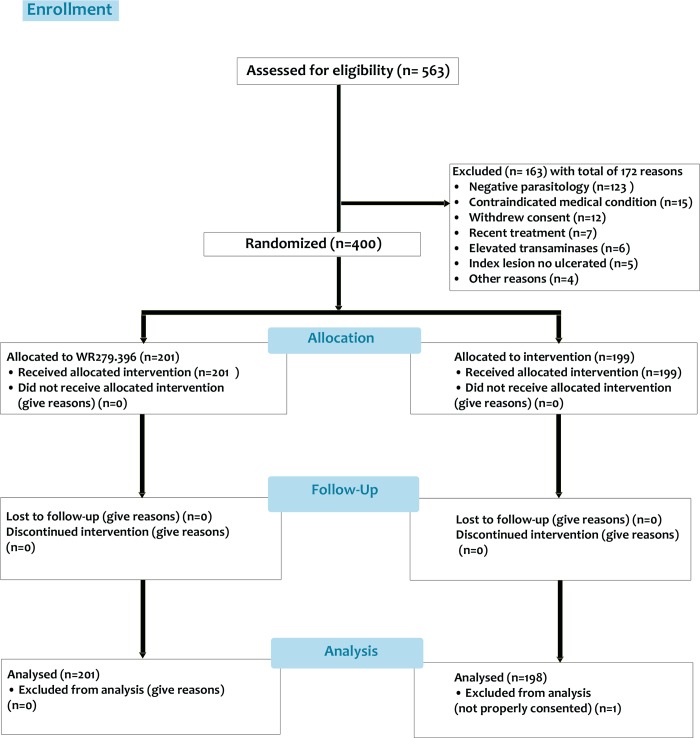
Methods: We conducted a randomized, double blind, Phase 3 trial of topical creams for the treatment of CL caused by Leishmania spp. Three hundred ninety nine patients with one to ten CL lesions were treated by topical application once daily for 20 days. The primary efficacy endpoint was percentage of subjects with clinical cure of an index lesion confirmed to contain Leishmania with no relapse.
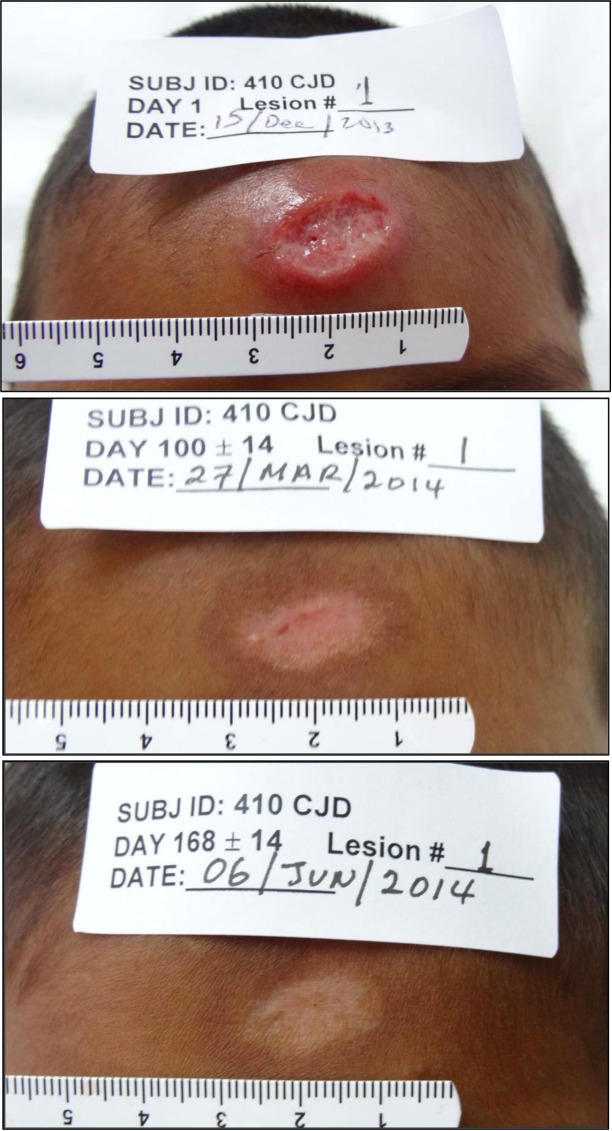
Results: The clinical cure of the index lesion for paromomycin-gentamicin was 79% (95% CI; 72 to 84) and for paromomycin alone was 78% (95% CI; 74 to 87) (p = 0.84). The most common adverse events considered related to study cream application were mild to moderate dermatitis, pain, and pruritus.
Conclusions: Superiority of paromomycin-gentamicin was not demonstrated. However, the approximately 80% cure rates for both topical creams were similar to those demonstrated in Tunisia and previously reported with parenteral antimonials.
Conflict of interest statement
The authors have declared that no competing interests exist.
Figures
References
-
- Hepburn NC. Cutaneous leishmaniasis: an overview. J Postgrad Med. 2003; 49(1):50–54. - PubMed
-
- Gontijo B, de Carvalho Mde L. American cutaneous leishmaniasis (Article in Portuguese). Rev Soc Bras Med Trop. 2003; 36(1):71–80. - PubMed
-
- Control of the leishmaniasis: WHO technical report series no. 949. Geneva: World Health Organization, 2010.
Publication types
MeSH terms
Substances
LinkOut - more resources
Full Text Sources
Other Literature Sources
Research Materials
Miscellaneous