


Infant Mortality in the United States, 1915-2017: Large Social Inequalities have Persisted for Over a Century
- PMID: 31049261
- PMCID: PMC6487507
- DOI: 10.21106/ijma.271
Infant Mortality in the United States, 1915-2017: Large Social Inequalities have Persisted for Over a Century
Abstract
Objectives: We examined trends in racial/ethnic, socioeconomic, and geographic disparities in age- and cause-specific infant mortality in the United States during 1915-2017.
Methods: Log-linear regression and inequality indices were used to analyze temporal infant mortality data from the National Vital Statistics System and the National Linked Birth/Infant Death files according to maternal and infant characteristics.
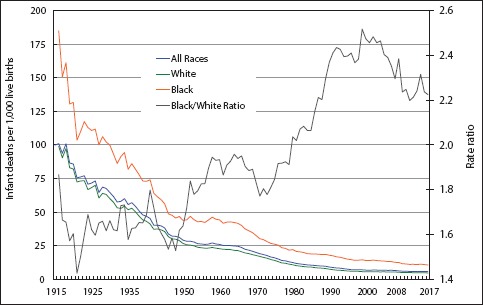
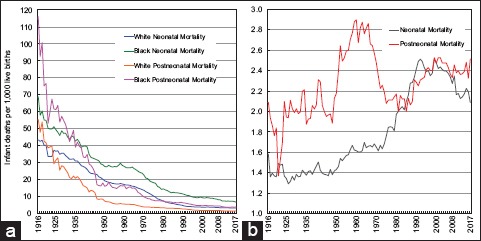
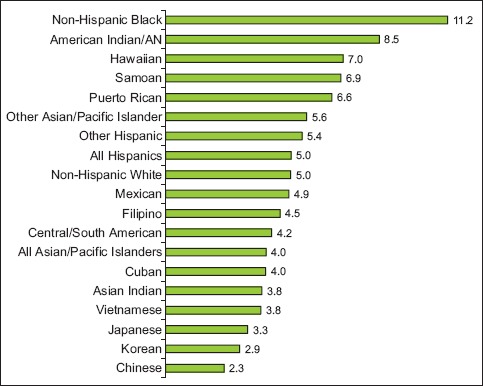
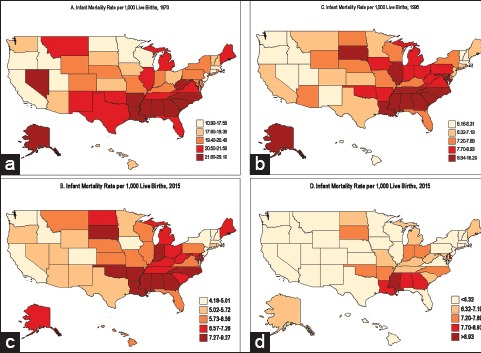
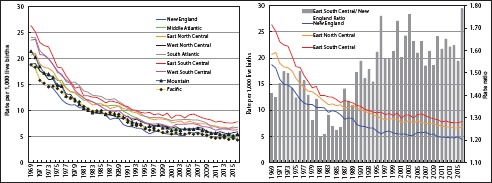
Results: During 1915-2017, the infant mortality rate (IMR) declined dramatically overall and for black and white infants; however, black/white disparities in mortality generally increased through 2000. Racial disparities were greater in post-neonatal mortality than neonatal mortality. Detailed racial/ethnic comparisons show an approximately five-fold difference in IMR, ranging from a low of 2.3 infant deaths per 1,000 live births for Chinese infants to a high of 8.5 for American Indian/Alaska Natives and 11.2 for black infants. Infant mortality from major causes of death showed a downward trend during the past 5 decades although there was a recent upturn in mortality from prematurity/low birthweight and unintentional injury. In 2016, black infants had 2.5-2.8 times higher risk of mortality from perinatal conditions, sudden infant death syndrome, influenza/pneumonia, and unintentional injuries, and 1.3 times higher risk of mortality from birth defects compared to white infants. Educational disparities in infant mortality widened between 1986 and 2016; mothers with less than a high school education in 2016 experienced 2.4, 1.9, and 3.7 times higher risk of infant, neonatal, and post-neonatal mortality than those with a college degree. Geographic disparities were marked and widened across regions, with states in the Southeast region having higher IMRs.
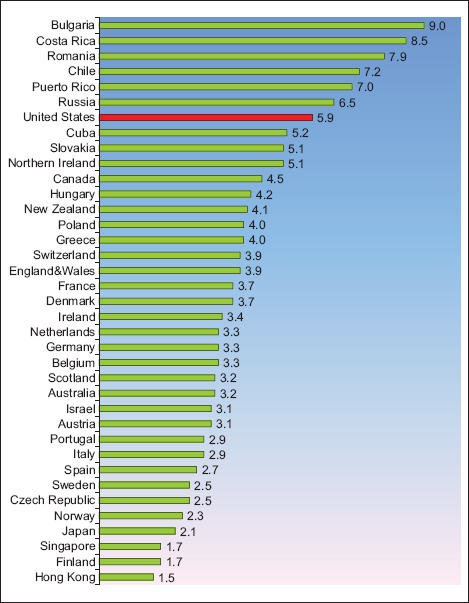
Conclusions and global health implications: Social inequalities in infant mortality have persisted and remained marked, with the disadvantaged ethnic and socioeconomic groups and geographic areas experiencing substantially increased risks of mortality despite the declining trend in mortality over time. Widening social inequalities in infant mortality are a major factor contributing to the worsening international standing of the United States.
Keywords: Cause of Death; Geographic; Inequality; Infant Mortality; Race/Ethnicity; Socioeconomic Status; Trend; United States.
Conflict of interest statement
Conflicts of Interest: None.
Figures
References
-
- Singh GK, van Dyck PC. A 75thAnniversary Publication. Health Resources and Services Administration, Maternal and Child Health Bureau. Rockville, MD: US Department of Health and Human Services; 2010. Infant Mortality in the United States, 1935-2007:Over Seven Decades of Progress and Disparities.
-
- World Health Organization. World Health Statistics 2016:Monitoring Health for the SDGs, Sustainable Development Goals. Geneva, Switzerland: WHO; 2016.
-
- Singh GK, Kogan MD, Slifkin RT. Widening Disparities in Infant Mortality and Life Expectancy between Appalachia and the Rest of the United States, 1990-2013. Health Aff (Millwood) 2017;36(8):1423–1432. - PubMed
-
- US Department of Health and Human Services. Healthy People. 2020. http://www.healthypeople.gov/2020/default.aspx . - PubMed
LinkOut - more resources
Full Text Sources
Miscellaneous