


The impacts of medication shortages on patient outcomes: A scoping review
- PMID: 31050671
- PMCID: PMC6499468
- DOI: 10.1371/journal.pone.0215837
The impacts of medication shortages on patient outcomes: A scoping review
Abstract
Background: In recent years, medication shortages have become a growing worldwide issue. This scoping review aimed to systematically synthesise the literature to report on the economic, clinical, and humanistic impacts of medication shortages on patient outcomes.
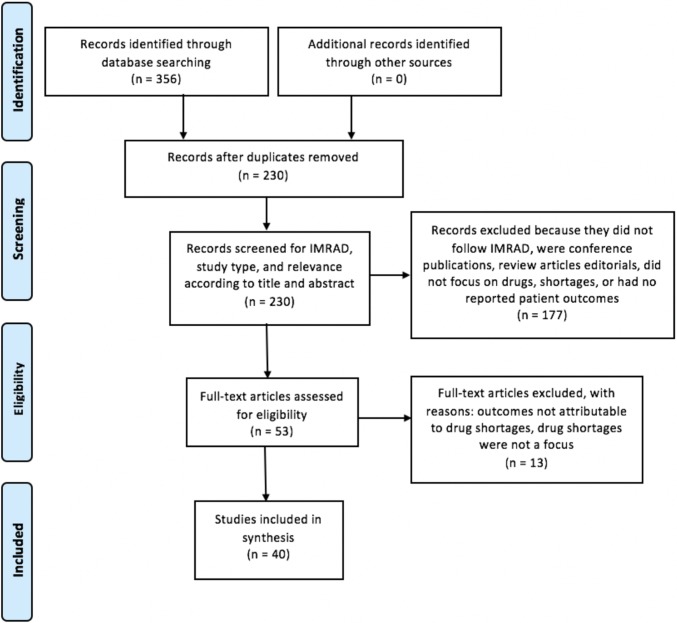
Methods: Medline, Embase, Global Health, PsycINFO and International Pharmaceutical Abstracts were searched using the two key concepts of medicine shortage and patient outcomes. Articles were limited to the English language, human studies and there were no limits to the year of publication. Manuscripts included contained information regarding the shortage of a scheduled medication and had gathered data regarding the economic, clinical, and/or humanistic outcomes of drug shortages on human patients.
Findings: We found that drug shortages were predominantly reported to have adverse economic, clinical and humanistic outcomes to patients. Patients were more commonly reported to have increased out of pocket costs, rates of drug errors, adverse events, mortality, and complaints during times of shortage. There were also reports of equivalent and improved patient outcomes in some cases.
Conclusions: The results of this review provide valuable insights into the impact drug shortages have on patient outcomes. The majority of studies reported medication shortages resulted in negative patient clinical, economic and humanistic outcomes.
Conflict of interest statement
The authors have declared that no competing interests exist.
References
-
- World Health Organisation. Medicines and health products. 2018. [cited 7 April 2018] In: World Health Organisation; [Internet] 2018. Available from: http://www.who.int/healthsystems/topics/medicines/en/
-
- Hedman L. Global approaches to addressing shortages of essential medicines in health systems. WHO Drug Information. 2016;30(2):180–5.
-
- Mori J, Hasui K, Tanimoto T, Matsumura T, Kami M. Drug Shortages After the Eastern Japan Earthquake: Experiences in a Tertiary Referral Center. Drug Inf J. 2012;46(5):607–10.
Publication types
MeSH terms
Substances
LinkOut - more resources
Full Text Sources
Medical
