


Information needs of physicians regarding the diagnosis of rare diseases: a questionnaire-based study in Belgium
- PMID: 31054581
- PMCID: PMC6500578
- DOI: 10.1186/s13023-019-1075-8
Information needs of physicians regarding the diagnosis of rare diseases: a questionnaire-based study in Belgium
Abstract
Background: Late and misdiagnoses of rare disease patients are common and often result in medical, physical and mental burden for the patient, and financial and emotional burden for the patient's family. Low rare disease awareness among physicians is believed to be one of the reasons for these late and misdiagnoses of rare disease patients. The aim of this study was to investigate how information and education could be tailored to the needs and preferences of physicians in Belgium to increase their rare disease awareness and support them in diagnosing patients with a rare disorder. Nine exploratory interviews with Belgian rare disease experts were performed in December 2016 to help the development of a questionnaire on information needs of physicians and their consulted information sources in rare disease awareness and diagnosis. This online questionnaire was then completed by Belgian physicians (n = 295), including general practitioners (GPs), pediatricians and other specialists (i.e. neurologists, pediatric neurologists, endocrinologists and pediatric endocrinologists) during January and February 2017.
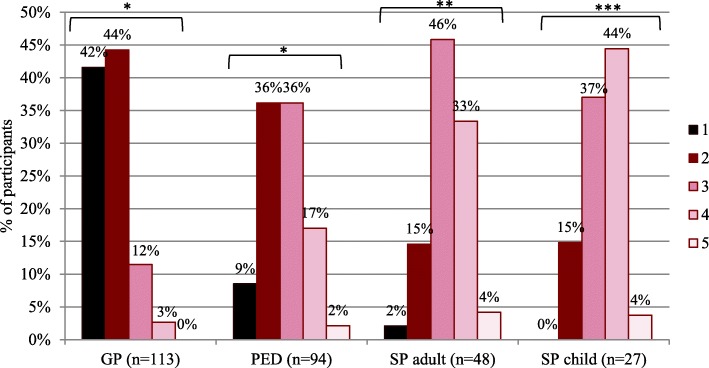
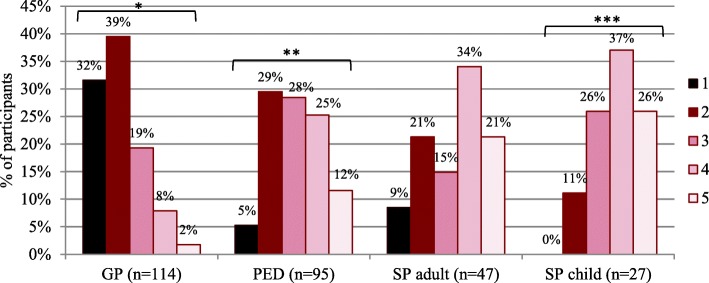
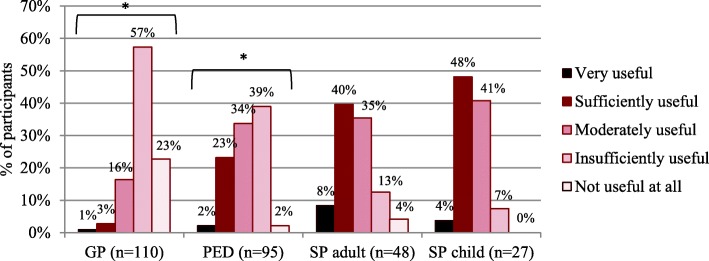
Results: Rare disease knowledge and awareness were the lowest among GPs and the highest among specialists. Interviewed experts indicated that physicians' academic and continuous medical education should be focused more on "red flags" to increase rare disease attentiveness in daily clinical practice. GPs scored their academic education on rare diseases as insufficient but pediatricians and other specialists scored it significantly better (p < 0.001). Even though GPs declared to only need information on rare diseases when having a rare disease patient in their practice, specialists indicated to need more rare disease information in general. Most physicians confirmed that they had specific information needs regarding rare diseases. Unlike specialists, the majority of GPs were unaware of information sources such as Orphanet.
Conclusion: In order to effectively support physicians in Belgium to diagnose rare diseases early, the academic medical education on rare diseases should be revised. Teaching methods should be focused more on casuistry and "red flags". An Orphanet-like digital platform about rare disease symptoms, diagnostic tests and reference centers might be ideal to support correct and timely diagnosis.
Keywords: Diagnosis; Information needs; Orphanet; Physicians; Rare diseases; Red flags.
Conflict of interest statement
Ethics approval and consent to participate
This study, with protocol number S59783, was approved by the Medical Ethics Committee of UZ KU Leuven/Research on the 30th of November 2016. Informed consent was obtained from all participants, including interviewed experts and physicians that completed the questionnaire.
Consent for publication
Not applicable.
Competing interests
All authors declare that they have no competing interests. All authors read and approved the final manuscript. Pfizer nv/sa was not a sponsor of the study but provided support to Liese Vandeborne with access to their infrastructure, expertise and statistical aid during the conduct of this study. No undue influence from Pfizer nv/sa was experienced on the presented work, and Pfizer nv/sa did not receive any data obtained in this study.
Publisher’s Note
Springer Nature remains neutral with regard to jurisdictional claims in published maps and institutional affiliations.
Figures
References
-
- De Sadeleer H. De zorg voor het kind door de huisarts en de pediater [dissertation] Ghent: University of Ghent; 2016.
-
- McIntyre FL. One in a million: when extraordinary cases occur in an ordinary practice. J Fam Pract. 1993;36(1):17–18. - PubMed
-
- Cello Health . Rare disease: taking a different approach. 2016.
-
- Kole A, Faurisson F, Mavris M. The voice of 12,000 patients. Experiences and expectations of rare disease patients on diagnosis and Care in Europe. Paris: EURORDIS; 2009.
MeSH terms
Grants and funding
LinkOut - more resources
Full Text Sources
Medical
