


Review
doi: 10.1161/HYPERTENSIONAHA.118.11513.
Epub 2019 May 6.
Preeclampsia and Cerebrovascular Disease
Affiliations
- PMID: 31055951
- PMCID: PMC6636840
- DOI: 10.1161/HYPERTENSIONAHA.118.11513
Item in Clipboard
Review
Preeclampsia and Cerebrovascular Disease
Hypertension.
2019 Jul.
No abstract available
Figures
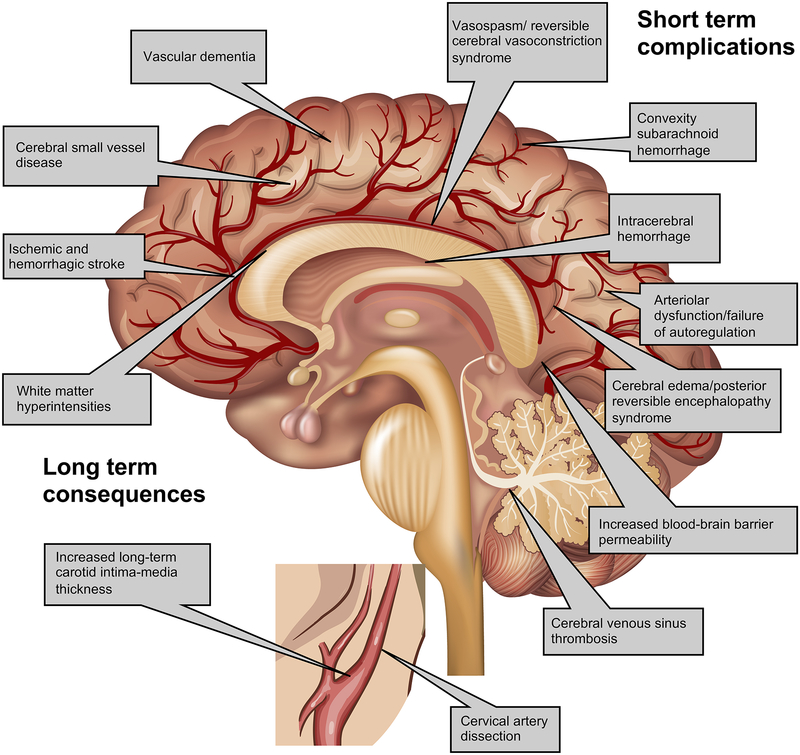
Legend: Preeclampsia (PE) causes both acute and chronic cerebrovascular disease. In the immediate peripartum period, PE is associated with increased blood-brain barrier permeability, impaired cerebral autoregulation, hypercoagulability and inflammation, resulting in complications such as ischemic and hemorrhagic stroke, posterior reversible encephalopathy syndrome, reversible cerebral vasoconstriction syndrome, and cerebral venous sinus thrombosis. Long term, PE is associated with cerebral small vessel disease including stroke and vascular dementia, as well as increased carotid intima-media thickness.
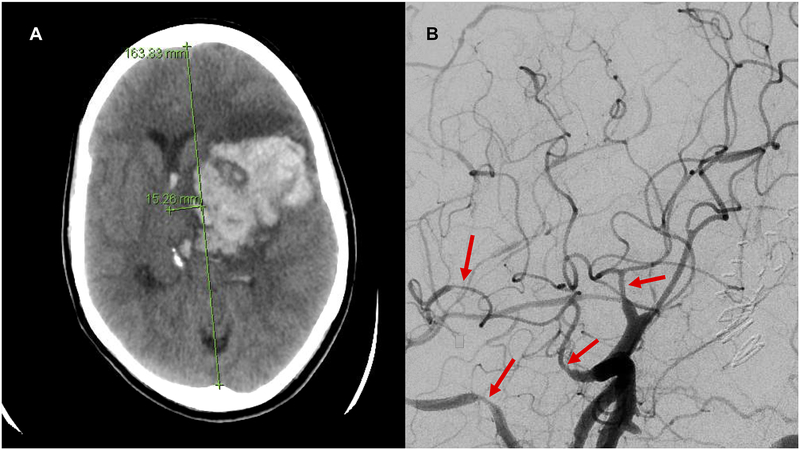
Legend: A 32-year-old woman presented 4 days postpartum with hypertension and severe headache, found to have severe preeclampsia. Computed tomography of the head without contrast (A) showed left sided intracerebral hemorrhage with cerebral herniation. Cerebral angiogram (B) showed diffuse segmental vasospasm of the proximal and distal large cerebral arteries. Brain biopsy showed no evidence of vasculitis. She was diagnosed with the reversible cerebral vasoconstriction syndrome.
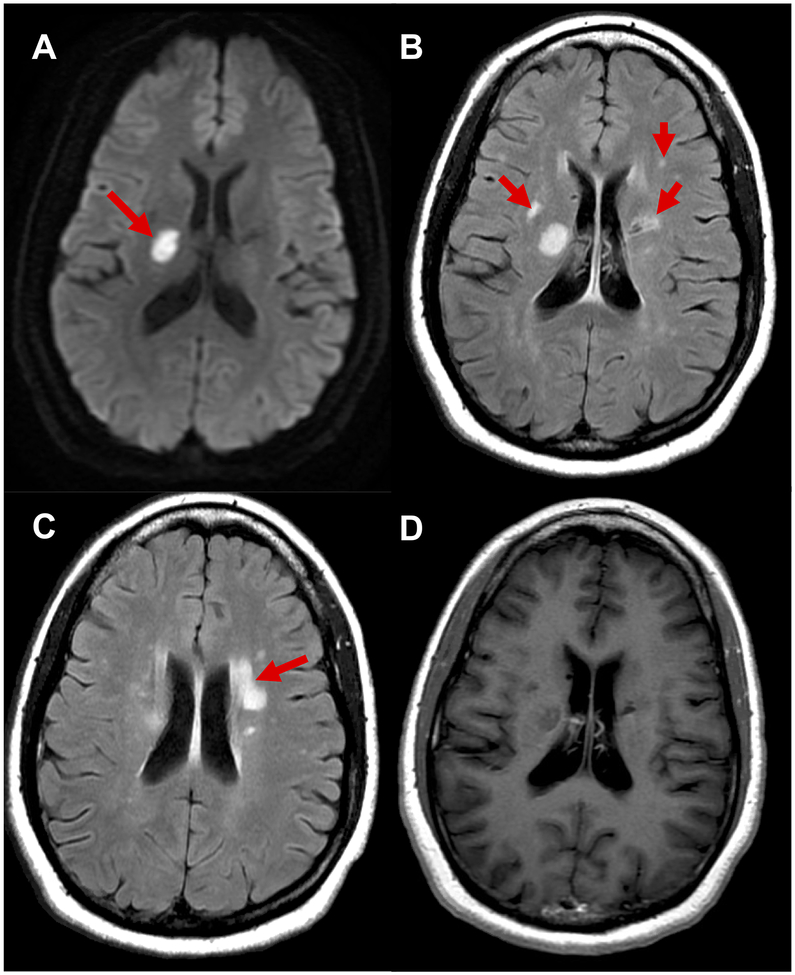
Legend: A 47-year-old woman with diabetes, hypertension, active tobacco use and history of preterm preeclampsia presented with left sided weakness and cognitive complaints. Magnetic resonance imaging of the brain with and without contrast showed an acute lacunar infarct in the right internal capsule on diffusion weighted images (A), patchy subcortical white matter hyperintensities on fluid-attenuated inversion recovery sequences (B, C), and no contrast enhancement (D). Additional studies including lumbar puncture showed no evidence of demyelinating disease or other inflammatory etiology. She was diagnosed with ischemic stroke and white matter changes due to cerebral small vessel disease.
References
-
- Hutcheon JA, Lisonkova S, Joseph KS. Epidemiology of pre-eclampsia and the other hypertensive disorders of pregnancy. Best practice & research. Clinical obstetrics & gynaecology. 2011;25(4):391–403. - PubMed
-
- Kalafat E, Thilaganathan B. Cardiovascular origins of preeclampsia. Current opinion in obstetrics & gynecology. 2017:1–7. - PubMed
-
- Raymond D, Peterson E. A critical review of early-onset and late-onset preeclampsia. Obstet Gynecol Surv. 2011;66(8):497–506. - PubMed
-
- Goulopoulou S Maternal Vascular Physiology in Preeclampsia. Hypertension. 2017;70(6):1066–1073. - PubMed
Publication types
MeSH terms
Grants and funding
LinkOut - more resources
Full Text Sources
