


What's Normal? Microbiomes in Human Milk and Infant Feces Are Related to Each Other but Vary Geographically: The INSPIRE Study
- PMID: 31058158
- PMCID: PMC6479015
- DOI: 10.3389/fnut.2019.00045
What's Normal? Microbiomes in Human Milk and Infant Feces Are Related to Each Other but Vary Geographically: The INSPIRE Study
Erratum in
-
Corrigendum: What's Normal? Microbiomes in Human Milk and Infant Feces Are Related to Each Other but Vary Geographically: The INSPIRE Study.Front Nutr. 2020 Feb 19;7:12. doi: 10.3389/fnut.2020.00012. eCollection 2020. Front Nutr. 2020. PMID: 32140470 Free PMC article.
Abstract
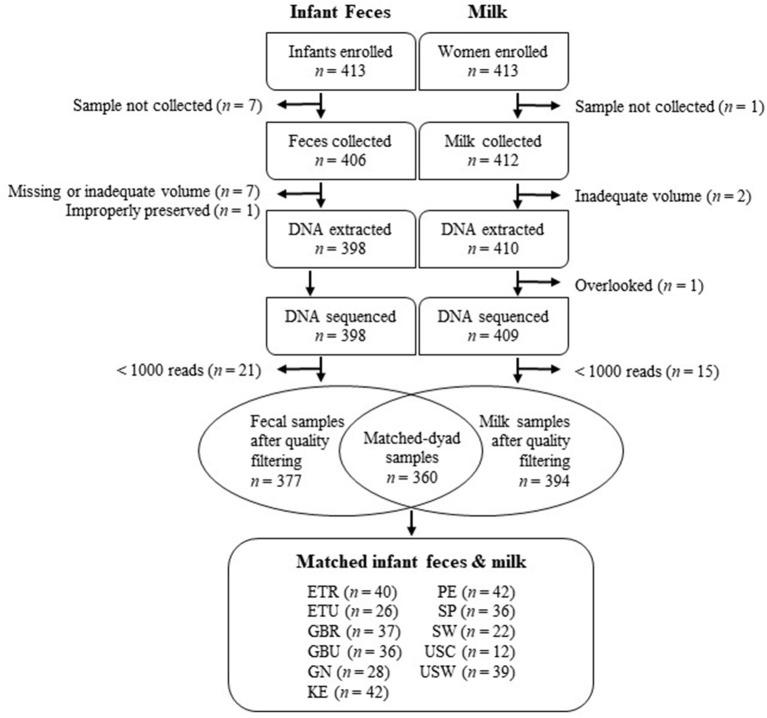
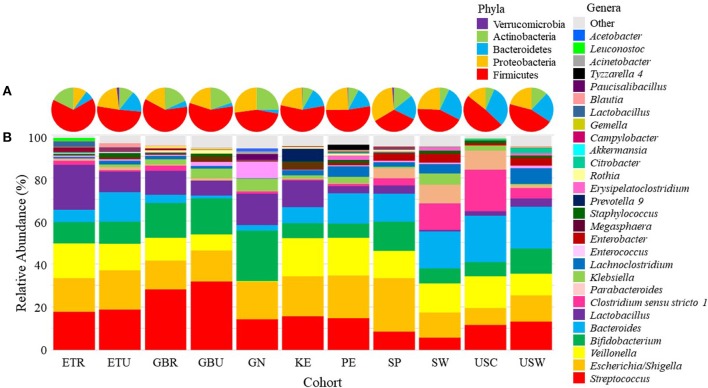
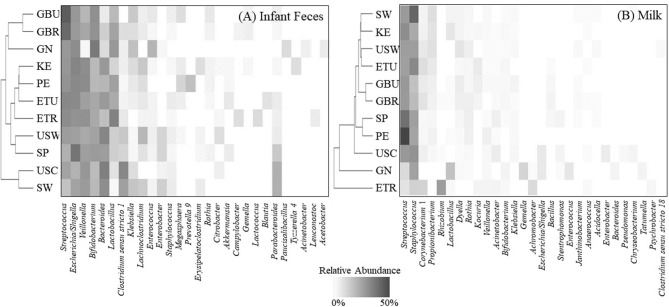
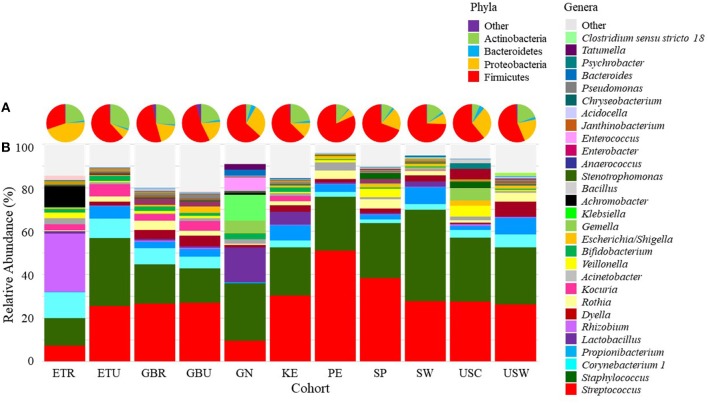
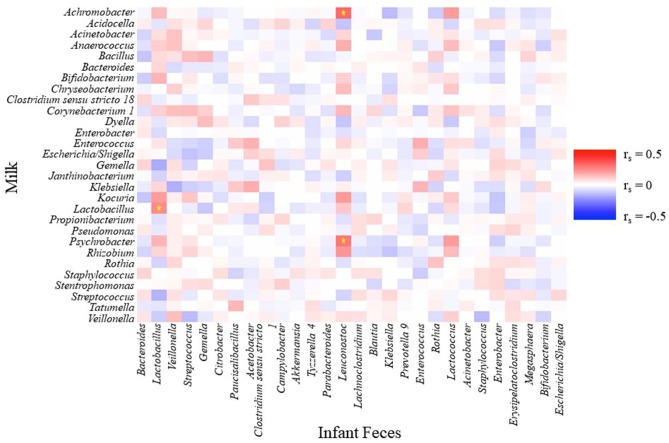
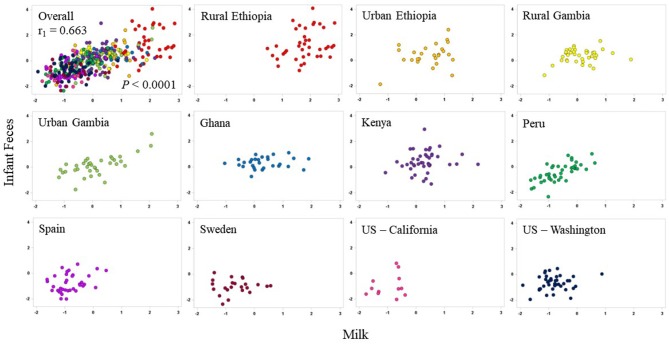
Background: Microbial communities in human milk and those in feces from breastfed infants vary within and across populations. However, few researchers have conducted cross-cultural comparisons between populations, and little is known about whether certain "core" taxa occur normally within or between populations and whether variation in milk microbiome is related to variation in infant fecal microbiome. The purpose of this study was to describe microbiomes of milk produced by relatively healthy women living at diverse international sites and compare these to the fecal microbiomes of their relatively healthy infants. Methods: We analyzed milk (n = 394) and infant feces (n = 377) collected from mother/infant dyads living in 11 international sites (2 each in Ethiopia, The Gambia, and the US; 1 each in Ghana, Kenya, Peru, Spain, and Sweden). The V1-V3 region of the bacterial 16S rRNA gene was sequenced to characterize and compare microbial communities within and among cohorts. Results: Core genera in feces were Streptococcus, Escherichia/Shigella, and Veillonella, and in milk were Streptococcus and Staphylococcus, although substantial variability existed within and across cohorts. For instance, relative abundance of Lactobacillus was highest in feces from rural Ethiopia and The Gambia, and lowest in feces from Peru, Spain, Sweden, and the US; Rhizobium was relatively more abundant in milk produced by women in rural Ethiopia than all other cohorts. Bacterial diversity also varied among cohorts. For example, Shannon diversity was higher in feces from Kenya than Ghana and US-California, and higher in rural Ethiopian than Ghana, Peru, Spain, Sweden, and US-California. There were limited associations between individual genera in milk and feces, but community-level analyses suggest strong, positive associations between the complex communities in these sample types. Conclusions: Our data provide additional evidence of within- and among-population differences in milk and infant fecal bacterial community membership and diversity and support for a relationship between the bacterial communities in milk and those of the recipient infant's feces. Additional research is needed to understand environmental, behavioral, and genetic factors driving this variation and association, as well as its significance for acute and chronic maternal and infant health.
Keywords: breastfeeding; breastmilk; feces; human milk; infant; international; maternal; microbiome.
Figures
References
Grants and funding
LinkOut - more resources
Full Text Sources
Other Literature Sources
