


A multicenter, randomized, double-blind study of ulimorelin and metoclopramide in the treatment of critically ill patients with enteral feeding intolerance: PROMOTE trial
- PMID: 31062046
- PMCID: PMC9121863
- DOI: 10.1007/s00134-019-05593-2
A multicenter, randomized, double-blind study of ulimorelin and metoclopramide in the treatment of critically ill patients with enteral feeding intolerance: PROMOTE trial
Abstract
Purpose: Enteral feeding intolerance (EFI) is a frequent problem in the intensive care unit (ICU), but current prokinetic agents have uncertain efficacy and safety profiles. The current study compared the efficacy and safety of ulimorelin, a ghrelin agonist, with metoclopramide in the treatment of EFI.
Methods: One hundred twenty ICU patients were randomized 1:1 to ulimorelin or metoclopramide for 5 days. EFI was diagnosed by a gastric residual volume (GRV) ≥ 500 ml. A volume-based feeding protocol was employed, and enteral formulas were standardized. The primary end point was the percentage daily protein prescription (%DPP) received by patients over 5 days of treatment. Secondary end points included feeding success, defined as 80% DPP; gastric emptying, assessed by paracetamol absorption; incidences of recurrent intolerance (GRV ≥ 500 ml); vomiting or regurgitation; aspiration, defined by positive tracheal aspirates for pepsin; and pulmonary infection.
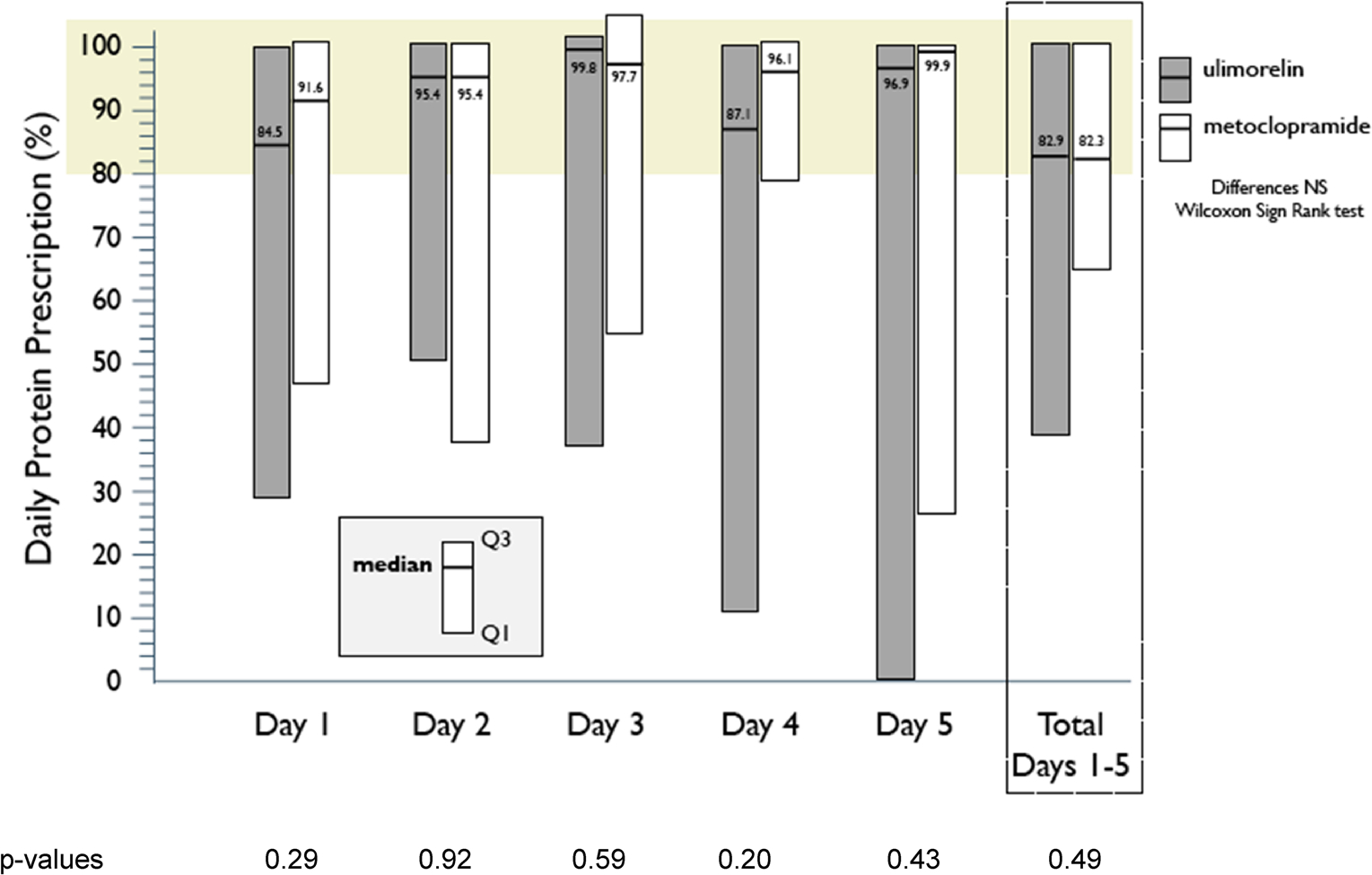
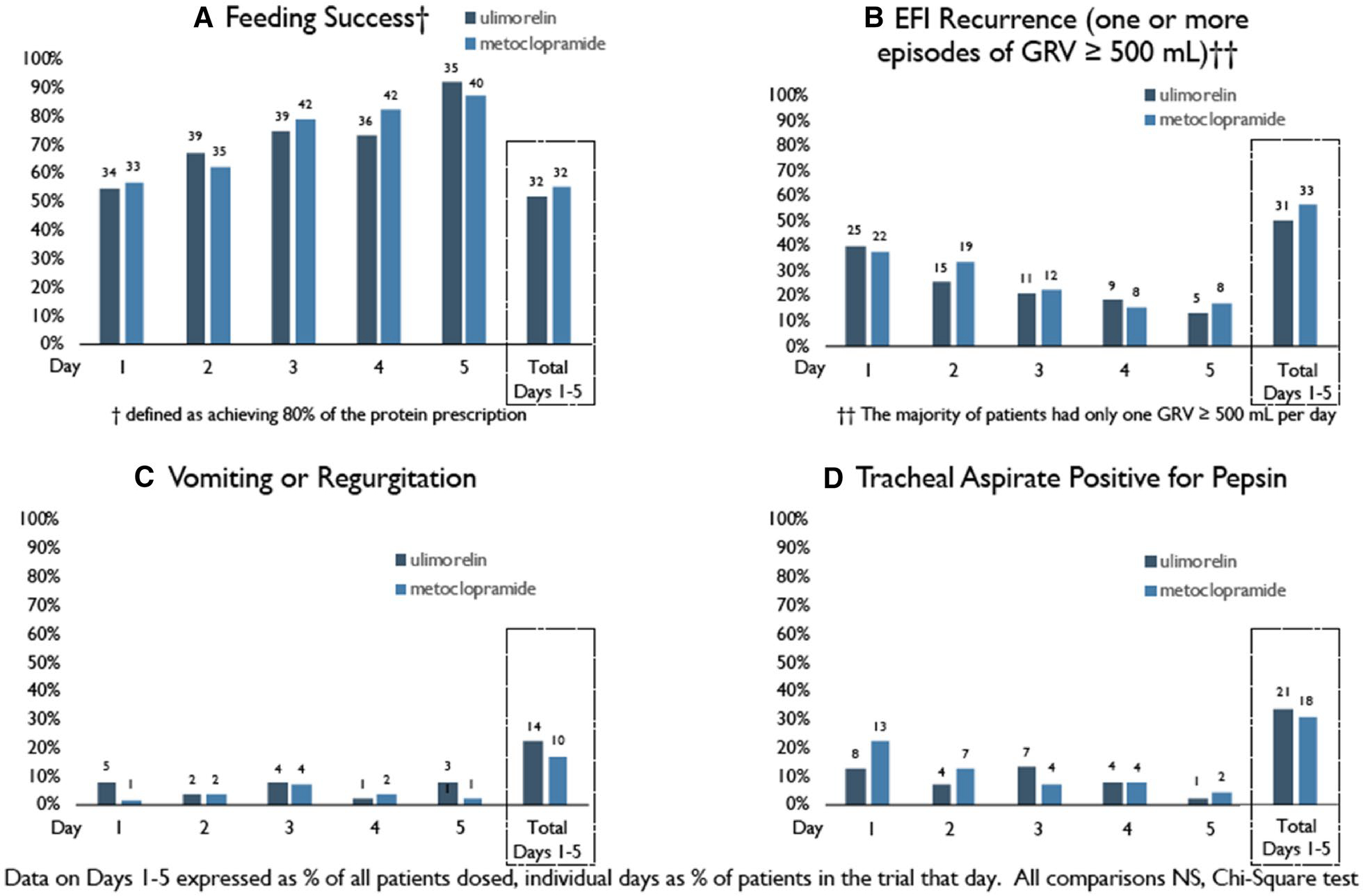
Results: One hundred twenty patients were randomized and received the study drug (ulimorelin 62, metoclopramide 58). Mean APACHE II and SOFA scores were 21.6 and 8.6, and 63.3% of patients had medical reasons for ICU admission. Ulimorelin and metoclopramide resulted in comparable %DPPs over 5 days of treatment (median [Q1, Q3]: 82.9% [38.4%, 100.2%] and 82.3% [65.6%, 100.2%], respectively, p = 0.49). Five-day rates of feeding success were 67.7% and 70.6% when terminations unrelated to feeding were excluded, and there were no differences in any secondary outcomes or adverse events between the two groups.
Conclusions: Both prokinetic agents achieved similar rates of feeding success, and no safety differences between the two treatment groups were observed.
Keywords: Enteral feeding intolerance; Gastric residual volume; Metoclopramide; PROMOTE; Ulimorelin; Volume-based feeding.
Conflict of interest statement
Conflicts of interest
Dr. Heyland served as a consultant to Lyric Pharmaceuticals in the design and execution of this trial. Dr. James, Dr. Harris and Mr. Brown were employees of Lyric Pharmaceuticals. Dr. Gonzalez and Mr. Perez were employees of Pivotal SL, the clinical research organization that conducted the trial on behalf of Lyric.
Figures
Comment in
-
When and how to manage enteral feeding intolerance?Intensive Care Med. 2019 Jul;45(7):1029-1031. doi: 10.1007/s00134-019-05635-9. Epub 2019 May 24. Intensive Care Med. 2019. PMID: 31127326 No abstract available.
References
-
- Gungabissoon U, Hacquoil K, Bains C, Irizarry M, Dukes G et al. (2014) Prevalence, risk factors, clinical consequences, and treatment of enteral feed intolerance during critical illness. JPEN 39:441–448 - PubMed
-
- Reintam Blaser A, Starkopf J, Kirismägi Ü, Deane AM (2014) Definition, prevalence, and outcome of feeding intolerance in intensive care: a systematic review and meta-analysis. Acta Anaesthesiol Scand 58:914–922 - PubMed
-
- Chapman MJ, Besanko LK, Burgstad CM, Fraser RJ, Bellon M et al. (2011) Gastric emptying of a liquid nutrient meal in the critically ill: relationship between scintigraphic and carbon breath test measurement. Gut 60:1336–1343 - PubMed
-
- Elke G, Feibinger TW, Heyland DK (2015) Gastric residual volume in critically ill patients: a dead marker or still alive? Nutr Clin Pract 30:59–71 - PubMed
-
- McClave SA, Taylor BE, Martindale RG, Warren MM, Johnson DR et al. (2016) Guidelines for the provision and assessment of nutrition support therapy in the adult critically ill patient: Society of Critical Care Medicine (SCCM) and Society for Parenteral and Enteral Nutrition (ASPEN). JPEN 40:159–211 - PubMed
Publication types
MeSH terms
Substances
Grants and funding
LinkOut - more resources
Full Text Sources
