


A Clinician's Guide to Analysis of the Pitching Motion
- PMID: 31062292
- PMCID: PMC6542879
- DOI: 10.1007/s12178-019-09556-4
A Clinician's Guide to Analysis of the Pitching Motion
Abstract
Purpose of review: This review examines recent literature regarding analysis of the throwing motion in baseball players and how modern technology may be used to predict or prevent injury.
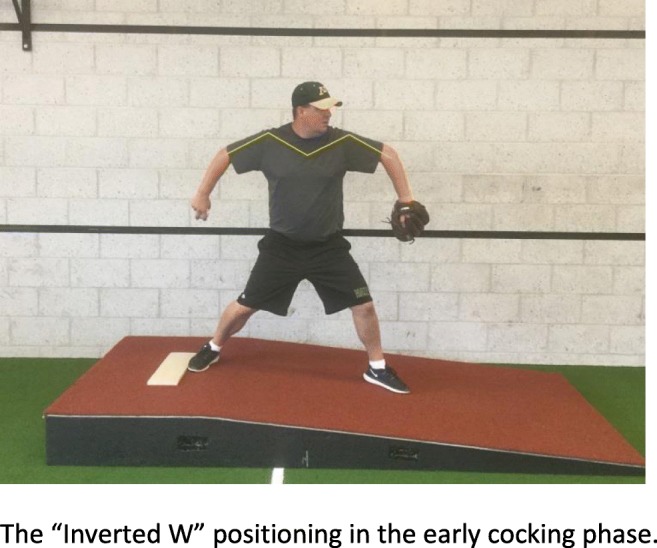
Recent findings: Proper throwing technique is vitally important to prevent injury and it is easier to correct poor mechanics prior to foot strike. Recent findings suggest that the inverted-W position may not lead to an increased risk of injury, but incorrect trunk or pelvis rotation does. Three-dimensional motion analysis in a laboratory setting is most commonly used to evaluate the throwing motion, but it does not allow for assessment in real game scenarios. Wearable monitors allow for this and have proven to reliably assess pitching workload, kinematics, and kinetics. Injuries in youth baseball pitchers have increased along with the trend towards more single sport specialization. To prevent injury, assessment of a pitcher's throwing motion should be performed early to prevent development of poor mechanics. Classically, three-dimensional motion analysis has been used to evaluate throwing mechanics and is considered the gold standard. Newer technology, such as wearable monitors, may provide an alternative and allow for assessment during actual competition.
Keywords: Kinematics of pitching; Kinetics of pitching; Pitching flaws; Pitching motion; Video analysis; Wearables.
Figures
References
-
- Conte S, Camp CL, Dines JS. Injury trends in major league baseball over 18 seasons: 1998-2015. Am J Orthop (Belle Mead NJ) 2016;45(3):116–123. - PubMed
-
- ASMI. UCL surgeries on adolescent baseball pitchers: ASMI; [Available from: http://www.asmi.org/research.php?page=research§ion=UCL. Accessed 18 Dec 2018.
Publication types
LinkOut - more resources
Full Text Sources
Research Materials
