


Treatment of Autosomal Dominant Hypocalcemia Type 1 With the Calcilytic NPSP795 (SHP635)
- PMID: 31063613
- PMCID: PMC6744344
- DOI: 10.1002/jbmr.3747
Treatment of Autosomal Dominant Hypocalcemia Type 1 With the Calcilytic NPSP795 (SHP635)
Abstract
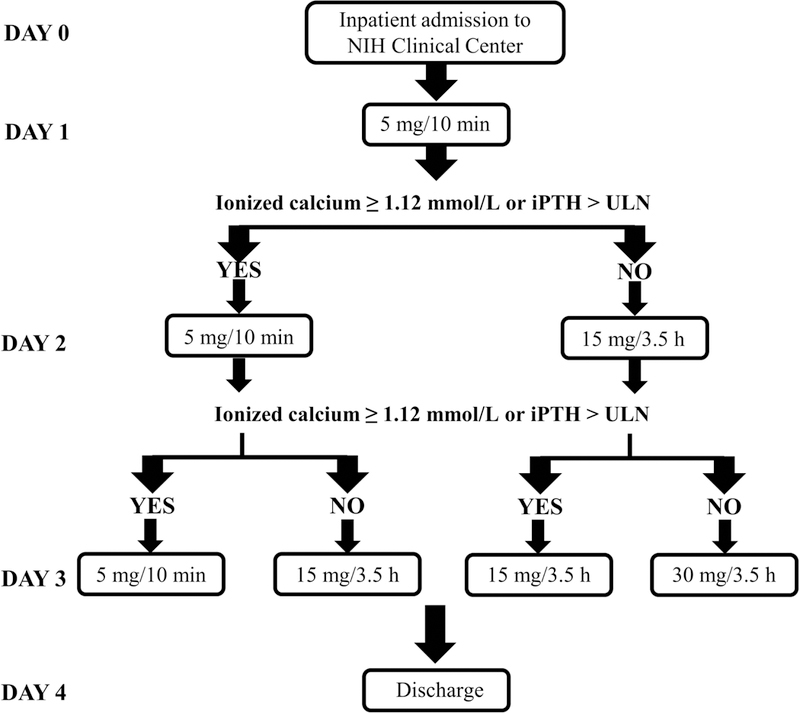
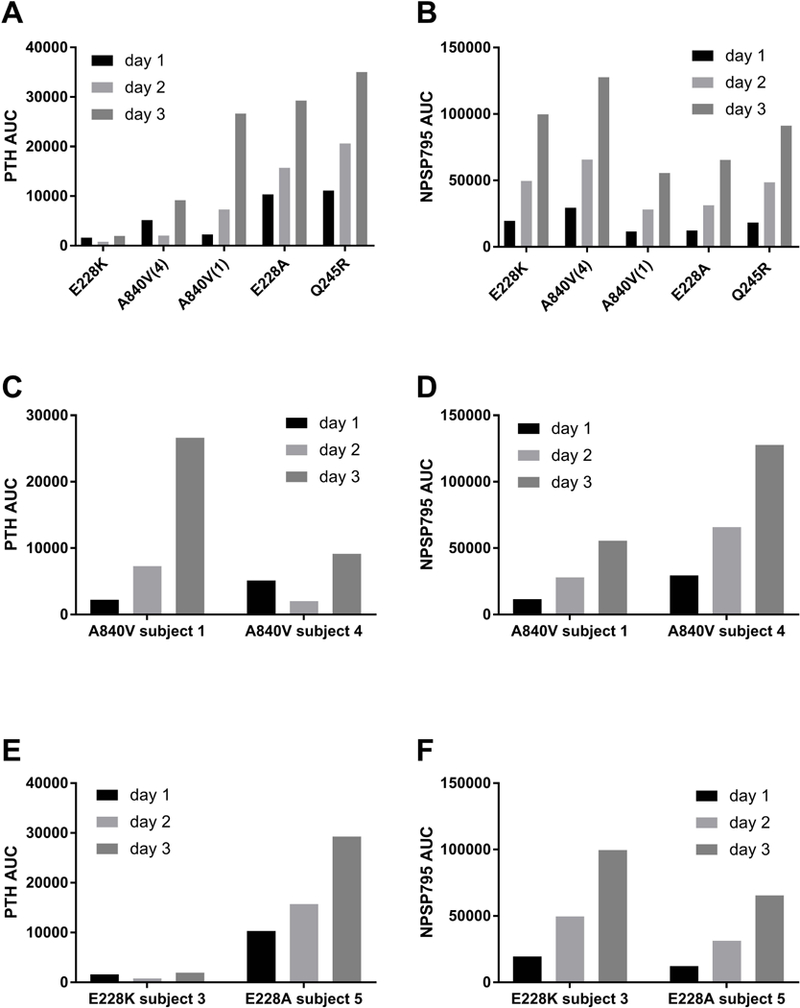
Autosomal dominant hypocalcemia type 1 (ADH1) is a rare form of hypoparathyroidism caused by heterozygous, gain-of-function mutations of the calcium-sensing receptor gene (CAR). Individuals are hypocalcemic with inappropriately low parathyroid hormone (PTH) secretion and relative hypercalciuria. Calcilytics are negative allosteric modulators of the extracellular calcium receptor (CaR) and therefore may have therapeutic benefits in ADH1. Five adults with ADH1 due to four distinct CAR mutations received escalating doses of the calcilytic compound NPSP795 (SHP635) on 3 consecutive days. Pharmacokinetics, pharmacodynamics, efficacy, and safety were assessed. Parallel in vitro testing with subject CaR mutations assessed the effects of NPSP795 on cytoplasmic calcium concentrations (Ca2+i ), and ERK and p38MAPK phosphorylation. These effects were correlated with clinical responses to administration of NPSP795. NPSP795 increased plasma PTH levels in a concentration-dependent manner up to 129% above baseline (p = 0.013) at the highest exposure levels. Fractional excretion of calcium (FECa) trended down but not significantly so. Blood ionized calcium levels remained stable during NPSP795 infusion despite fasting, no calcitriol supplementation, and little calcium supplementation. NPSP795 was generally safe and well-tolerated. There was significant variability in response clinically across genotypes. In vitro, all mutant CaRs were half-maximally activated (EC50 ) at lower concentrations of extracellular calcium (Ca2+o ) compared to wild-type (WT) CaR; NPSP795 exposure increased the EC50 for all CaR activity readouts. However, the in vitro responses to NPSP795 did not correlate with any clinical parameters. NPSP795 increased plasma PTH levels in subjects with ADH1 in a dose-dependent manner, and thus, serves as proof-of-concept that calcilytics could be an effective treatment for ADH1. Albeit all mutations appear to be activating at the CaR, in vitro observations were not predictive of the in vivo phenotype or the response to calcilytics, suggesting that other parameters impact the response to the drug. © 2019 American Society for Bone and Mineral Research.
Keywords: CALCILYTIC; CALCIUM-SENSING RECEPTOR; HYPOCALCEMIA; HYPOPARATHYROIDISM; PTH.
© 2019 American Society for Bone and Mineral Research.
Figures

References
-
- Pearce SH, Williamson C, Kifor O, Bai M, Coulthard MG, Davies M, et al. A familial syndrome of hypocalcemia with hypercalciuria due to mutations in the calcium-sensing receptor. N Engl J Med. October 10 1996;335(15):1115–22. - PubMed
-
- Baron J, Winer KK, Yanovski JA, Cunningham AW, Laue L, Zimmerman D, et al. Mutations in the Ca(2+)-sensing receptor gene cause autosomal dominant and sporadic hypoparathyroidism. Hum Mol Genet. May 1996;5(5):601–6. - PubMed
-
- Brown EM, Gamba G, Riccardi D, Lombardi M, Butters R, Kifor O, et al. Cloning and characterization of an extracellular Ca(2+)-sensing receptor from bovine parathyroid. Nature. December 9 1993;366(6455):575–80. - PubMed
-
- Nemeth EF, Scarpa A. Rapid mobilization of cellular Ca2+ in bovine parathyroid cells evoked by extracellular divalent cations. Evidence for a cell surface calcium receptor. J Biol Chem. April 15 1987;262(11):5188–96. - PubMed
-
- Hebert SC, Brown EM, Harris HW. Role of the Ca(2+)-sensing receptor in divalent mineral ion homeostasis. J Exp Biol. January 1997;200(Pt 2):295–302. - PubMed
Publication types
MeSH terms
Substances
Supplementary concepts
Grants and funding
LinkOut - more resources
Full Text Sources
Other Literature Sources
Medical
Miscellaneous
