Otitis Externa
- PMID: 31064650
- PMCID: PMC6522672
- DOI: 10.3238/arztebl.2019.0224
Otitis Externa
Abstract
Background: Otitis externa has a lifetime prevalence of 10% and can arise in acute, chronic, and necrotizing forms.
Methods: This review is based on publications retrieved by a selective search of the pertinent literature.
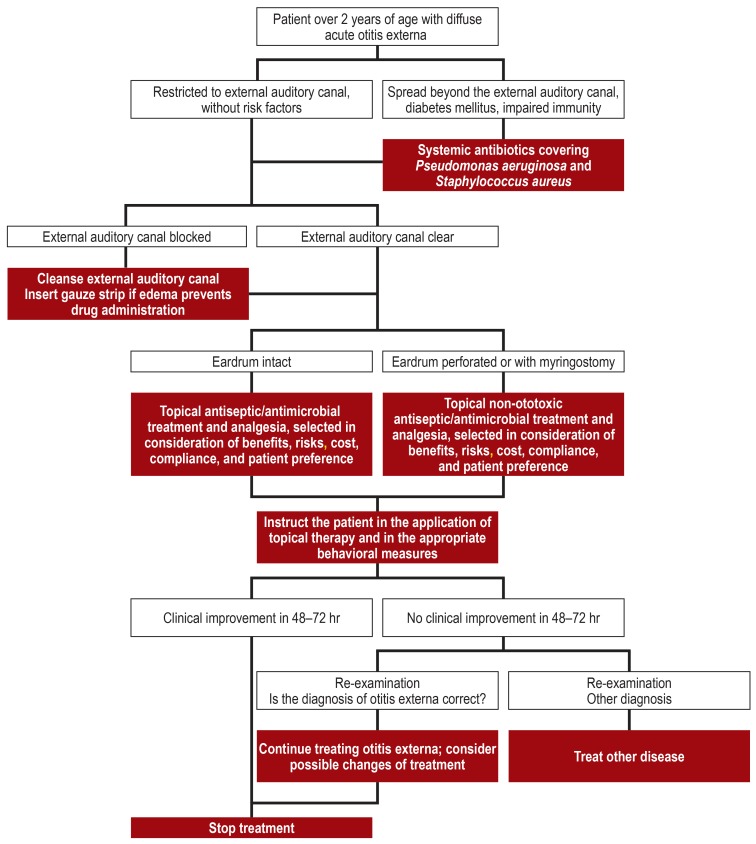
Results: The treatment of acute otitis media consists of anal- gesia, cleansing of the external auditory canal, and the appli- cation of antiseptic and antimicrobial agents. Local antibiotic and corticosteroid preparations have been found useful, but there have been no large-scale randomized controlled trials of their use. Topical antimicrobial treatments lead to a higher cure rate than placebo, and corticosteroid preparations lessen swelling, erythema, and secretions. Oral antibiotics are indi- cated if the infection has spread beyond the ear canal or in patients with poorly controlled diabetes mellitus or immuno- suppression. Chronic otitis externa is often due to an under- lying skin disease. Malignant otitis externa, a destructive infection of the external auditory canal in which there is also osteomyelitis of the petrous bone, arises mainly in elderly diabetic or immunosuppressed patients and can be life- threatening.
Conclusion: With correct assessment of the different types of otitis externa, rapidly effective targeted treatment can be initi- ated, so that complications will be avoided and fewer cases will progress to chronic disease.
Figures
References
-
- Leitlinie der Deutschen Gesellschaft für Allgemeinmedizin und Familienmedizin (DEGAM) Ohrenschmerzen. www.awmf.org/uploads/tx_szleitlinien/053-009l_S2k_Ohrenschmerzen_2014-12... (last accessed on 25 January 2019)
-
- Neher A, Nagl M, Scholtz AW. Otitis externa. HNO. 2008;56:1067–1080. - PubMed
-
- Stroman DW, Roland PS, Dohar J, Burt W. Microbiology of normal external auditory canal. Laryngoscope. 2001;111:2054–2059. - PubMed
-
- Raza SA, Denholm SW, Wong JC. An audit of the management of otitis externa in an ENT casualty clinic. J Laryngol Otol. 1995;109:130–133. - PubMed
Publication types
MeSH terms
Substances
LinkOut - more resources
Full Text Sources