


Variability in snake skin microbial assemblages across spatial scales and disease states
- PMID: 31065028
- PMCID: PMC6776063
- DOI: 10.1038/s41396-019-0416-x
Variability in snake skin microbial assemblages across spatial scales and disease states
Abstract
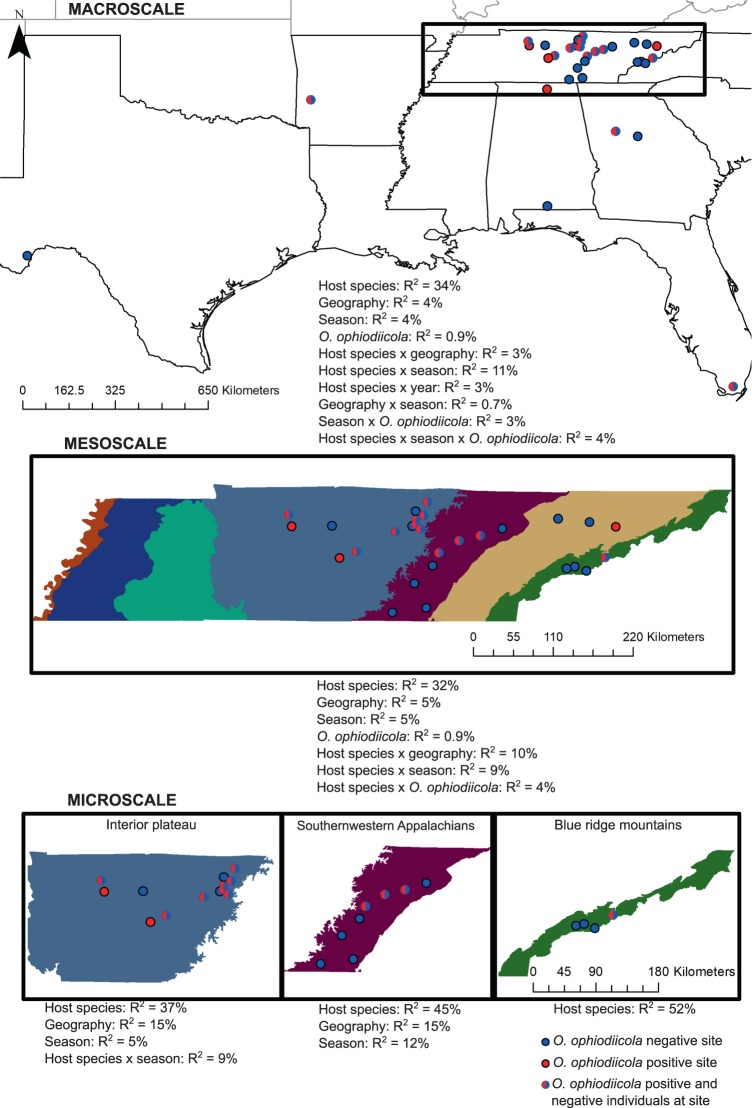
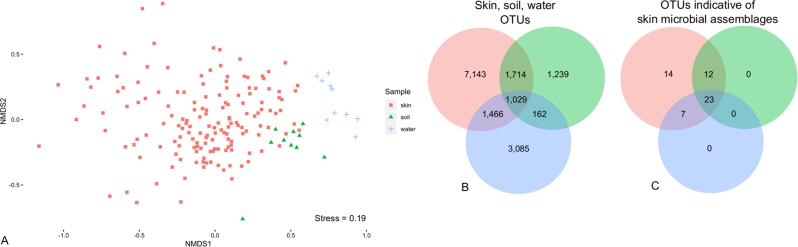
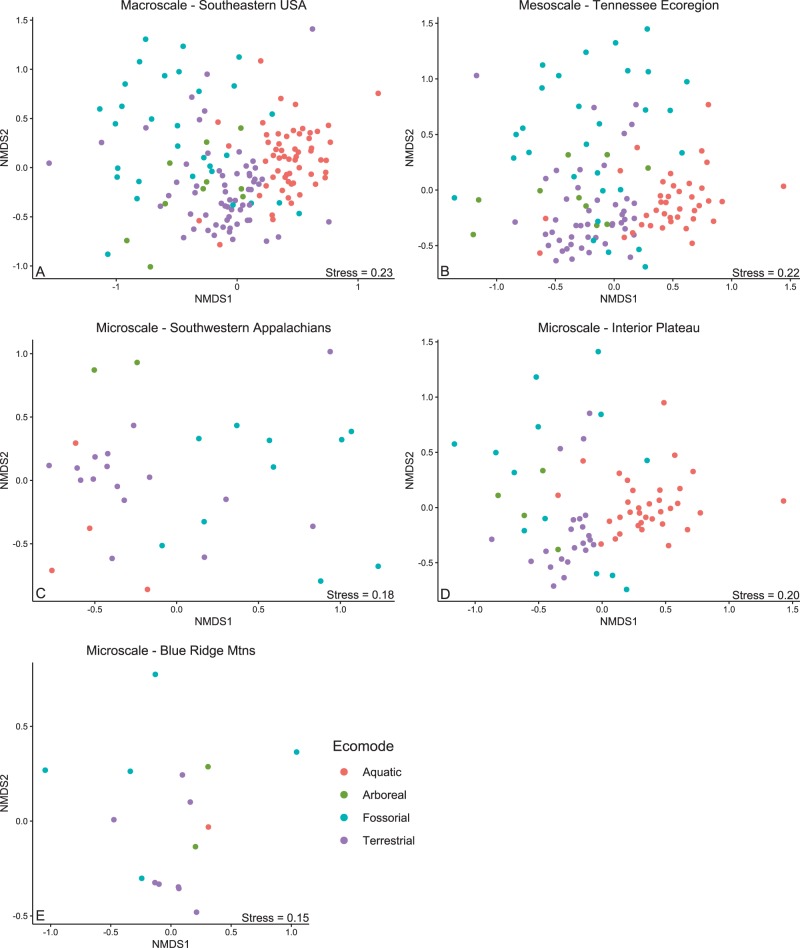
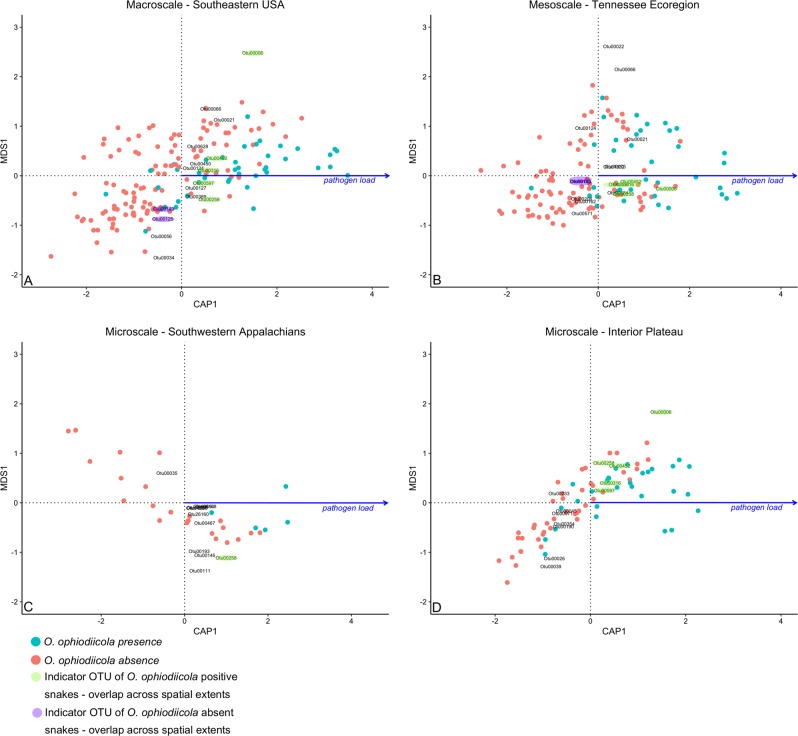
Understanding how biological patterns translate into functional processes across different scales is a central question in ecology. Within a spatial context, extent is used to describe the overall geographic area of a study, whereas grain describes the overall unit of observation. This study aimed to characterize the snake skin microbiota (grain) and to determine host-microbial assemblage-pathogen effects across spatial extents within the Southern United States. The causative agent of snake fungal disease, Ophidiomyces ophiodiicola, is a fungal pathogen threatening snake populations. We hypothesized that the skin microbial assemblage of snakes differs from its surrounding environment, by host species, spatial scale, season, and in the presence of O. ophiodiicola. We collected snake skin swabs, soil samples, and water samples across six states in the Southern United States (macroscale extent), four Tennessee ecoregions (mesoscale extent), and at multiple sites within each Tennessee ecoregion (microscale extent). These samples were subjected to DNA extraction and quantitative PCR to determine the presence/absence of O. ophiodiicola. High-throughput sequencing was also utilized to characterize the microbial communities. We concluded that the snake skin microbial assemblage was partially distinct from environmental microbial communities. Snake host species was strongly predictive of the skin microbiota at macro-, meso-, and microscale spatial extents; however, the effect was variable across geographic space and season. Lastly, the presence of the fungal pathogen O. ophiodiicola is predictive of skin microbial assemblages across macro- and meso-spatial extents, and particular bacterial taxa associate with O. ophiodiicola pathogen load. Our results highlight the importance of scale regarding wildlife host-pathogen-microbial assemblage interactions.
Conflict of interest statement
The authors declare that they have no conflict of interest.
Figures
References
-
- Wiens J. Spatial scaling in ecology. Funct Ecol. 1989;3:385–97. doi: 10.2307/2389612. - DOI
-
- Levin S. The problem of pattern and scale in ecology: The Robert H. MacArthur Award Lecture. Ecology. 1992;73:1943–67. doi: 10.2307/1941447. - DOI
-
- Hopkins M, Thurman C. The geographic structure of morphological variation in eight species of fiddler crabs (Ocypodidae: genus Uca) from the eastern United States and Mexico. Biol Jour of the Linn Soc. 2010;100:248–70. doi: 10.1111/j.1095-8312.2010.01402.x. - DOI
Publication types
MeSH terms
LinkOut - more resources
Full Text Sources
Medical
