


Colorectal Peritoneal Metastases: A Systematic Review of Current and Emerging Trends in Clinical and Translational Research
- PMID: 31065262
- PMCID: PMC6466888
- DOI: 10.1155/2019/5180895
Colorectal Peritoneal Metastases: A Systematic Review of Current and Emerging Trends in Clinical and Translational Research
Abstract
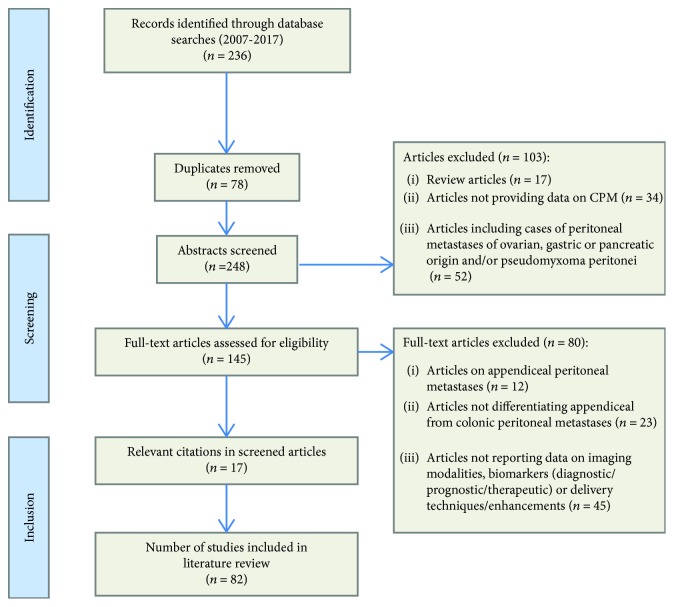
Colorectal peritoneal metastases (CPM) are associated with abbreviated survival and significantly impaired quality of life. In patients with CPM, radical multimodality treatment consisting of cytoreductive surgery (CRS) combined with hyperthermic intraperitoneal chemotherapy (HIPEC) has demonstrated oncological superiority over systemic chemotherapy alone. In highly selected patients undergoing CRS + HIPEC, overall survival of over 60% has been reported in some series. These are patients in whom the disease burden is limited and where the diagnosis is made at an early stage in the disease course. Early diagnosis and a deeper understanding of the biological mechanisms that regulate CPM are critical to refining patient selection for radical treatment, personalising therapeutic approaches, enhancing prognostication, and ultimately improving long-term survivorship. In the present study, we outline three broad themes which represent critical future research targets in CPM: (1) enhanced radiological strategies for early detection and staging; (2) identification and validation of translational biomarkers for diagnostic, prognostic, and therapeutic deployment; and (3) development of optimized approaches for surgical cytoreduction as well as more precise strategies for intraperitoneal drug selection and delivery. Herein, we provide a contemporary narrative review of the state of the art in these three areas. A systematic review in accordance with PRISMA guidelines was undertaken on all English language studies published between 2007 and 2017. In vitro and animal model studies were deemed eligible for inclusion in the sections pertaining to biomarkers and therapeutic optimisation, as these areas of research currently remain in the early stages of development. Acquired data were then divided into hierarchical thematic categories (imaging modalities, translational biomarkers (diagnostic/prognostic/therapeutic), and delivery techniques) and subcategories. An interactive sunburst figure is provided for intuitive interrogation of the CPM research landscape.
Figures

References
Publication types
LinkOut - more resources
Full Text Sources
