


Multiple antibiotic resistance as a risk factor for mortality and prolonged hospital stay: A cohort study among neonatal intensive care patients with hospital-acquired infections caused by gram-negative bacteria in Vietnam
- PMID: 31067232
- PMCID: PMC6505890
- DOI: 10.1371/journal.pone.0215666
Multiple antibiotic resistance as a risk factor for mortality and prolonged hospital stay: A cohort study among neonatal intensive care patients with hospital-acquired infections caused by gram-negative bacteria in Vietnam
Abstract
Background: Antibiotic resistance (ABR) is an increasing burden for global health. The prevalence of ABR in Southeast Asia is among the highest worldwide, especially in relation to hospital-acquired infections (HAI) in intensive care units (ICU). However, little is known about morbidity and mortality attributable to ABR in neonates.
Aim: This study aimed to assess mortality and the length of hospitalization attributable to ABR in gram-negative bacteria (GNB) causing HAI in a Vietnamese neonatal ICU (NICU).
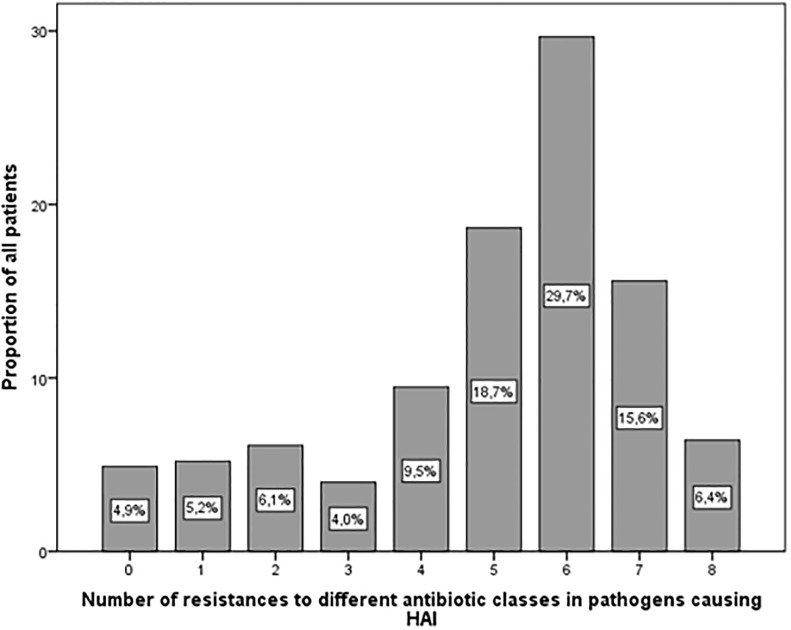
Methods: We conducted a prospective cohort study (n = 296) in a NICU in Hanoi, Vietnam, from March 2016 to October 2017. Patients isolated with HAI caused by GNB were included. The exposure was resistance to multiple antibiotic classes, the two outcomes were mortality and length of hospital stay (LOS). Data were analysed using two regression models, controlling for confounders and effect modifiers such as co-morbidities, time at risk, severity of illness, sex, age, and birthweight.
Results: The overall case fatality rate was 44.3% and the 30 days mortality rate after infection was 31.8%. For every additional resistance to an antibiotic class, the odds of a fatal outcome increased by 27% and LOS increased by 2.1 days. These results were statistically significant (p < 0.05).
Conclusion: ABR was identified as a significant risk factor for adverse outcomes in neonates with HAI. These findings are generally in line with previous research in children and adults. However, heterogeneous study designs, the neglect of important confounders and varying definitions of ABR impair the validity, reliability, and comparability of results.
Conflict of interest statement
The authors have declared that no competing interests exist.
Figures
References
-
- CDC About Antimicrobial Resistance Atlanta: Centers for Disease Control and Prevention.
-
- CDC (2013) Antibiotic resistance threats in the United States. In: Prevention CfDCa, editor. Atlanta.
-
- Paphitou NI (2013) Antimicrobial resistance: action to combat the rising microbial challenges. Int J Antimicrob Agents 42 Suppl: S25–28. - PubMed
-
- Kollef MH, Fraser VJ (2001) Antibiotic resistance in the intensive care unit. Ann Intern Med 134: 298–314. - PubMed
