Can Exercise-Induced Modulation of the Tumor Physiologic Microenvironment Improve Antitumor Immunity?
- PMID: 31068341
- PMCID: PMC7474542
- DOI: 10.1158/0008-5472.CAN-18-2468
Can Exercise-Induced Modulation of the Tumor Physiologic Microenvironment Improve Antitumor Immunity?
Abstract
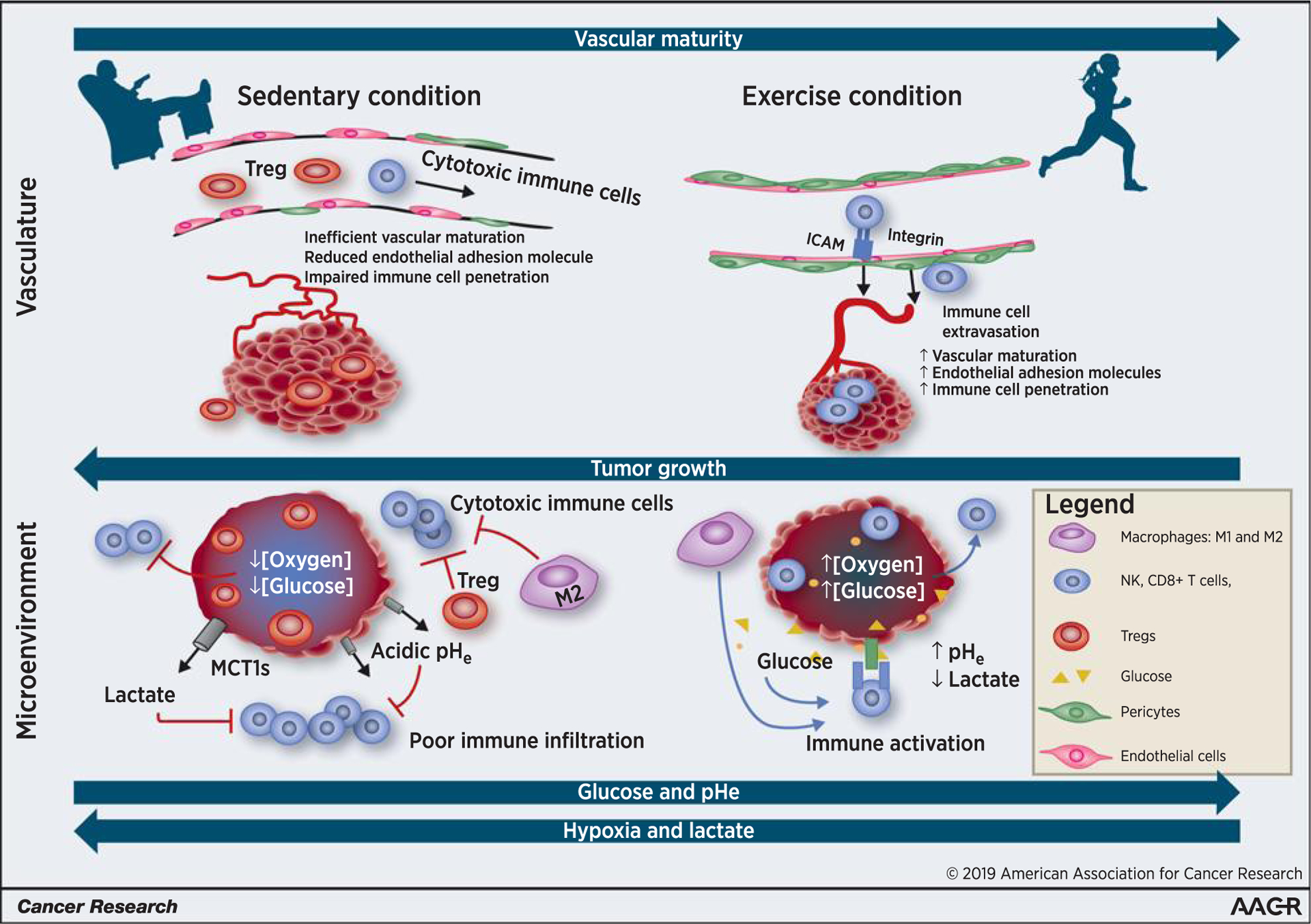
The immune system plays an important role in controlling cancer growth. However, cancers evolve to evade immune detection. Immune tolerance and active immune suppression results in unchecked cancer growth and progression. A major contributor to immune tolerance is the tumor physiologic microenvironment, which includes hypoxia, hypoglucosis, lactosis, and reduced pH. Preclinical and human studies suggest that exercise elicits mobilization of leukocytes into circulation (also known as "exercise-induced leukocytosis"), especially cytotoxic T cells and natural killer cells. However, the tumor physiologic microenvironment presents a significant barrier for these cells to enter the tumor and, once there, properly function. We hypothesize that the effect of exercise on the immune system's ability to control cancer growth is linked to how exercise affects the tumor physiologic microenvironment. Normalization of the microenvironment by exercise may promote more efficient innate and adaptive immunity within the tumor. This review summarizes the current literature supporting this hypothesis.
©2019 American Association for Cancer Research.
Conflict of interest statement
Disclosure of Potential Conflicts of Interest
No potential conflicts of interest were disclosed.
Figures
References
-
- Hambrecht R, Wolf A, Gielen S, Linke A, Hofer J, Erbs S, et al. Effect of exercise on coronary endothelial function in patients with coronary artery disease. N Engl J Med 2000;342:454–60. - PubMed
-
- Gammon MD, Schoenberg JB, Britton JA, Kelsey JL, Coates RJ, Brogan D, et al. Recreational physical activity and breast cancer risk among women under age 45 years. Am J Epidemiol 1998;147:273–80. - PubMed
Publication types
MeSH terms
Substances
Grants and funding
LinkOut - more resources
Full Text Sources
Medical
Molecular Biology Databases