Mentoring the next generation of behavioral health scientists to promote health equity
- PMID: 31070422
- PMCID: PMC7577403
- DOI: 10.1037/ort0000415
Mentoring the next generation of behavioral health scientists to promote health equity
Abstract
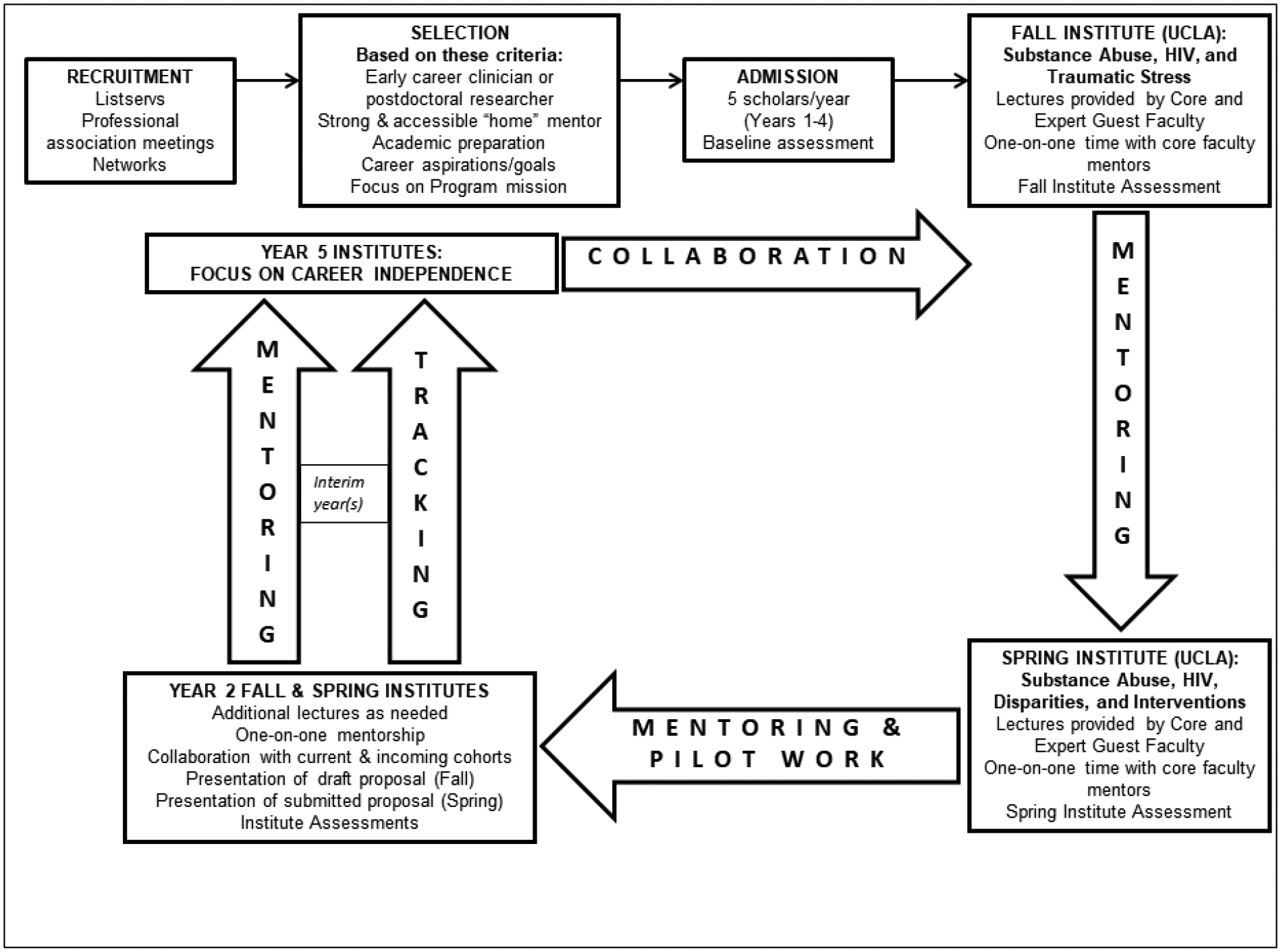
Health inequities and disparities among various racial/ethnic minority, sexual minority, and rural populations are the focus of increasing national efforts. Three health problems disproportionately affecting these populations-HIV/AIDS, substance abuse, and trauma-deserve particular attention because of their harmful effects on health across the life span. To address these problems, our training program, the UCLA HIV/AIDS, Substance Abuse, and Trauma Training Program (HA-STTP), mentors and trains early career behavioral health scientists to conduct research using scientifically sound, culturally collaborative, and population-centered approaches. HA-STTP has been highly successful in training a diverse, productive, nationwide group of scholars. The program provides 2 years of training and mentorship to 20 (5 per year over 4 years) scholars. It is unique in its attention to traumatic stress as a form of dysregulation, particularly as experienced by underserved populations. Furthermore, our training program embraces a uniquely comprehensive, culturally grounded understanding of traumatic stress and its implications for substance abuse and HIV. HA-STTP advances scholars' knowledge of the interconnections among substance abuse, HIV/AIDS, traumatic stress, and health disparities, particularly in underrepresented populations; provides intensive mentorship to support scholars' research interests and career trajectories; capitalizes on a multidisciplinary, multiracial/ethnic network of expert faculty; and evaluates the program's impact on scholars' knowledge and productivity. By fostering the growth of scholars committed to conducting research with underrepresented populations that are disproportionately affected by HIV/AIDS, substance abuse, and traumatic stress, this program enhances nationwide efforts to diminish the prevalence of these problems and improve health and quality of life. (PsycINFO Database Record (c) 2019 APA, all rights reserved).
Figures
References
-
- Abrams DB (2006). Applying transdisciplinary research strategies to understanding and eliminating health disparities. Health Education & Behavior, 33(4), 515–531. - PubMed
-
- Beech BM, Calles-Escandon J, Hairston KG, Langdon MSE, Latham-Sadler BA, & Bell RA (2013). Mentoring programs for underrepresented minority faculty in academic medical centers: a systematic review of the literature. Academic medicine: journal of the Association of American Medical Colleges, 88(4). - PMC - PubMed
-
- Brady K, Back S, & Coffey S (2004). Substance abuse and posttraumatic stress disorder. Current Directions in Psychological Science, 13(5), 206–209.
-
- Brief DJ, Bollinger AR, Vielhauer MJ, Berger-Greenstein JA, Morgan EE, Brady SM, Buondonno LM, & Keane TM (2004). Understanding the interface of HIV, trauma, post-traumatic stress disorder, and substance use and its implications for health outcomes. AIDS Care, 16(Suppl1), S97–S120. - PubMed