Review
. 2018 Dec;56(1):594-611.
doi: 10.1080/13880209.2018.1517185.

Molecular mechanism and research progress on pharmacology of traditional Chinese medicine in liver injury

Affiliations
Review

Molecular mechanism and research progress on pharmacology of traditional Chinese medicine in liver injury

Hong Yang Zhang et al. Pharm Biol. 2018 Dec.

Abstract

Context: Liver disease is a common threat to human health, caused by a variety of factors that damage the liver. Recent studies have shown that active ingredients (for example: flavonoids, saponins, acids, phenols, and alkaloids) from Traditional Chinese Medicine (TCM) can have hepatoprotective benefits, which represents an attractive source of drug discovery for treating liver injury.

Objective: We reviewed recent contributions on the chemically induced liver injury, immunological liver damage, alcoholic liver injury, and drug-induced liver injury, in order to summarize the research progress in molecular mechanism and pharmacology of TCM, and provides a comprehensive overview of new TCM treatment strategies for liver disease.

Materials and methods: Relevant literature was obtained from scientific databases such as Pubmed, Web of Science. and CNKI databases on ethnobotany and ethnomedicines (from January 1980 to the end of May 2018). The experimental studies involving the antihepatic injury role of the active agents from TCM and the underlying mechanisms were identified. The search terms included 'liver injury' or 'hepatic injury', and 'traditional Chinese medicine', or 'herb'.

Results: A number of studies revealed that the active ingredients of TCM exhibit potential therapeutic benefits against liver injury, while the underlying mechanisms appear to contribute to the regulation of inflammation, oxidant stress, and pro-apoptosis signaling pathways.

Discussion and conclusions: The insights provided in this review will help further exploration of botanical drugs in the development of liver injury therapy via study on the effective components of TCM.

Keywords: Herb; drug discovery; hepatic; liver damage.


Figures
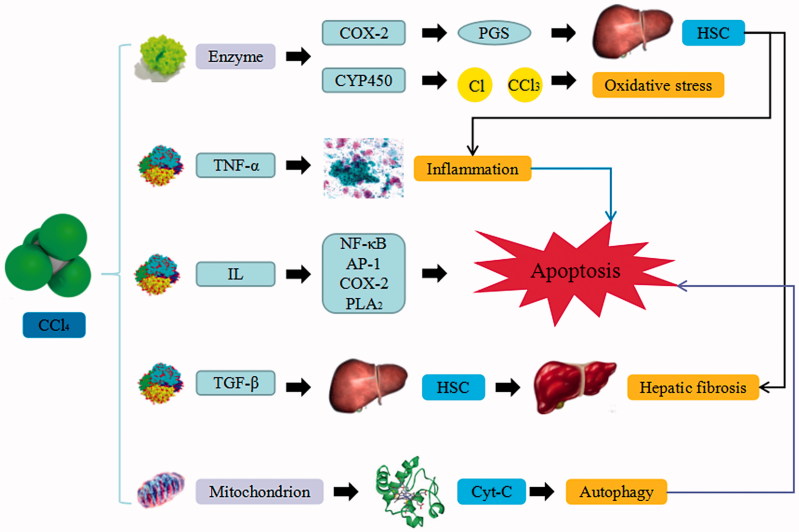
Figure 1.
Figure 1.
CCl4-induced liver injury. CCl4 trigger the continuous development of hepatocyte injury by inducing cell stress via inflammation, macrophages activation, mitochondrion path, and oxidative stress, resulting in apoptosis, hepatic fibrosis, and liver injury. COX-2: epoxide hydrolase; PGs: prostaglandins; HSC: hepatic stellate cells; CYP450: cytochrome P450; TNF-α: tumor necrosis factor α; IL: interleukin; NF-κB: nuclear factor κB; AP-1: activated protein transcription factor 1; PLA2: phosphatase A2; TGF-β: transforming growth factor β; Cyt-C: cytochrome C.
Figure 2.
Figure 2.
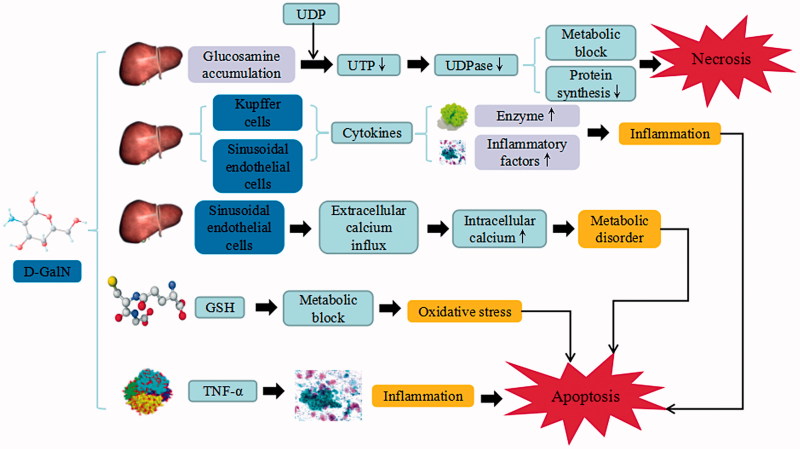
d-GalN-induced liver injury. d-GalN trigger the continuous development of hepatocyte injury by inducing cell stress via inflammation, metabolic disorder, and oxidative stress, resulting in necrosis, apoptosis, autophagy, and liver injury. UDP: uridine diphosphate; UTP: uridine triphosphate; UDPase: UDP-glucose pyrophosphorylase; GSH: glutathione; TNF-α: tumor necrosis factor α.
Figure 3.
Figure 3.
ANIT-induced liver injury. ANIT trigger the continuous development of hepatocyte injury by inducing cell stress via inflammation, hepatotoxicity, cholestatic jaundice, and hyperbilirubinemia, resulting in apoptosis, autophagy, cholestasis, and liver injury. GSH: glutathione; IL: interleukin; MIP-2: macrophage inflammatory protein-2; NADPH: nicotinamide adenine dinucleotide phosphate.
Figure 4.
Figure 4.
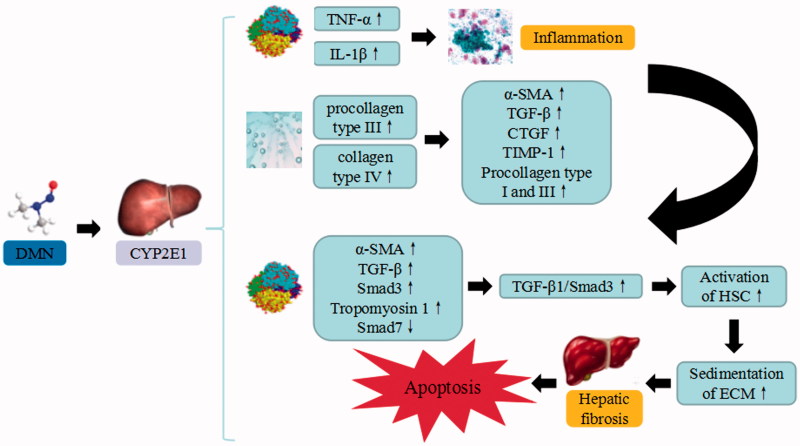
DMN-induced liver injury. DMN trigger the continuous development of hepatocyte injury by inducing cell stress via inflammation, and activation of HSC, resulting in apoptosis, autophagy, sedimentation of ECM, hepatic fibrosis, and liver injury. CYP2EI: cytochrome P2EI; TNF-α: tumor necrosis factor α; IL: interleukin; α-SMA: α smooth muscle actin; TGF-β: transforming growth factor β; CTGF: connective tissue growth factor; TIMP1: tissue inhibitor of metalloproteinases 1; Smad: drosophila mothers against decapentaplegic protein; ECM: extracellular matrix.
Figure 5.
Figure 5.
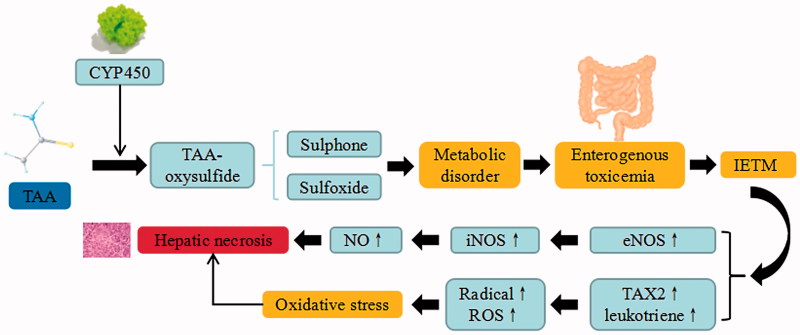
TAA-induced liver injury. TAA trigger the continuous development of hepatocyte injury by inducing cell stress via inflammation, metabolic disorder, enterogenous toxicemia, and oxidative stress, resulting in hepatic necrosis, apoptosis, and liver injury. CYP450: cytochrome P450; IETM: intestinal endotoxemia; iNOS: inducible nitric oxide synthase; eNOS: endothelial nitric oxide synthase; TXA2: thromboxane A2; ROS: reactive oxygen species.
Figure 6.
Figure 6.
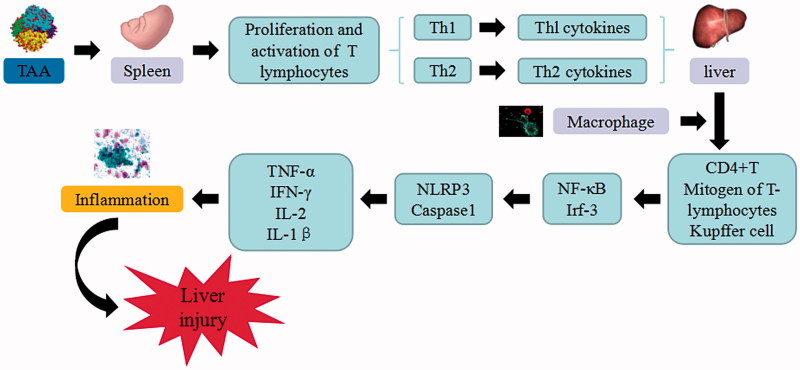
ConA-induced liver injury. ConA triggers the continuous development of hepatocyte injury by inducing cell stress via inflammation and macrophages activation, resulting in hepatic necrosis and liver injury. NF-κB: nuclear factor κB; Irf-3: Interferon regulatory factor -3; NLRP3: NACHT, LRR and PYD domains-containing protein 3; TNF-α: tumor necrosis factor α; IFN-γ: Interferon-γ; IL: interleukin.
Figure 7.
Figure 7.
BCG/LPS-induced liver injury. BCG/LPS trigger the continuous development of hepatocyte injury by inducing cell stress via inflammation and sensitization, resulting in hepatic necrosis and liver injury. TNF-α: tumor necrosis factor α; IL: interleukin.
Figure 8.
Figure 8.
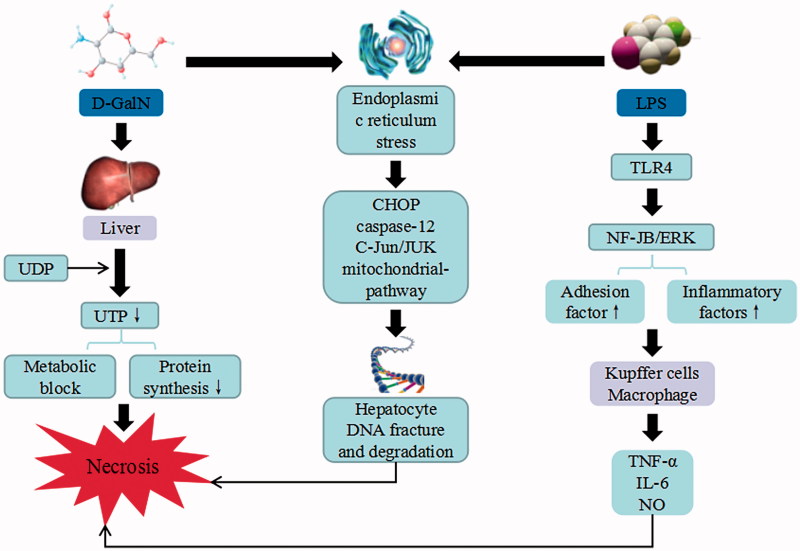
d-GalN/LPS-induced liver injury. d-GalN/LPS triggers the continuous development of hepatocyte injury by inducing cell stress via inflammation, metabolic block, protein synthesis decrease, and hepatocyte DNA fracture and degradation, resulting in hepatic necrosis and liver injury. UDP: uridine diphosphate; UTP: uridine triphosphate; TLR: toll-like receptor; TNF-α: tumor necrosis factor α; IL: interleukin.
Figure 9.
Figure 9.
Alcoholic-induced liver injury. Alcohol triggers the continuous development of hepatocyte injury by inducing cell stress via inflammation, oxidative stress, protein synthesis decrease, and hepatocyte DNA fracture and degradation, resulting in hepatic necrosis, apoptosis, hepatic fibrosis, and liver injury. ADH: alcohol dehydrogenase; ALDH: aldehyde dehydrogenase; CYP2EI: cytochrome P2EI; ROS: reactive oxygen species; Cyt-C: cytochrome C; RIP: receptor-interacting protein; TRADD: tumor necrosis factor receptor-related domain death protein; FADD: fas-associating protein with a novel death domain; TNF-α: tumor necrosis factor α; IL: interleukin; NF-κB: nuclear factor κB.
Figure 10.
Figure 10.
APAP-induced liver injury. APAP trigger the continuous development of hepatocyte injury by inducing cell stress via inflammation, oxidative stress, and JNK pathway, resulting in hepatic necrosis, apoptosis, hepatic fibrosis, and liver injury. CYP450: cytochrome P450; NAPQI: N-acetyl-p-benzoquinonimine; GSH: glutathione; ROS: reactive oxygen species; iNOS: inducible nitric oxide synthase; NF-κB: nuclear factor κB; TNF-α: tumor necrosis factor α.
Figure 11.
Figure 11.
INH/RIF-induced liver injury. INH/RIF trigger the continuous development of hepatocyte injury by inducing cell stress via inflammation, cholestasis, and metabolic disorder, resulting in hepatic necrosis, apoptosis, and liver injury. CYP450: cytochrome P450; PPAR: peroxisome proliferator-activated receptors.

References

    1. Almajwal A, Elsadek MF. 2014. Anti-hepatotoxic prospect of Panax ginseng extract and/or selenium against d-galactosamine-induced liver injury in experimental rats. Prog Nutr. 16:16–24.
    1. Balogun FO, Ashafa AOT. 2016. Antioxidant, hepatoprotective and ameliorative potentials of aqueous leaf extract of Gazania krebsiana (Less.) against carbon tetrachloride (CCl4)-induced liver injury in Wistar rats. Trans R Soc S Afr. 71:145–156.
    1. Bardi DA, Halabi MF, Hassandarvish P, Rouhollahi E, Paydar M, Moghadamtousi SZ, Al-Wajeeh NS, Ablat A, Abdullah NA, Abdulla MA. 2014. Andrographis paniculata leaf extract prevents thioacetamide-induced liver cirrhosis in rats. PLoS One. 9:e109424. - PMC - PubMed
    1. Baskaran UL, Sabina EP. 2015. The food supplement coenzyme Q10 and suppression of antitubercular drug-induced hepatic injury in rats: the role of antioxidant defence system, anti-inflammatory cytokine IL-10. Cell Biol Toxicol. 31:211–219. - PubMed
    1. Chen YR, Chang KT, Tsai MJ, Lee CH, Huang KJ, Cheng H, Ho YP, Chen JC, Yang HH, Weng CF. 2014. Antrodia cinnamomea profoundly exalted the reversion of activated hepatic stellate cells by the alteration of cellular proteins. Food Chem Toxicol. 69:150–162. - PubMed

MeSH terms

Substances