


Increase in Hepatitis A Virus Infections - United States, 2013-2018
- PMID: 31071072
- PMCID: PMC6542191
- DOI: 10.15585/mmwr.mm6818a2
Increase in Hepatitis A Virus Infections - United States, 2013-2018
Abstract
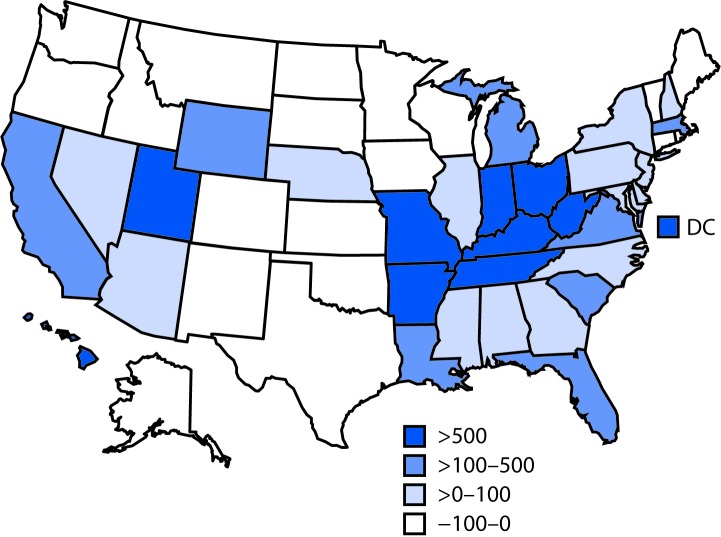
Hepatitis A virus (HAV) is primarily transmitted fecal-orally after close contact with an infected person (1); it is the most common cause of viral hepatitis worldwide, typically causing acute and self-limited symptoms, although rarely liver failure and death can occur (1). Rates of hepatitis A had declined by approximately 95% during 1996-2011; however, during 2016-2018, CDC received approximately 15,000 reports of HAV infections from U.S. states and territories, indicating a recent increase in transmission (2,3). Since 2017, the vast majority of these reports were related to multiple outbreaks of infections among persons reporting drug use or homelessness (4). In addition, increases of HAV infections have also occurred among men who have sex with men (MSM) and, to a much lesser degree, in association with consumption of imported HAV-contaminated food (5,6). Overall, reports of hepatitis A cases increased 294% during 2016-2018 compared with 2013-2015. During 2016-2018, CDC tested 4,282 specimens, of which 3,877 (91%) had detectable HAV RNA; 565 (15%), 3,255 (84%), and 57 (<1%) of these specimens were genotype IA, IB, or IIIA, respectively. Adherence to the Advisory Committee on Immunization Practices (ACIP) recommendations to vaccinate populations at risk can help control the current increases and prevent future outbreaks of hepatitis A in the United States (7).
Conflict of interest statement
All authors have completed and submitted the ICMJE form for disclosure of potential conflicts of interest. No potential conflicts of interest were disclosed.
Figures
References
-
- CDC. Viral hepatitis surveillance, United States 2016. Atlanta, GA: US Department of Health and Human Services, CDC; 2017. https://www.cdc.gov/hepatitis/statistics/2016surveillance/pdfs/2016HepSu...
-
- CDC. National notifiable infectious diseases: weekly tables, 2018. Atlanta, GA: US Department of Health and Human Services, CDC; 2018. https://wonder.cdc.gov/nndss/static/2018/52/2018-52-table2H-H.pdf
-
- Viray MA, Hofmeister MG, Johnston DI, et al. Public health investigation and response to a hepatitis A outbreak from imported scallops consumed raw—Hawaii, 2016. Epidemiol Infect 2018;147:1–8. - PubMed
MeSH terms
LinkOut - more resources
Full Text Sources
Medical
