


Intercropping of marine finfish in shrimp ponds: A maiden feasibility study
- PMID: 31071183
- PMCID: PMC6508718
- DOI: 10.1371/journal.pone.0216648
Intercropping of marine finfish in shrimp ponds: A maiden feasibility study
Abstract
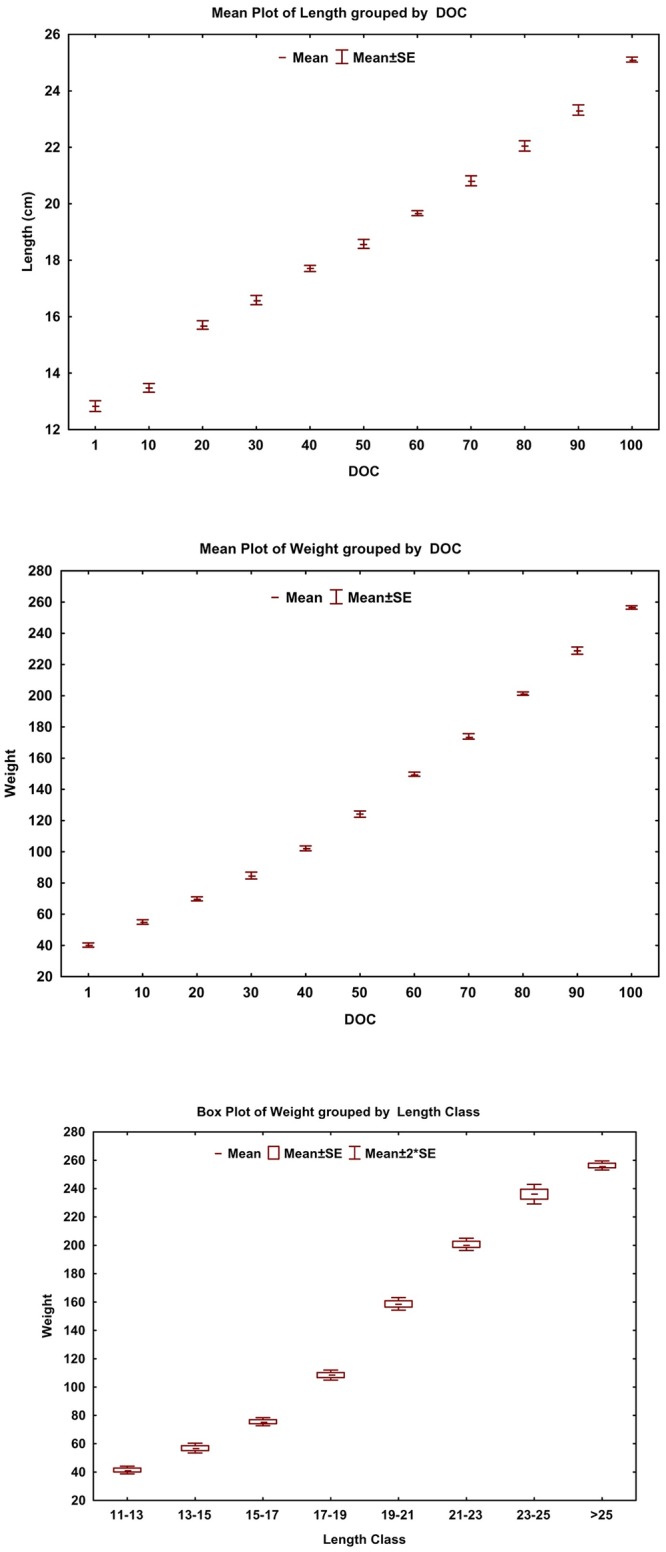
Diversification of shrimp farming with marine finfish in a farmer participatory research model was attempted. The study is intended to find an economically viable finfish culture during the fallow period of shrimp farms. The Silver pompano, Trachinotus blochi iintercropped with Pacific white shrimp, Litopenaeus vannamei culture in coastal shrimp ponds was assessed for growth, survival, and economic viability. During the grow-out period of 100 days, fishes grew from 40.23 ± 1.40 g to 256.56 ± 1.08 g in weight and 12.83 ± 0.19 cm to 25.11 ± 0.09 cm in length. The daily weight gain (DWG) and daily length gain (DLG) were 2.16 g/day and 0.12 cm/day, respectively. Relative growth rate (RGR) and specific growth rate (SGR) recorded for weight was 537.80% in 100 days and 1.85% per day, respectively. Pompano has exhibited its sturdiness and adaptability to the land-based culture system as evidenced by an overall survival percentage of 89.8% including nursery and grow-out phases. The realized feed conversion ratio was 1.94. The culture period of 100 days is found to be enough to attain a desirable harvest size of 250 g. The projected production potential of the experimental demonstration farm of 4500 m2 water spread area for culture was 16.2 tonnes/cycle with a benefit-cost ratio (BCR) of 1.34 over operational cost. The present participatory trial empirically proved the viability of Silver pompano as an intercrop in coastal shrimp ponds. Thus, the introduction of Pompano in shrimp ponds is recommended and can be promoted for sustainable intercropping with shrimp farming along the Indian coast for improving people's livelihoods.
Conflict of interest statement
The authors have declared that no competing interests exist.
Figures




References
-
- Harvey B, Soto D, Carolsfeld J, Beveridge M, Bartley DM (2017) Planning for aquaculture diversification: the importance of climate change and other drivers. FAO, Rome.
-
- MPEDA (2018) India’s seafood export Cross US$ 7 billion for the first time and India’s seafood exports register 13% growth in Apr 2017-Jan 2018. Retrieved from http://mpeda.gov.in/MPEDA/press_releases.php#.
-
- Sinha A, Datta S, Mahapatra BK (2012) Diversification in Aquaculture. Narendra Publishing House.
-
- NFDB (2018) Guidelines-Centrally sponsored scheme (CSS) on Blue revolution: integrated development and management of fisheries National Fisheries Development Board, Ministry of Agriculture and Farmers’ welfare: 1–54.
-
- Gopakumar G, Abdul Nazar AK, Jayakumar R, Tamilmani G, Kalidas C, et al. (2012) Broodstock development through regulation of photoperiod and controlled breeding of silver pompano, Trachinotusblochii (Lacepede, 1801) in India. Indian Journal of Fisheries 59 (1): 53–57.
Publication types
MeSH terms
Associated data
LinkOut - more resources
Full Text Sources
Other Literature Sources
