


Improvement in anxiety and depression symptoms following cognitive behavior therapy for pediatric obsessive compulsive disorder
- PMID: 31075706
- PMCID: PMC7197731
- DOI: 10.1016/j.psychres.2019.04.021
Improvement in anxiety and depression symptoms following cognitive behavior therapy for pediatric obsessive compulsive disorder
Abstract
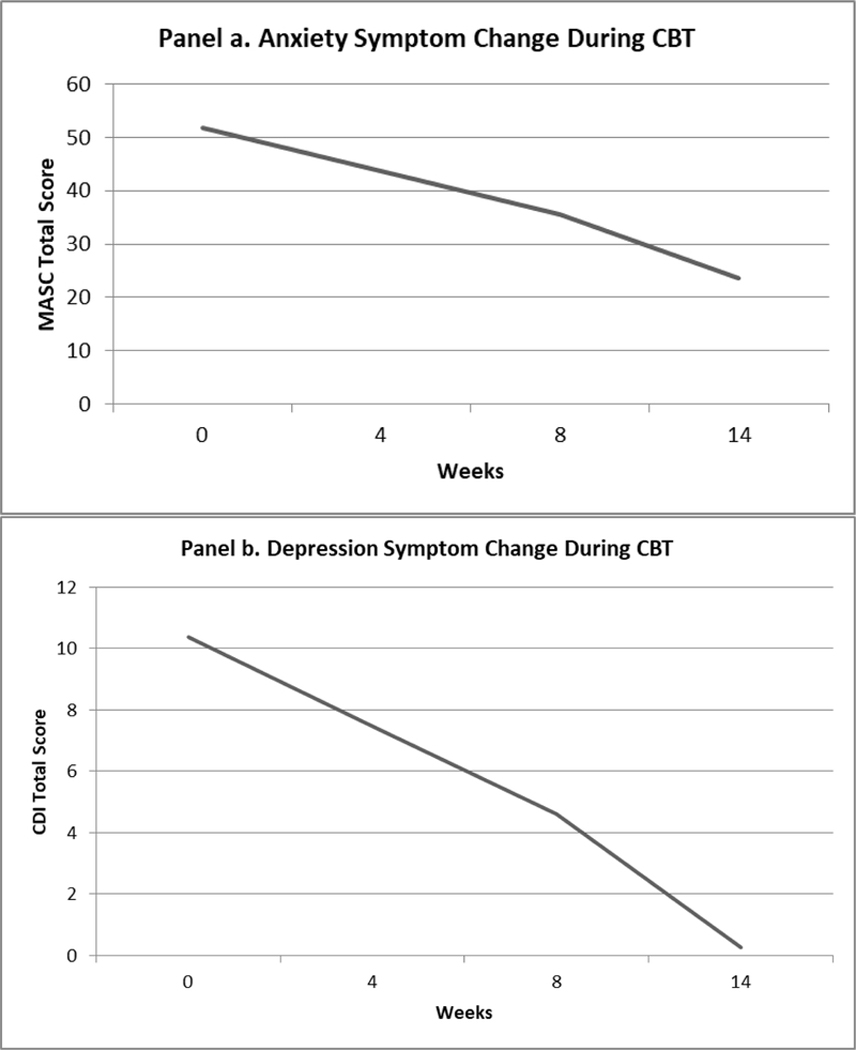
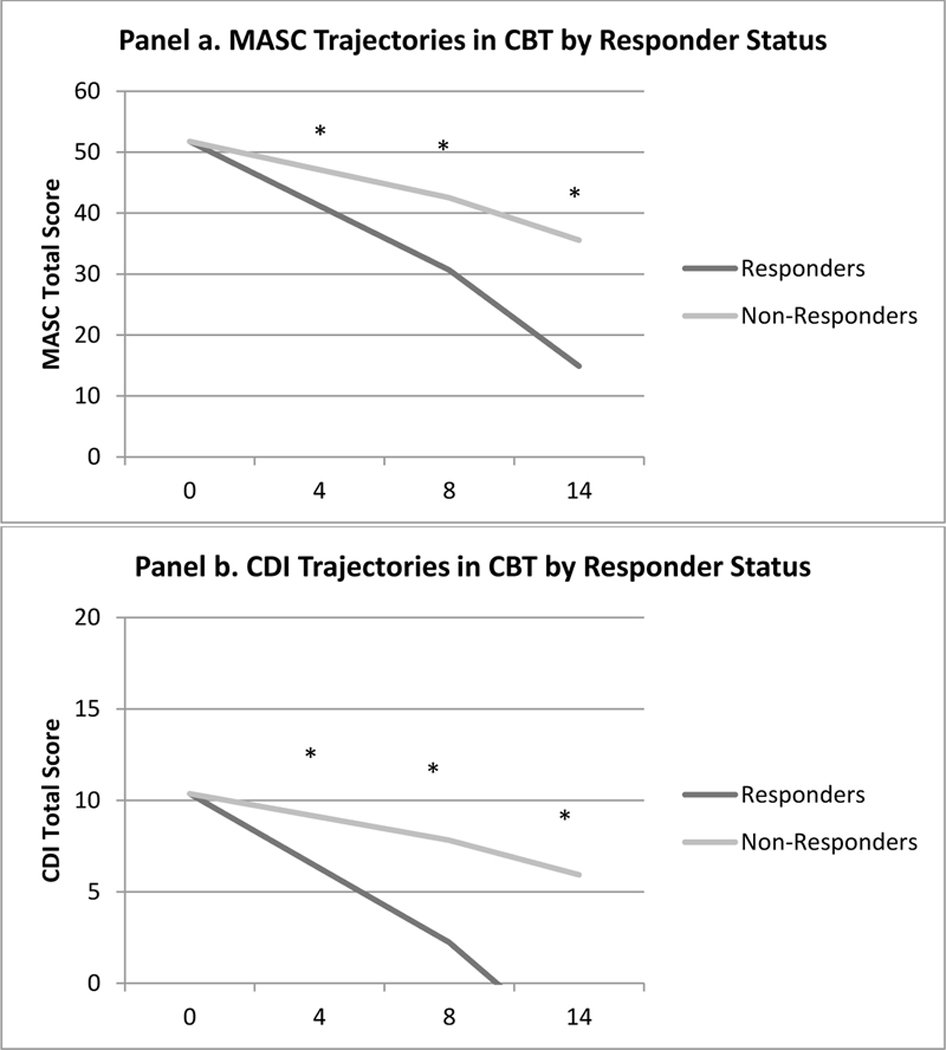
Pediatric obsessive-compulsive disorder (OCD) co-occurs frequently with other mental health conditions, adding to the burden of disease and complexity of treatment. Cognitive behavioral therapy (CBT) is efficacious for both OCD and two of its most common comorbid conditions, anxiety and depression. Therefore, treating OCD may yield secondary benefits for anxiety and depressive symptomatology. This study examined whether anxiety and/or depression symptoms declined over the course of OCD treatment and, if so, whether improvements were secondary to reductions in OCD severity, impairment, and/or global treatment response. The sample consisted of 137 youths who received 12 sessions of manualized CBT and were assessed by independent evaluators. Mixed models analysis indicated that youth-reported anxiety and depression symptoms decreased in a linear fashion over the course of CBT, however these changes were not linked to specific improvements in OCD severity or impairment but to global ratings of treatment response. Results indicate that for youth with OCD, CBT may offer benefit for secondary anxiety and depression symptoms distinct from changes in primary symptoms. Understanding the mechanisms underlying carryover in CBT techniques is important for furthering transdiagnostic and/or treatment-sequencing strategies to address co-occurring anxiety and depression symptoms in pediatric OCD.
Keywords: Adolescent; Anxiety; Child; Depression; Obsessive-compulsive disorder.
Copyright © 2019. Published by Elsevier B.V.
Figures
References
-
- Albano AM, Comer JS, Compton SN, Piacentini J, Kendall PC, Birmaher B, Walkup JT, Ginsburg GS, Rynn MA, McCracken J, Keeton C, 2018. Secondary outcomes from the child/adolescent anxiety multimodal study: Implications for clinical practice. Evid. Based Pract. Child Adolesc. Ment. Health 3(1), 30–41. doi: 10.1080/23794925.2017.1399485 - DOI - PMC - PubMed
