


XBP1 inhibits mesangial cell apoptosis in response to oxidative stress via the PTEN/AKT pathway in diabetic nephropathy
- PMID: 31077568
- PMCID: PMC6609578
- DOI: 10.1002/2211-5463.12655
XBP1 inhibits mesangial cell apoptosis in response to oxidative stress via the PTEN/AKT pathway in diabetic nephropathy
Retraction in
-
RETRACTION: XBP1 Inhibits Mesangial Cell Apoptosis in Response to Oxidative Stress via the PTEN/AKT Pathway in Diabetic Nephropathy.FEBS Open Bio. 2025 Mar;15(3):524. doi: 10.1002/2211-5463.13947. Epub 2024 Dec 6. FEBS Open Bio. 2025. PMID: 39643937 Free PMC article.
Abstract
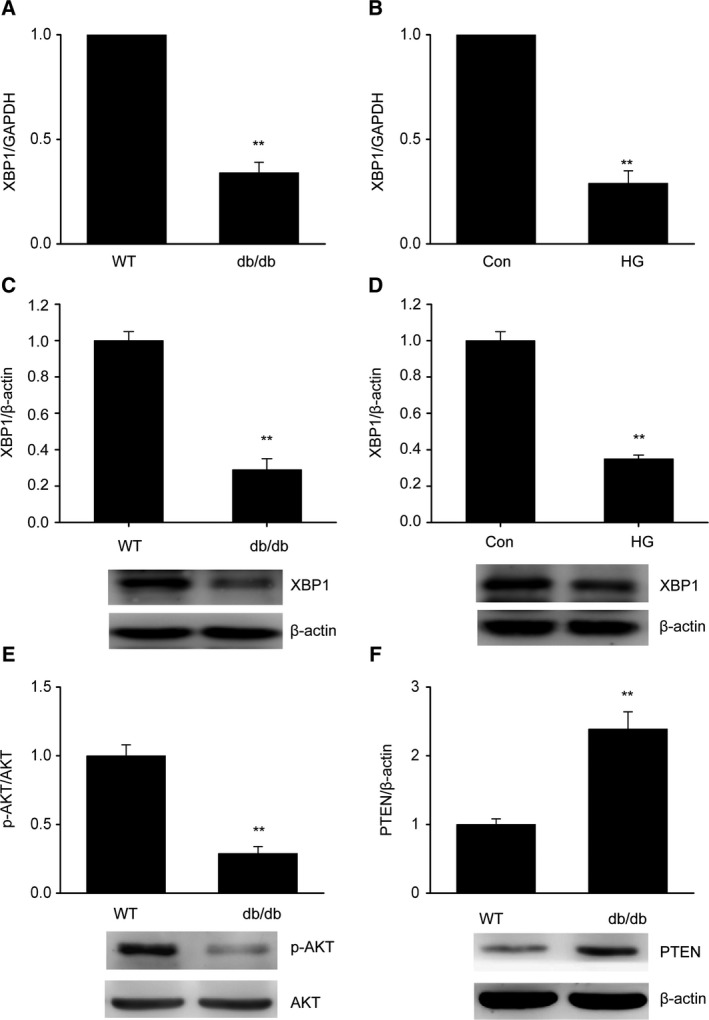
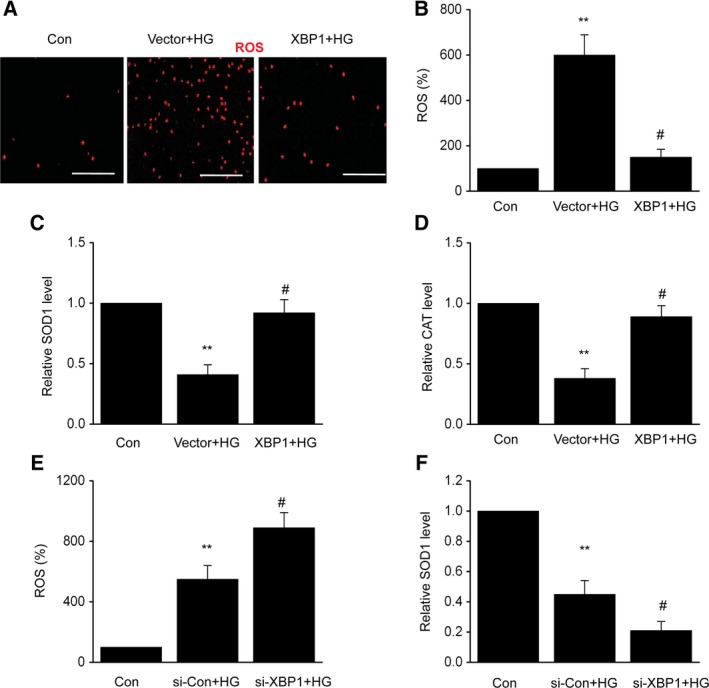
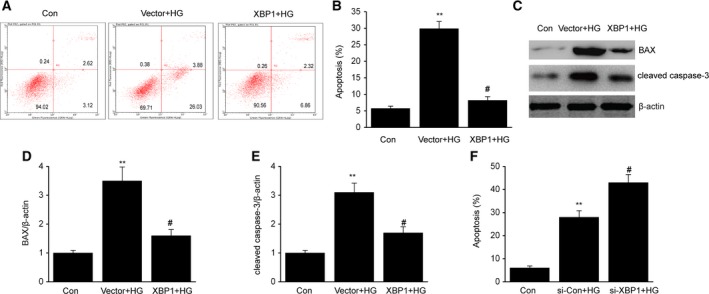
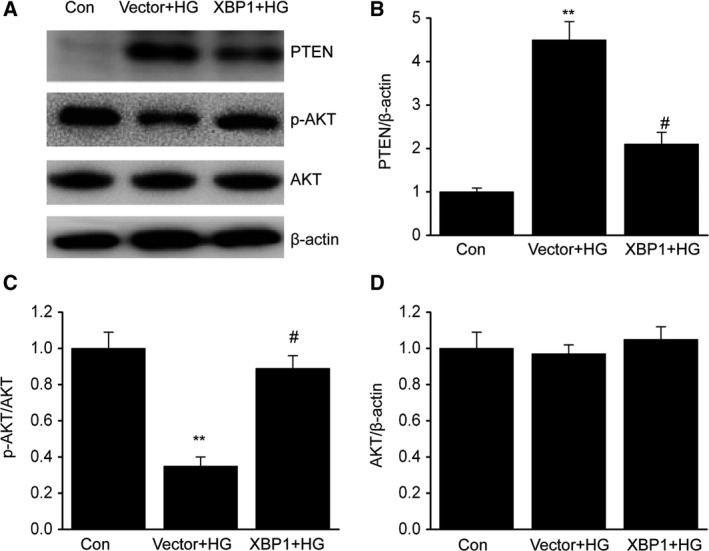
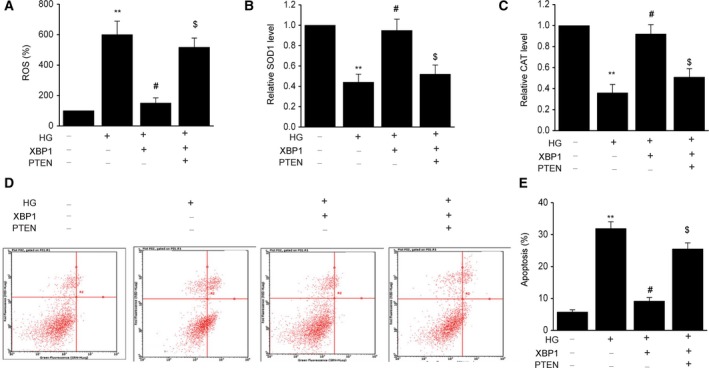
Diabetic nephropathy (DN) is a complication of diabetes mellitus (DM) that frequently results in renal disease, and is characterized by a variety of symptoms, including albuminuria. It has been shown that apoptosis of glomerular mesangial cells (MCs) can aggravate albuminuria and contribute to the development of diabetic glomerulosclerosis. Hence, determination of the mechanisms leading to MC apoptosis may help us gain insights into the pathogenesis of DN. As our understanding of the role of high glucose (HG) in MC apoptosis remains elusive, we explored the interplay between X-box binding protein 1 (XBP1) and MC apoptosis in this study. XBP1 was observed to be downregulated both in vivo and in vitro. Treatment of XBP1-overexpressing cells with HG resulted in a decrease of reactive oxygen species (ROS) and a suppression of cell apoptosis, concomitant with decreases in cleaved caspase-3 and Bax. Subsequent analyses demonstrated that XBP1 overexpression inhibited the expression of phosphatase and tensin homolog deleted on chromosome ten (PTEN) and enhanced the activation of AKT in MCs exposed to HG. In addition, XBP1-induced injuries in MC were reversed by overexpression of PTEN, and XBP1 inhibited apoptosis, which was mediated by the activated PTEN/AKT signaling pathway. Thus, our data indicate that XBP1 can activate the PTEN/AKT signaling pathway, thereby alleviating oxidative stress caused by HG or MC apoptosis. These findings suggest that XBP1 may have potential in the development of treatment methods for DN.
Keywords: PTEN/AKT pathway; XBP1; apoptosis; mesangial cell; oxidative stress.
© 2019 The Authors. Published by FEBS Press and John Wiley & Sons Ltd.
Conflict of interest statement
The authors declare no conflict of interest.
Figures
References
-
- Jiang S (2018) Precise medicine for diabetic nephropathy based on multiomics. Zhonghua Yi Xue Za Zhi 98, 1053–1056. - PubMed
-
- Vallianou N, Stratigou T, Paikopoulou A, Apostolou T, Vlassopoulou B, Tsagarakis S and Ioannidis G (2018) Monitoring of patients with type 2 diabetes and nephropathy in a specialized diabetic nephropathy clinic seems to be beneficial. Diabetes Metab Syndr 12, 689–692. - PubMed
-
- Abedini A and Roomizadeh P (2018) The association between apolipoprotein E polymorphism and diabetic nephropathy in Iranian patients. Saudi J Kidney Dis Transpl 29, 478–479. - PubMed
-
- Singh L, Arya A and Gupta S (2018) Role of atrial natriuretic peptide in controlling diabetic nephropathy in rats. J Basic Clin Physiol Pharmacol 29, 499–505. - PubMed
Publication types
MeSH terms
Substances
LinkOut - more resources
Full Text Sources
Medical
Research Materials
