


Incidence, Epidemiology, and Transformation of Ocular Myasthenia Gravis: A Population-Based Study
- PMID: 31077669
- PMCID: PMC6744973
- DOI: 10.1016/j.ajo.2019.04.017
Incidence, Epidemiology, and Transformation of Ocular Myasthenia Gravis: A Population-Based Study
Erratum in
-
Corrigendum to Incidence, Epidemiology, and Transformation of Ocular Myasthenia Gravis: A Population Based Study.AM J OPHTHALMOL 2019; 205:99105.Am J Ophthalmol. 2021 Jul;227:288. doi: 10.1016/j.ajo.2020.02.018. Epub 2020 Jul 3. Am J Ophthalmol. 2021. PMID: 32631489 No abstract available.
Abstract
Purpose: To establish the incidence of ocular myasthenia gravis (OMG) as well as identify determinants of transformation to generalized myasthenia gravis (GMG) using a population-based record-linkage system.
Design: Population-based, retrospective cohort study.
Methods: All adults (≥18 years) diagnosed with myasthenia gravis (MG) from January 1, 1990, through December 31, 2017, were identified using the Rochester Epidemiology Project. Sixty-five patients with MG were identified. Data were collected regarding symptom onset, diagnostic testing results, and conversion from OMG to GMG.
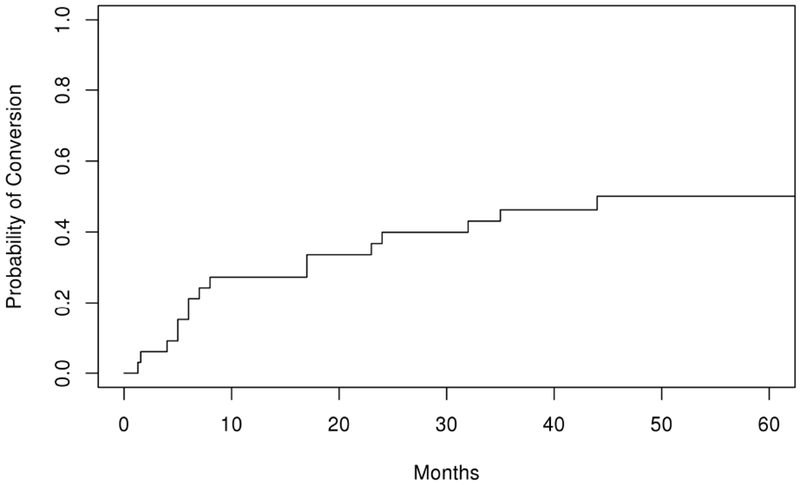
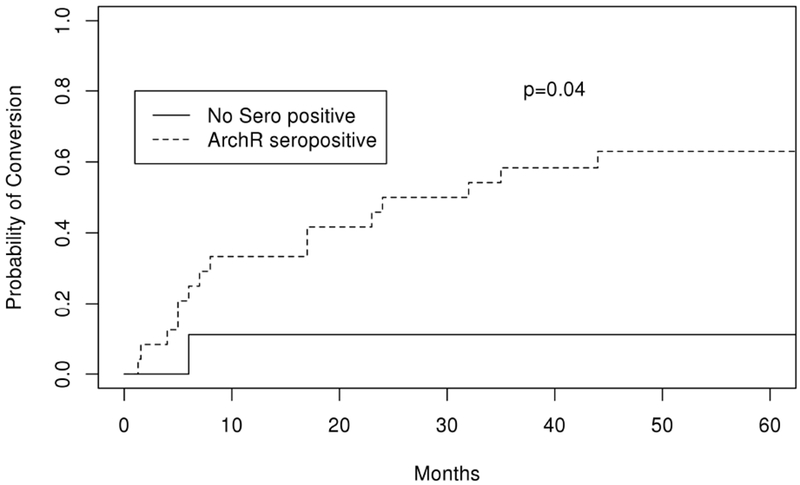
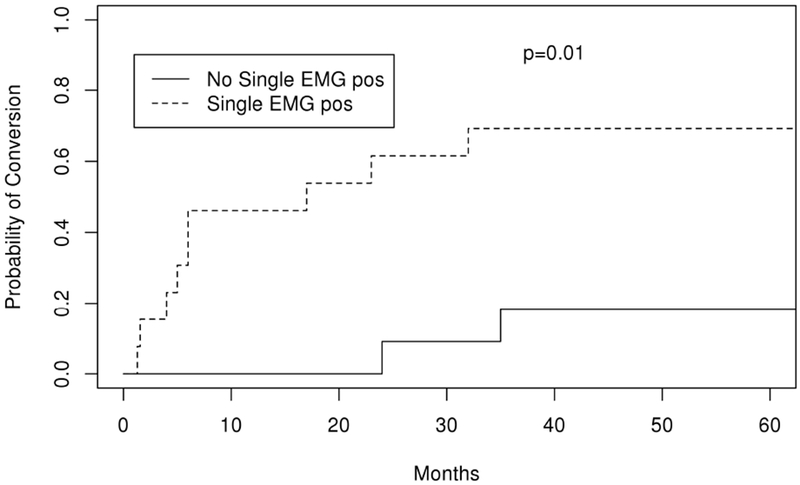
Results: Median follow-up time was 91 months (range 17-333 months). The annual incidence of MG was 2.20/100 000 with a mean age at diagnosis of 59 years (SD=17) and 62% male sex. Thirty-three (51%) of the 65 patients presented with OMG, providing an annual incidence of 1.13/100 000. Eighteen (55%) of the 33 patients presenting with OMG converted to GMG at a median time of 13 months (range 2-180 months). Sixteen (67%) of 24 OMG patients who were seropositive for acetylcholine receptor antibody (AchR Ab) converted to GMG at 5 years compared to 11% (1/9) of those who were seronegative (hazard ratio [HR], 8.2, P = .04). Ten (77%) of 13 OMG patients with a positive single-fiber electromyography (sfEMG) at diagnosis converted to GMG at 5 years, compared with 18% (2/11) of patients who had a negative sfEMG (HR, 5.5, P = .01).
Conclusions: In our population-based study, 51% (33/65) of patients with MG presented with isolated ocular involvement, with 55% (18/33) of these patients converting to GMG at some point in the course of their disease. Positive sfEMG and AchR Ab seropositivity at the time of diagnosis increased the risk of conversion to GMG.
Copyright © 2019 Elsevier Inc. All rights reserved.
Conflict of interest statement
Figures
References
-
- McGrogan A, Sneddon S, De Vries CS. The incidence of myasthenia gravis: a systematic literature review. Neuroepidemiology. 2010;34(3):171–183. - PubMed
-
- Casetta I, Groppo E, De Gennaro R, et al. Myasthenia gravis: a changing pattern of incidence. Journal of neurology. 2010;257(12):2015–2019. - PubMed
-
- Grob D, Brunner N, Namba T, Pagala M. Lifetime course of myasthenia gravis. Muscle & nerve. 2008;37(2):141–149. - PubMed
-
- Hong Y-H, Kwon S-B, Kim B-J, et al. Prognosis of ocular myasthenia in Korea: a retrospective multicenter analysis of 202 patients. Journal of the neurological sciences. 2008;273(1):10–14. - PubMed
Publication types
MeSH terms
Grants and funding
LinkOut - more resources
Full Text Sources
Medical
