


Prospective observational study of early respiratory management in preterm neonates less than 35 weeks of gestation
- PMID: 31078143
- PMCID: PMC6511129
- DOI: 10.1186/s12887-019-1518-3
Prospective observational study of early respiratory management in preterm neonates less than 35 weeks of gestation
Abstract
Background: Current guidelines for management of respiratory distress syndrome (RDS) recommend continuous positive airway pressure (CPAP) as the primary mode of respiratory support even in the most premature neonates, reserving endotracheal intubation (ETI) for rescue surfactant or respiratory failure. The incidence and timing of ETI in practice is poorly documented.
Methods: In 27 Level III NICUs in the US (n = 19), Canada (n = 3) and Poland (n = 5), demographics and baseline characteristics, respiratory support modalities including timing of ETI, administration of surfactant and caffeine/other methylxanthines, and neonatal morbidities were prospectively recorded in consecutive preterm neonates following written parental consent. Infants were divided into three groups according to gestational age (GA) at birth, namely 26-28, 29-32 and 33-34 weeks. Statistical comparisons between groups were done using Chi-Square tests.
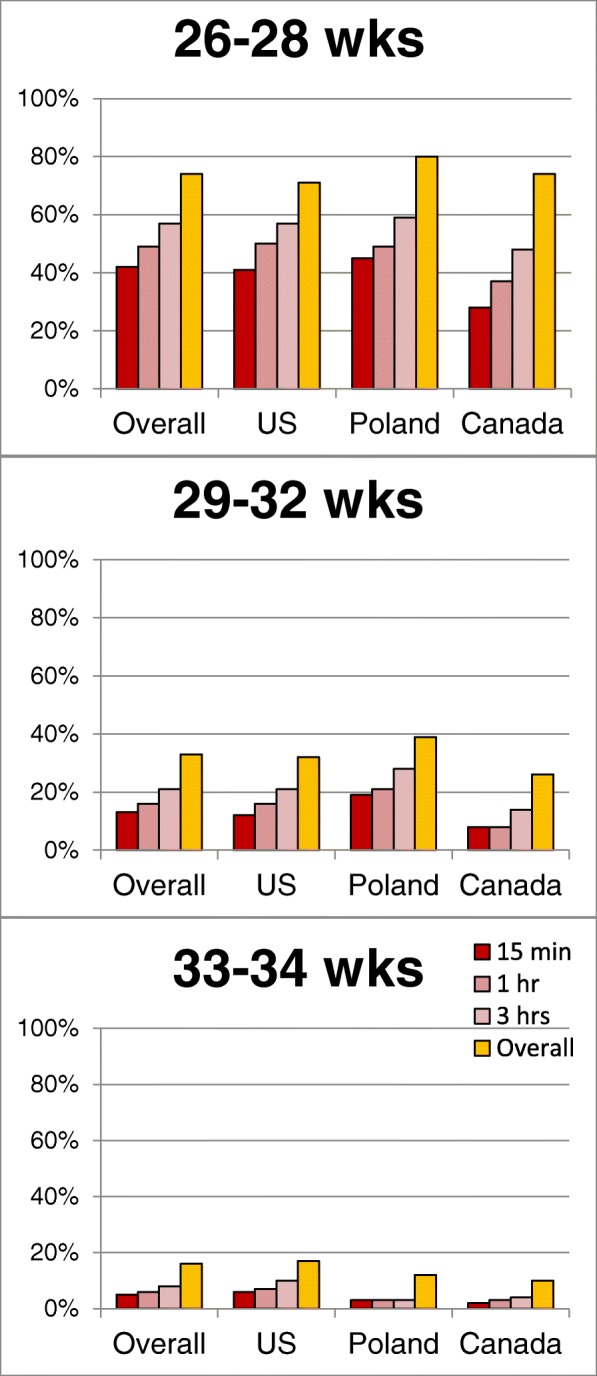
Results: Of 2093 neonates (US = 1507, 254 Canada, 332 Poland), 378 (18%) were 26-28 weeks gestational age (GA), 835 (40%) were 29-32 weeks, and 880 (42%) were 33-34 weeks. Antenatal steroid use was 81% overall, and approximately 89% in neonates ≤32 weeks. RDS incidence and use of ventilatory or supplemental oxygen support were similar across all sites. CPAP was initiated in 43% of all infants, being highest in the 29-32-week group, with a lower proportion in other GA categories (p < 0.001). The overall rate of ETI was 74% for neonates 26-28 weeks (42% within 15 min of birth, 49% within 60 min, and 57% within 3 h), 33% for 29-32 weeks (13 16 and 21%, respectively), and 16% for 33-34 weeks (5, 6 and 8%, respectively). Overall intubation rates and timing were similar between countries in all GAs. Rates within each country varied widely, however. Across US sites, overall ETI rates in 26-28-week neonates were 30-60%, and ETI within 15 min varied from 0 to 83%. Similar within 15-min variability was seen at Polish sites (22-67%) in this GA, and within all countries for 29-32 and 33-34-week neonates.
Conclusion: Despite published guidelines for management of RDS, rate and timing of ETI varies widely, apparently unrelated to severity of illness. The impact of this variability on outcome is unknown but provides opportunities for further approaches which can avoid the need for ETI.
Keywords: Continuous positive airway pressure; Endotracheal intubation; Preterm neonate; Respiratory management; Surfactant; prospective study.
Conflict of interest statement
Ethics approval and consent to participate
This prospective observational study was reviewed and approved by institutional review boards, and/or research ethics boards at each participating research institution (see Appendix). Written informed parental/legal representative consent was obtained to collect the data. All data collected were de-identified to ensure compliance with patient privacy rights.
Consent for publication
Not applicable.
Competing interests
Drs. Paul M Shore, Steven G Simonson, Robert Segal, and Timothy J Gregory, and Mr. Phillip D Simmons and Ms. Judy Varga are employees of Windtree therapeutics, Inc. Drs. Jan Mazela, Fernando R Moya, Neil Finer and Carlos G Guardia are paid consultants of the company.
Publisher’s Note
Springer Nature remains neutral with regard to jurisdictional claims in published maps and institutional affiliations.
Figures


References
Publication types
MeSH terms
Substances
LinkOut - more resources
Full Text Sources
Medical
