


Randomized comparison of two web-based interventions on immediate and 30-day opioid overdose knowledge in three unique risk groups
- PMID: 31078564
- PMCID: PMC6842412
- DOI: 10.1016/j.ypmed.2019.05.006
Randomized comparison of two web-based interventions on immediate and 30-day opioid overdose knowledge in three unique risk groups
Abstract
Background: In response to the opioid overdose epidemic, scalable interventions that instruct at-risk populations how to prevent and respond to overdose scenarios are needed.
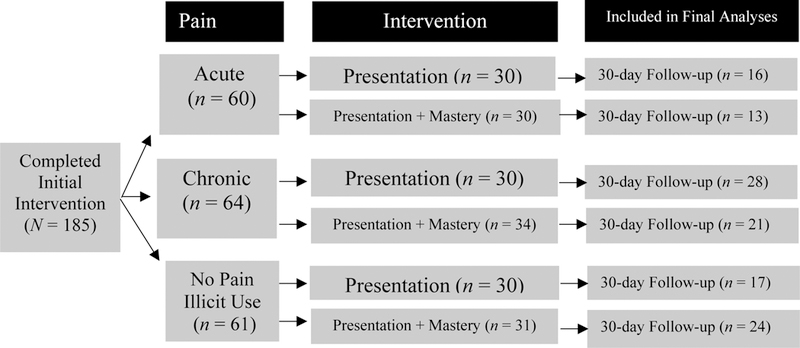
Method: The following groups of at-risk individuals were recruited online: (1) Acute Pain patients with an opioid prescription, (2) Chronic Pain patients with an opioid prescription, and (3) persons without pain who use Illicit Opioids. Participants were tested on their opioid overdose knowledge using the Brief Opioid Overdose Knowledge (BOOK) questionnaire and randomized to one of two web-based interventions that contained 25 educational content slides. One intervention consisted of embedded questions with corrective feedback (Presentation + Mastery, n = 58), the other did not (Presentation, n = 61). Participants completed the BOOK again at the end of the intervention and 30 days later. Overdose risk behaviors were assessed at baseline and 30-days.
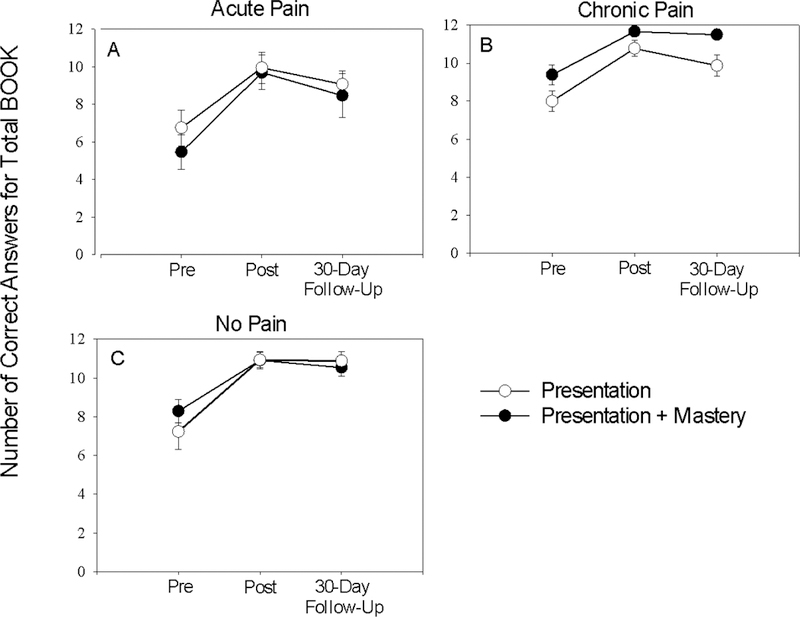
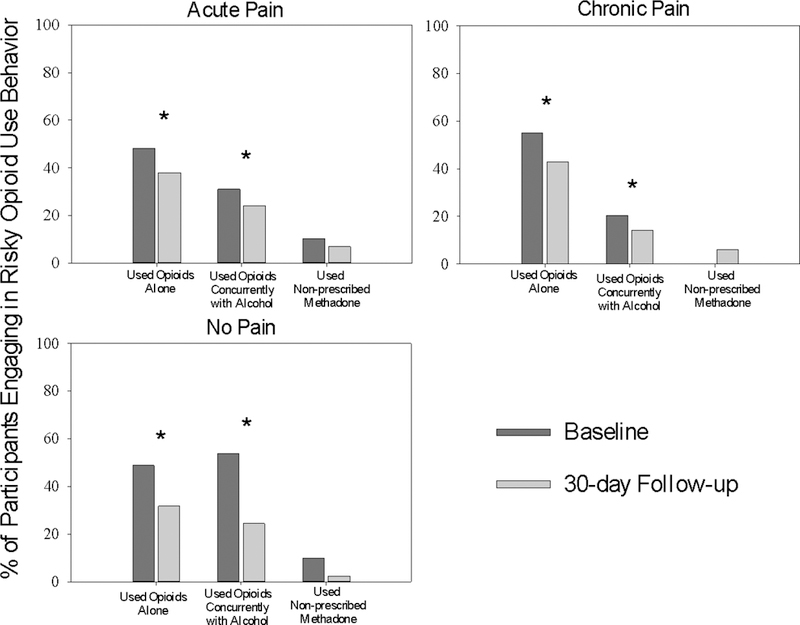
Results: Relative to baseline, both Presentation and Presentation + Mastery interventions increased total BOOK scores immediately and 30 days later. There was a significant effect of Group on BOOK Knowledge, whereby those with Acute Pain had lower scores across time, regardless of intervention, relative to those with Chronic Pain and Illicit Opioid Use. Compared to baseline, all three groups reported fewer instances of using opioids alone or concurrently with alcohol at the 30-day follow-up.
Conclusions: A web-based intervention increased opioid overdose knowledge and decreased overdose risk behavior immediately and at a one-month follow-up, suggesting that this brief, practical, and scalable program could have utility in several populations who are at-risk of opioid overdose.
Keywords: Acute pain; Analgesic; Chronic pain; Crowdsourcing; Drug overdose; Opioid; Web-based intervention.
Copyright © 2019. Published by Elsevier Inc.
Figures
References
Publication types
MeSH terms
Substances
Grants and funding
LinkOut - more resources
Full Text Sources
Medical
