


Postprandial hypoglycemia after gastric bypass surgery: from pathogenesis to diagnosis and treatment
- PMID: 31082828
- PMCID: PMC6598692
- DOI: 10.1097/MCO.0000000000000574
Postprandial hypoglycemia after gastric bypass surgery: from pathogenesis to diagnosis and treatment
Abstract
Purpose of review: The Roux-en-Y gastric bypass surgery (RYGB) improves glucose control in majority of patients with type 2 diabetes. However, a minority group of individuals develop a life-threatening complication of hyperinsulinemic hypoglycemia. The goal of this review is to identify underlying mechanisms by which RYGB cause hypoglycemia and describe pathogenesis-driven strategies to diagnose and treat this condition.
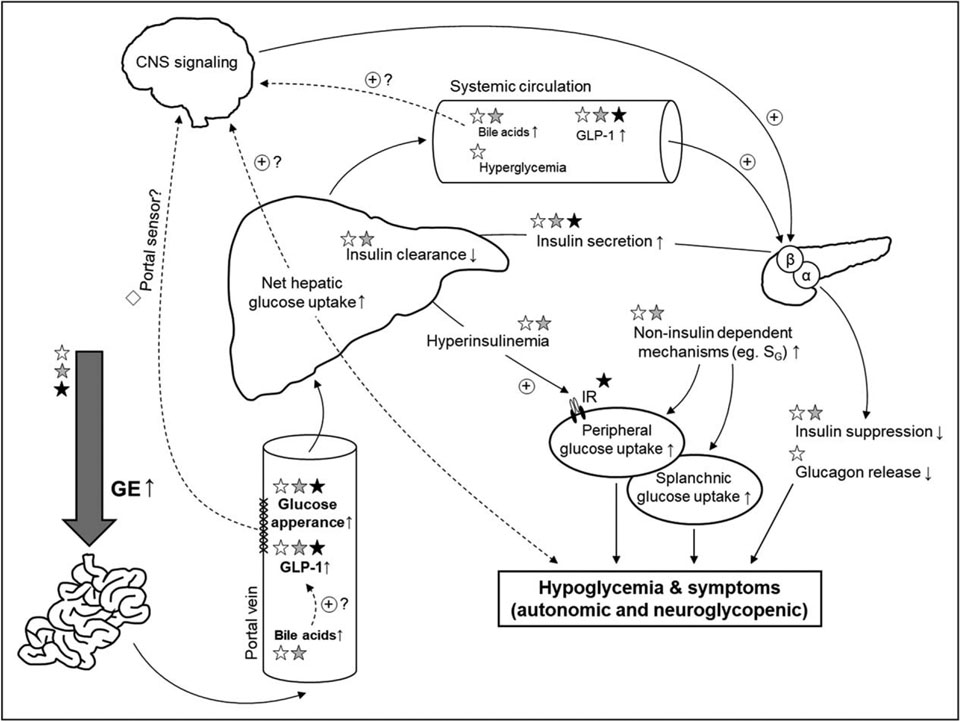
Recent findings: Gastric bypass leads to higher and earlier peak levels of glucose and lower nadir glucose after eating along with larger insulin and glucagon-like peptide 1 (GLP-1) secretion, resetting the balance between glucose appearance and clearance after this procedure. These weight-loss independent glycemic effects of RYGB have been attributed to changes in ingested glucose appearance as a result of rapid nutrient emptying from stomach pouch to the intestine and increased glucose clearance as a result of prandial hyperinsulinemia. The exaggerated effect of RYGB on postmeal glucose metabolism is a syndrome of postprandial hyperinsulinemic hypoglycemia manifesting in a group of individuals several years after this surgery. Affected patients have larger systemic appearance of ingested glucose and greater postmeal secretion of insulin and GLP-1 compared to those with history of RYGB without symptomatic hypoglycemia. Current evidence supporting a multifactorial model of glucose dysregulation among patients with hypoglycemia will be highlighted in this review.
Summary: Hypoglycemia after RYGB is a life-threatening condition and likely represents the extreme glycemic phenotype of this procedure. Diagnosis is challenging and treatment options are limited.
Conflict of interest statement
Conflicts of interest
There are no conflicts of interest associated with this manuscript.
Figures
References
Publication types
MeSH terms
Substances
Grants and funding
LinkOut - more resources
Full Text Sources
Medical
Research Materials
