


Review of Therapeutic Applications of Radiolabeled Functional Nanomaterials
- PMID: 31083402
- PMCID: PMC6539387
- DOI: 10.3390/ijms20092323
Review of Therapeutic Applications of Radiolabeled Functional Nanomaterials
Abstract
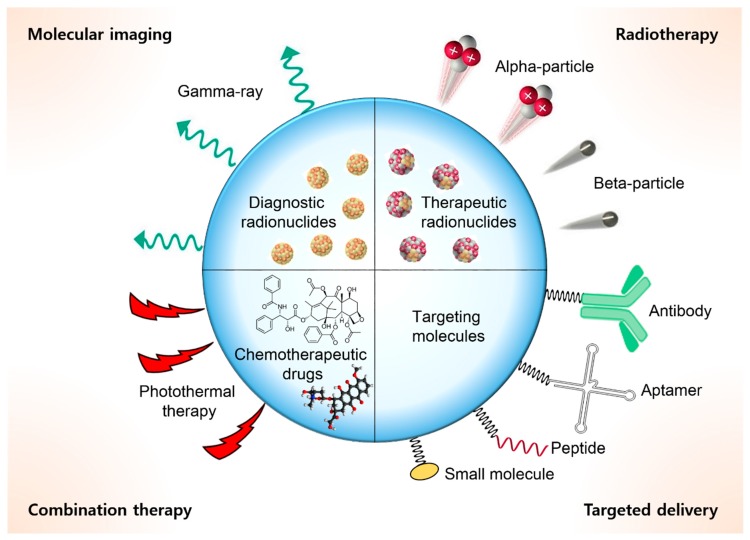
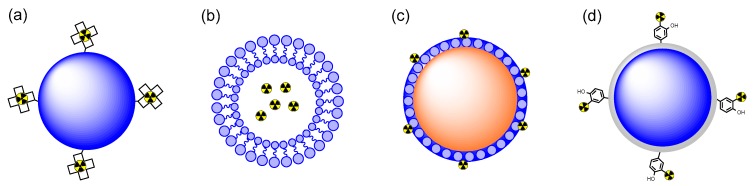
In the last two decades, various nanomaterials have attracted increasing attention in medical science owing to their unique physical and chemical characteristics. Incorporating radionuclides into conventionally used nanomaterials can confer useful additional properties compared to the original material. Therefore, various radionuclides have been used to synthesize functional nanomaterials for biomedical applications. In particular, several α- or β-emitter-labeled organic and inorganic nanoparticles have been extensively investigated for efficient and targeted cancer treatment. This article reviews recent progress in cancer therapy using radiolabeled nanomaterials including inorganic, polymeric, and carbon-based materials and liposomes. We first provide an overview of radiolabeling methods for preparing anticancer agents that have been investigated recently in preclinical studies. Next, we discuss the therapeutic applications and effectiveness of α- or β-emitter-incorporated nanomaterials in animal models and the emerging possibilities of these nanomaterials in cancer therapy.
Keywords: cancer; nanomaterial; radioisotope; radiolabeling; radionuclide therapy; α-particle; β-particle.
Conflict of interest statement
The author declares no conflict of interest.
Figures
References
Publication types
MeSH terms
Substances
Grants and funding
LinkOut - more resources
Full Text Sources
Other Literature Sources
