


Efficiency of chlorine and UV in the inactivation of Cryptosporidium and Giardia in wastewater
- PMID: 31083664
- PMCID: PMC6513095
- DOI: 10.1371/journal.pone.0216040
Efficiency of chlorine and UV in the inactivation of Cryptosporidium and Giardia in wastewater
Abstract
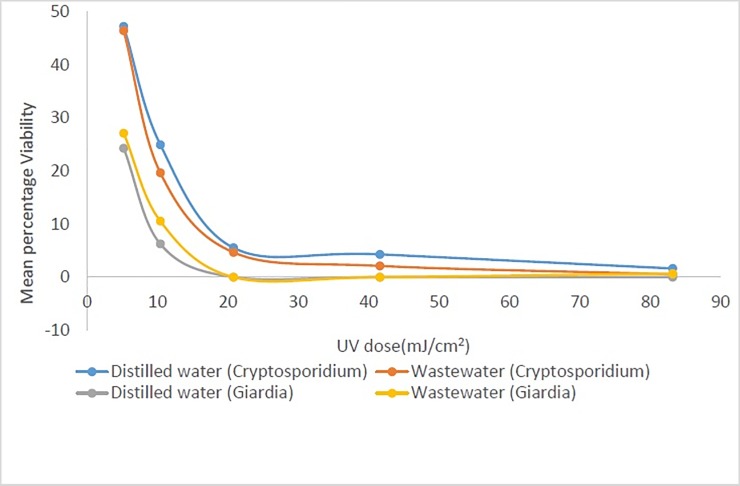
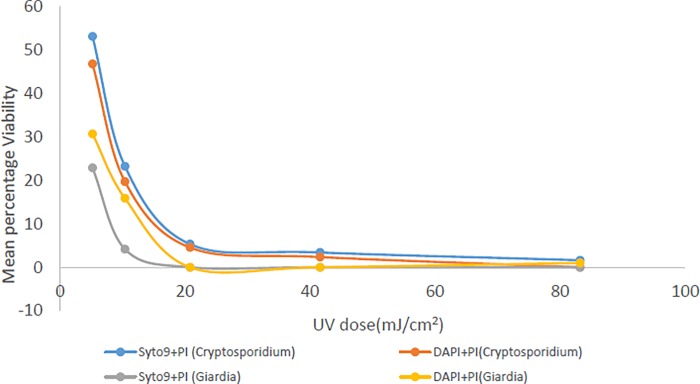
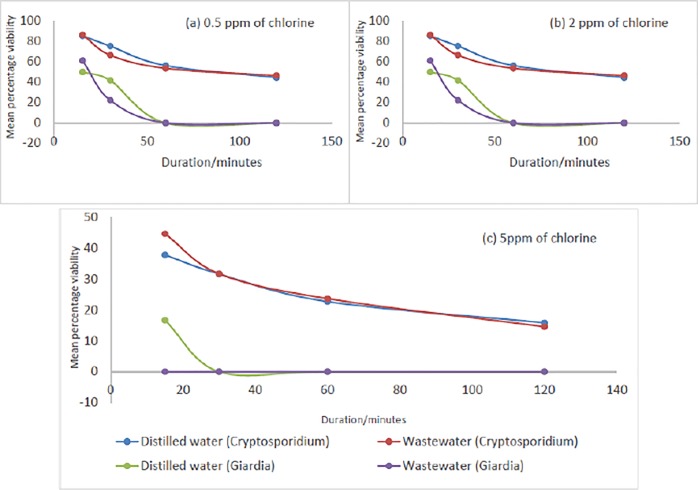
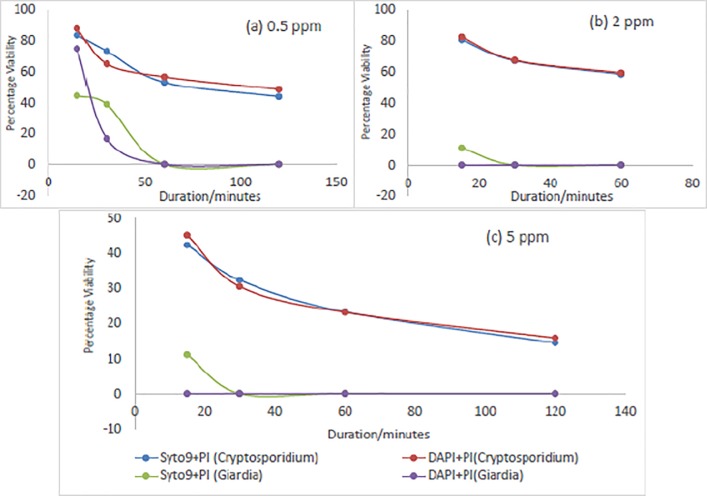
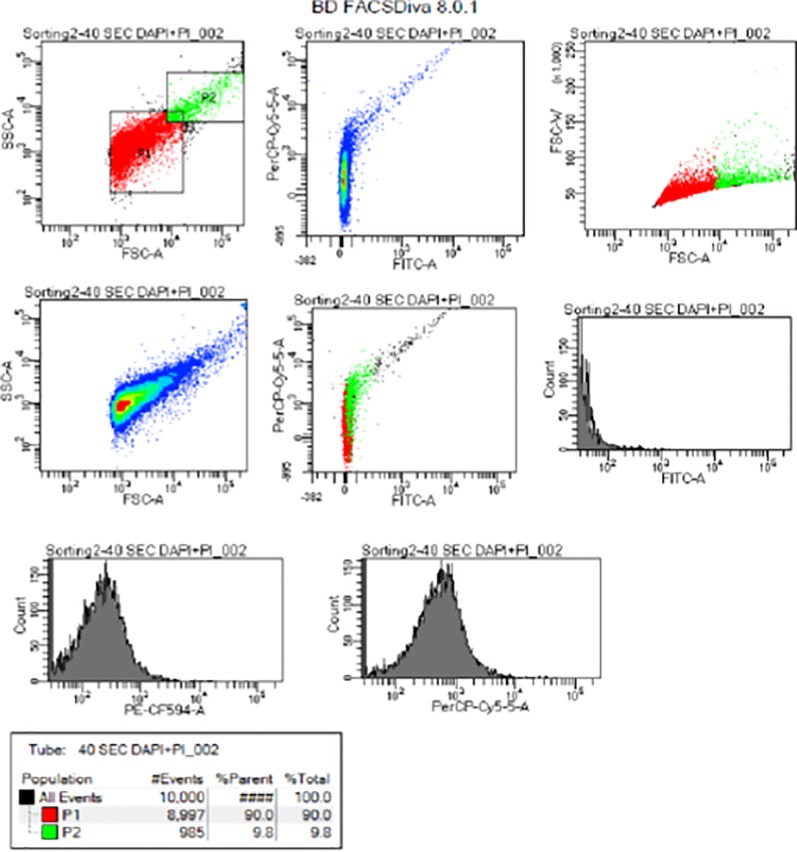
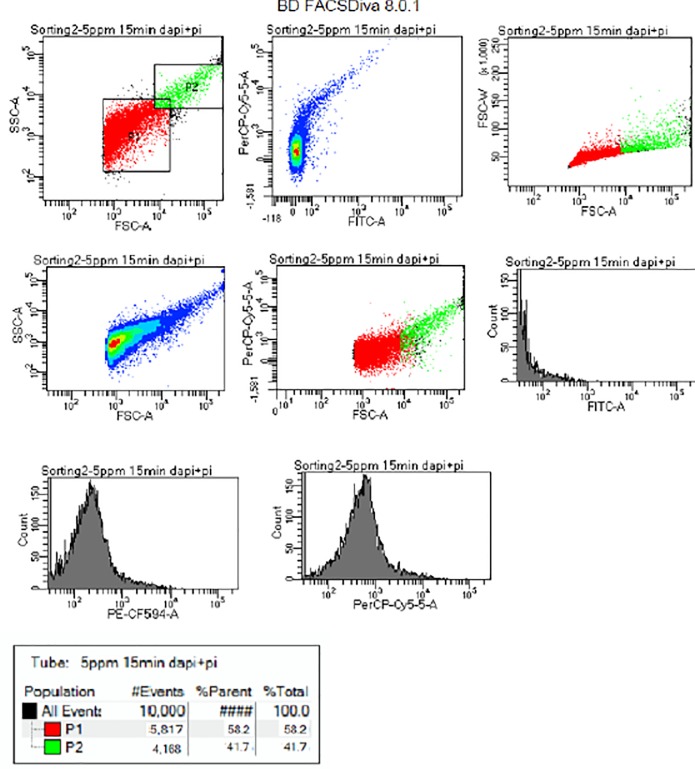
Wastewater from different sources is contaminated by protozoan parasites including Cryptosporidium and Giardia. Many protozoan parasites are becoming resistant to chemical treatment. The challenge of finding alternatives is presented to researchers by exploring other methods of eliminating protozoan parasites from wastewater. The aim of this study was to assess the speciation and the viability of Cryptosporidium and Giardia in environmental samples with the specific objective of evaluating if effluent chlorination and UV affect the viability. Different doses of chlorine with different exposure times were experimented with both distilled water and waste water spiked with (oo)cysts derived from environmental samples. UV irradiation at different doses was also experimented using the same spiked samples. Two methods of quantification and detection, namely, microscopy and flow cytometry, were used in the experiment. Two vital dyes, Syto-9+PI and DAPI+PI, were the used for staining the collected wastewater samples. It was found that the (oo)cysts responded to chlorination and UV treatments with Giardia responding better than Cryptosporidium. Giardia responded very well to UV irradiations with almost 0 percent remaining viable after a low dose of UV. Cryptosporidium was found to be resistant to chlorination even at high doses but responded well to high UV doses. DAPI+PI dye gave a lower mean percentage viability values than Syto-9+PI. Flow cytometry gave higher mean percentage than microscopy from the results. It is concluded that UV is a promising alternative to Chlorine in removing Cryptosporidium and Giardia from waste water. Appropriate treatment method for wastewater is necessary to minimize water resources pollution when wastewater is released into water systems.
Conflict of interest statement
The authors have declared that no competing interests exist.
Figures
References
-
- CDC. Diagnosis & Detection: Centre for Disease Control and Prevention (CDC) 2016 [18 November 2017]. Available from: https://www.cdc.gov/parasites/crypto/diagnosis.html.
-
- Badenoch J. Cryptosporidium in water supplies. Report of the Group of Experts Controller of HMSO London, UK. 1990.
-
- Juranek DD. Cryptosporidium and water: a public health handbook. Clinic Laboratory Science 1997;10:272–424. - PubMed
Publication types
MeSH terms
Substances
LinkOut - more resources
Full Text Sources
Research Materials
Miscellaneous
