


Causes of mortality in backyard poultry in eight states in the United States
- PMID: 31084344
- PMCID: PMC6838705
- DOI: 10.1177/1040638719848718
Causes of mortality in backyard poultry in eight states in the United States
Abstract
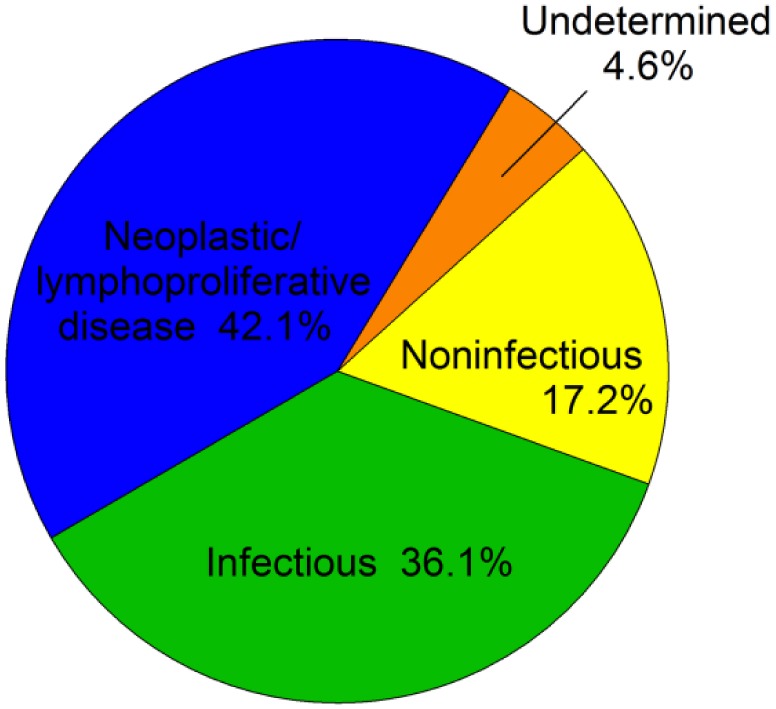
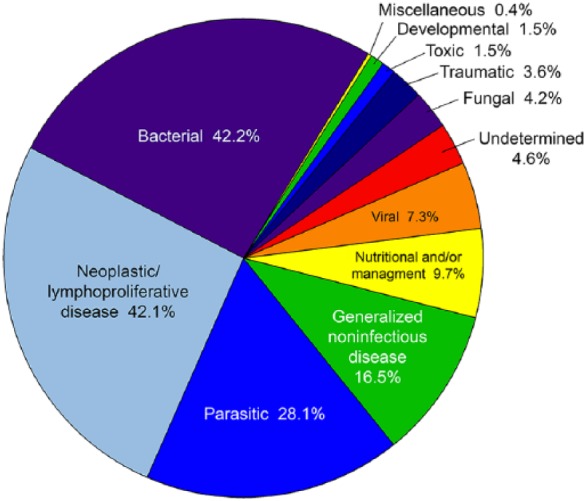
A comprehensive understanding of common diseases of backyard poultry flocks is important to providing poultry health information to flock owners, veterinarians, and animal health officials. We collected autopsy reports over a 3-y period (2015-2017) from diagnostic laboratories in 8 states in the United States; 2,509 reports were collected, involving autopsies of 2,687 birds. The primary cause of mortality was categorized as infectious, noninfectious, neoplasia or lymphoproliferative disease, or undetermined. Neoplasia or lymphoproliferative disease was the most common primary diagnosis and involved 42% of the total birds autopsied; 63% of these cases were diagnosed as Marek's disease or leukosis/sarcoma. Bacterial, parasitic, and viral organisms were commonly detected, involving 42%, 28%, and 7% of the birds autopsied, respectively, with 2 or more organisms detected in 69% of birds. Our findings demonstrate the importance of educating flock owners about disease prevention and biosecurity practices. The detection of zoonotic bacteria including paratyphoid salmonellae, Campylobacter spp., Listeria monocytogenes, and Mycobacterium avium, and the detection of lead and other heavy metals, indicate public health risks to flock owners and consumers of backyard flock egg and meat products.
Keywords: backyard flock; chickens; poultry disease; poultry mortality; zoonoses.
Conflict of interest statement
Figures
References
-
- Alexander DJ. Ecology and epidemiology of Newcastle disease. In: Capua I, Alexander DJ, eds. Avian Influenza and Newcastle Disease: A Field and Laboratory Manual. Milan: Springer Milan, 2009:19–26.
-
- Anderson J, et al. The prevalence and genetic diversity of Campylobacter spp. in domestic ‘backyard’ poultry in Canterbury, New Zealand. Zoonoses Public Health 2012;59:52–60. - PubMed
-
- Clark S, Kimminau E. Critical review: future control of blackhead disease (histomoniasis) in poultry. Avian Dis 2017;61:8. - PubMed
MeSH terms
LinkOut - more resources
Full Text Sources
Miscellaneous
