Potentially Inappropriate Prescribing Among Older Persons: A Meta-Analysis of Observational Studies
- PMID: 31085530
- PMCID: PMC6827633
- DOI: 10.1370/afm.2373
Potentially Inappropriate Prescribing Among Older Persons: A Meta-Analysis of Observational Studies
Abstract
Purpose: Potentially inappropriate prescribing (PIP) is a common yet preventable medical error among older persons in primary care. It is uncertain whether PIP produces adverse outcomes in this population, however. We conducted a systematic review with meta-analysis to pool the adverse outcomes of PIP specific to primary care.
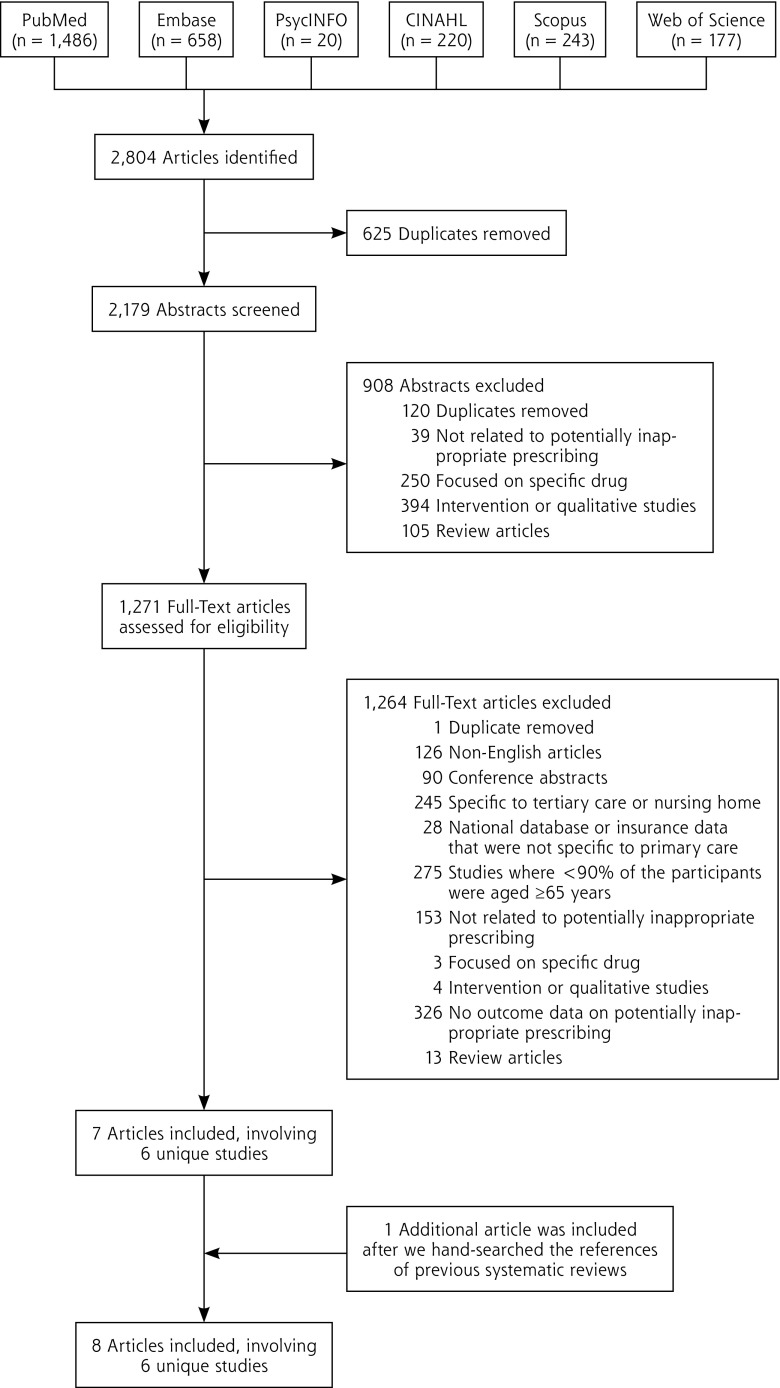
Method: We searched PubMed, Embase, CINAHL, Web of Science, Scopus, PsycINFO, and previous review articles for studies related to "older persons," "primary care," and "inappropriate prescribing." Two reviewers selected eligible articles, extracted data, and evaluated the risk of bias. Meta-analysis was conducted to pool studies with similar PIP criteria and outcome measures.
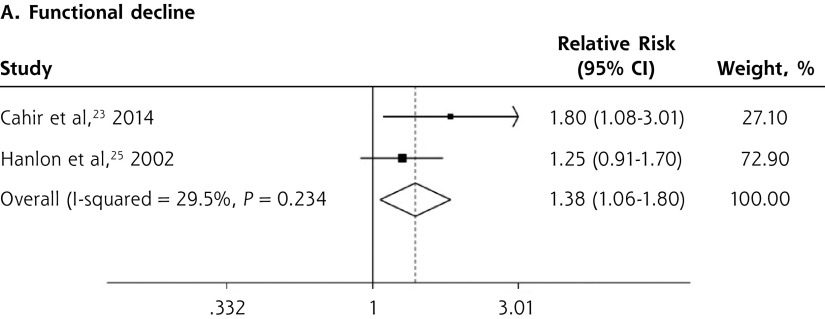
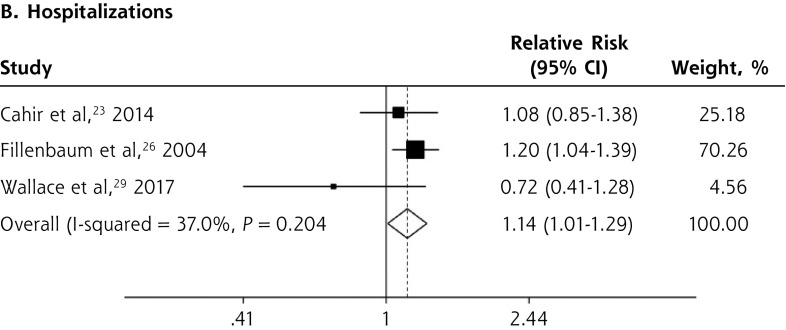
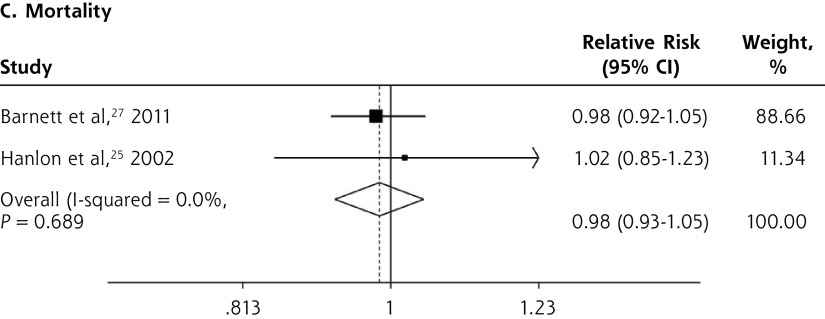
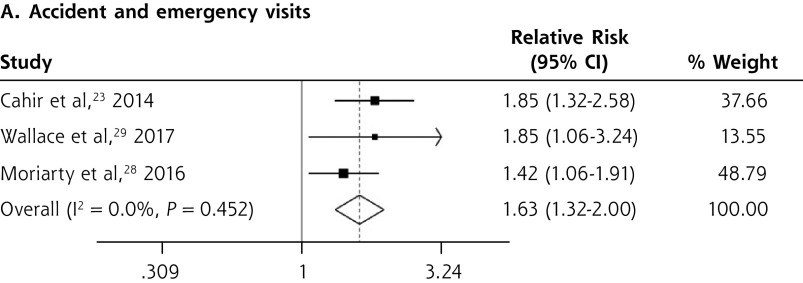
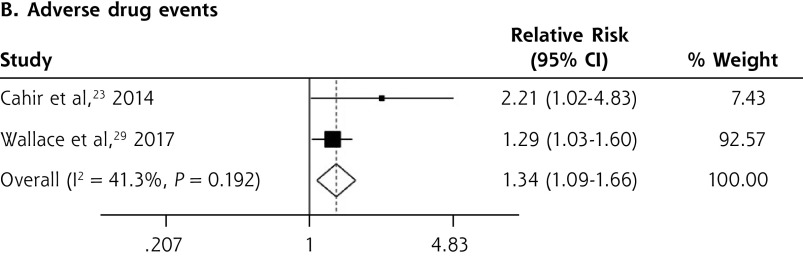
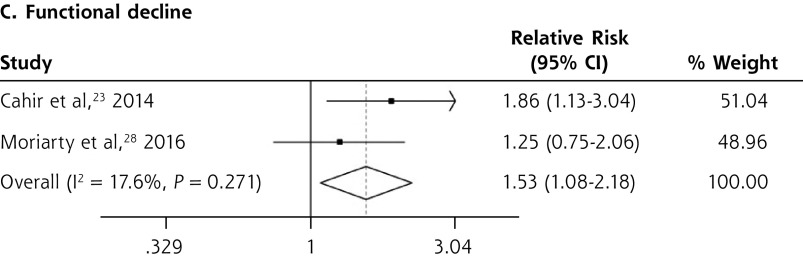
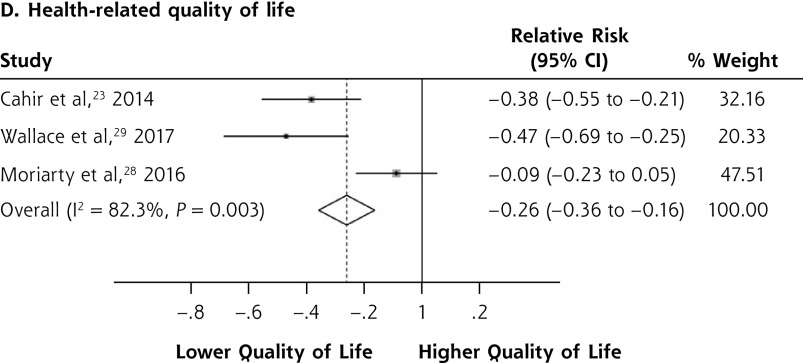
Results: Of the 2,804 articles identified, we included 8 articles with a total of 77,624 participants. All included studies had cohort design and low risk of bias. Although PIP did not affect mortality (risk ratio [RR] 0.98; 95% CI, 0.93-1.05), it was significantly associated with the other available outcomes, including emergency room visits (RR 1.63; 95% CI, 1.32-2.00), adverse drug events (RR 1.34; 95% CI, 1.09-1.66), functional decline (RR 1.53; 95% CI, 1.08-2.18), health-related quality of life (standardized mean difference -0.26; 95% CI, -0.36 to -0.16), and hospitalizations (RR 1.25; 95% CI, 1.09-1.44). A majority of the pooled estimates had negligible heterogeneity.
Conclusions: This meta-analysis provides consolidated evidence on the wide-ranging impact of PIP among older persons in primary care. It highlights the need to identify PIP in primary care, calls for further research on PIP interventions in primary care, and points to the need to consider potential implications when deciding on the operational criteria of PIP.
Keywords: adverse outcomes; aged; family physicians; family practice; general practice; general practitioners; inappropriate prescribing; medication errors; meta-analysis; primary health care; systematic review.
© 2019 Annals of Family Medicine, Inc.
Figures
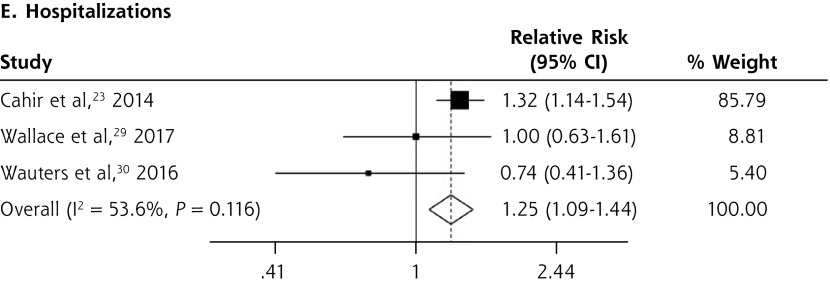
References
-
- O’Connor MN, Gallagher P, O’Mahony D. Inappropriate prescribing: criteria, detection and prevention. Drugs Aging. 2012; 29(6): 437–452. - PubMed
-
- Kaufmann CP, Tremp R, Hersberger KE, Lampert ML. Inappropriate prescribing: a systematic overview of published assessment tools. Eur J Clin Pharmacol. 2014; 70(1): 1–11. - PubMed
-
- Spinewine A, Schmader KE, Barber N, et al. Appropriate prescribing in elderly people: how well can it be measured and optimised? Lancet. 2007; 370(9582): 173–184. - PubMed
-
- Tommelein E, Mehuys E, Petrovic M, Somers A, Colin P, Boussery K. Potentially inappropriate prescribing in community-dwelling older people across Europe: a systematic literature review. Eur J Clin Pharmacol. 2015; 71(12): 1415–1427. - PubMed
-
- Morin L, Laroche ML, Texier G, Johnell K. Prevalence of potentially inappropriate medication use in older adults living in nursing homes: a systematic review. J Am Med Dir Assoc. 2016; 17(9): 862.e1–862.e9. - PubMed
Publication types
MeSH terms
LinkOut - more resources
Full Text Sources