


Friend retrovirus studies reveal complex interactions between intrinsic, innate and adaptive immunity
- PMID: 31087035
- PMCID: PMC6735856
- DOI: 10.1093/femsre/fuz012
Friend retrovirus studies reveal complex interactions between intrinsic, innate and adaptive immunity
Abstract
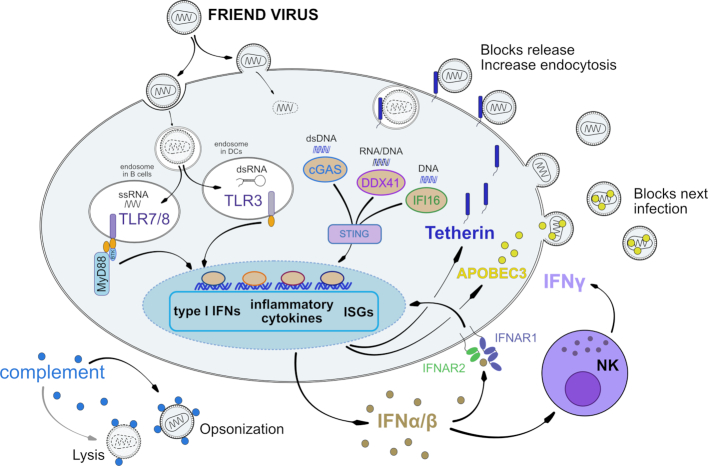
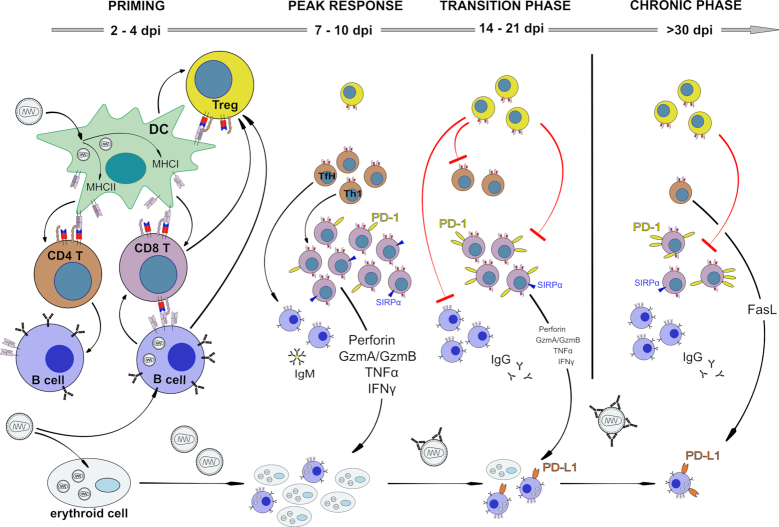
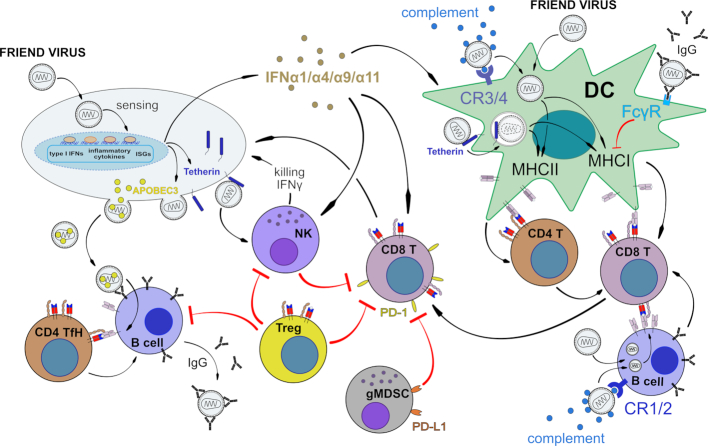
Approximately 4.4% of the human genome is comprised of endogenous retroviral sequences, a record of an evolutionary battle between man and retroviruses. Much of what we know about viral immunity comes from studies using mouse models. Experiments using the Friend virus (FV) model have been particularly informative in defining highly complex anti-retroviral mechanisms of the intrinsic, innate and adaptive arms of immunity. FV studies have unraveled fundamental principles about how the immune system controls both acute and chronic viral infections. They led to a more complete understanding of retroviral immunity that begins with cellular sensing, production of type I interferons, and the induction of intrinsic restriction factors. Novel mechanisms have been revealed, which demonstrate that these earliest responses affect not only virus replication, but also subsequent innate and adaptive immunity. This review on FV immunity not only surveys the complex host responses to a retroviral infection from acute infection to chronicity, but also highlights the many feedback mechanisms that regulate and counter-regulate the various arms of the immune system. In addition, the discovery of molecular mechanisms of immunity in this model have led to therapeutic interventions with implications for HIV cure and vaccine development.
Keywords: Friend retrovirus; adaptive immunity; immunotherapy; innate immunity; intrinsic immunity; mouse model.
Published by Oxford University Press on behalf of FEMS 2019.
Figures
References
-
- Abudu A, Takaori-Kondo A, Izumi Tet al. .. Murine retrovirus escapes from murine APOBEC3 via two distinct novel mechanisms. Curr Biol. 2006;16:1565–70. - PubMed
-
- Akhmetzyanova I, Zelinskyy G, Littwitz-Salomon Eet al. .. CD137 agonist therapy can reprogram regulatory T cells into cytotoxic CD4+ T cells with antitumor activity. J Immunol. 2016;196:484–92. - PubMed
-
- Akira S, Takeda K. Toll-like receptor signalling. Nat Rev Immunol. 2004;4:499–511. - PubMed
-
- Aman MJ, Tretter T, Eisenbeis Iet al. .. Interferon-alpha stimulates production of interleukin-10 in activated CD4+ T cells and monocytes. Blood. 1996;87:4731–6. - PubMed
