


A systematic review on the prevalence of symptoms of depression, anxiety and distress in long-term cancer survivors: Implications for primary care
- PMID: 31087398
- PMCID: PMC9286037
- DOI: 10.1111/ecc.13086
A systematic review on the prevalence of symptoms of depression, anxiety and distress in long-term cancer survivors: Implications for primary care
Abstract
Introduction: Symptoms of depression, anxiety and distress are common in the first years after a cancer diagnosis, but little is known about the prevalence of these symptoms at the long term. The aim of this review was to describe the prevalence of symptoms of depression, anxiety and distress in long-term cancer survivors, five or more years after diagnosis, and to provide implications for primary care.
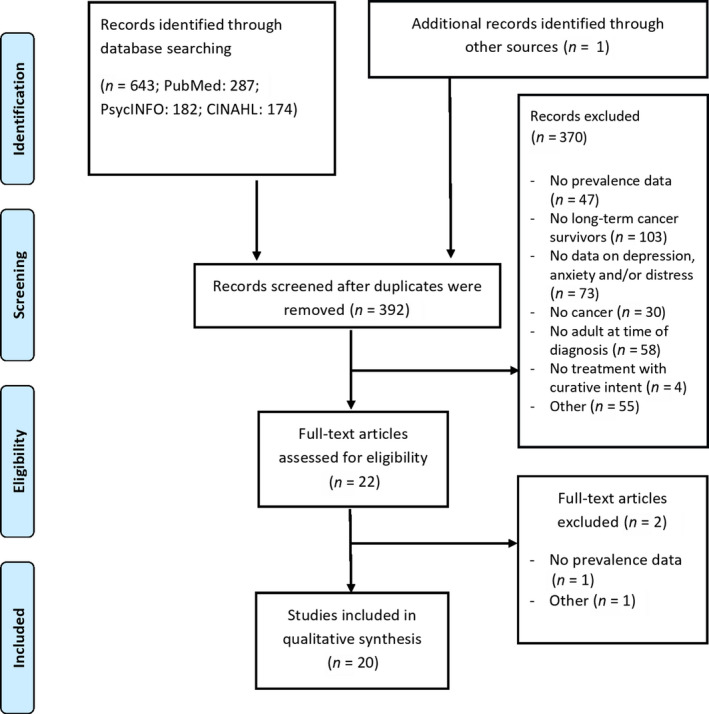
Methods: We performed a systematic literature search in the PubMed, PsycINFO and CINAHL databases. Studies were eligible when reporting on the prevalence of symptoms of depression, anxiety and/or distress in long-term cancer survivors (≥5 years after diagnosis), treated with curative intent.
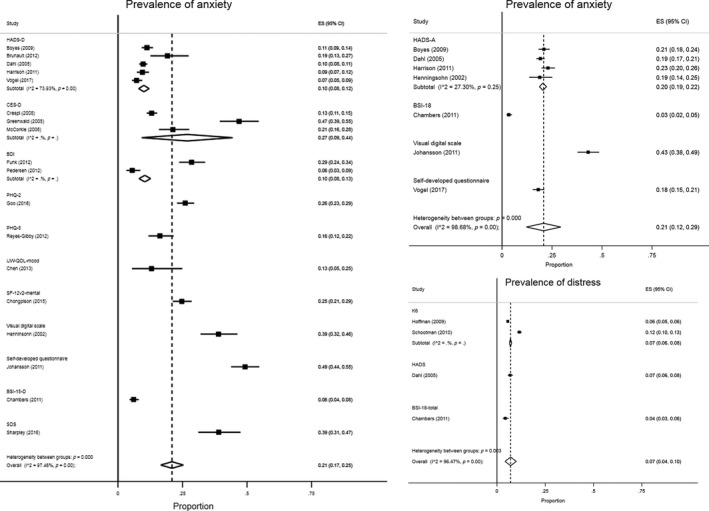
Results: A total of 20 studies were included. The reported prevalence of depressive symptoms (N = 18) varied from 5.4% to 49.0% (pooled prevalence: 21.0%). For anxiety (N = 7), the prevalence ranged from 3.4% to 43.0% (pooled prevalence: 21.0%). For distress (N = 4), the prevalence ranged from 4.3% to 11.6% (pooled prevalence: 7.0%).
Conclusion: Prevalences of symptoms of depression, anxiety and distress among long-term survivors of cancer do not fundamentally differ from the general population. This is reassuring for primary care physicians, as they frequently act as the primary physician for long-term survivors whose follow-up schedules in the hospital have been completed.
Keywords: anxiety; cancer survivors; depression; distress; long term; psychological problems.
© 2019 The Authors. European Journal of Cancer Care Published by John Wiley & Sons Ltd.
Conflict of interest statement
No conflicts to declare.
Figures
References
-
- Boyes, A. W. , Girgis, A. , Zucca, A. C. , & Lecathelinais, C. (2009). Anxiety and depression among long‐term survivors of cancer in australia: Results of a population‐based survey. comment. The Medical Journal of Australia, 191(5), 295. - PubMed
-
- Brunault, P. , Suzanne, I. , Trzepidur‐Edom, M. , Garaud, P. , Calais, G. , Toledano, A. , & Camus, V. (2013). Depression is associated with some patient‐perceived cosmetic changes, but not with radiotherapy‐induced late toxicity, in long‐term breast cancer survivors. Psycho‐Oncology, 22(3), 590–597. 10.1002/pon.3038 - DOI - PubMed
