


Neprilysin inhibition: a new therapeutic option for type 2 diabetes?
- PMID: 31089754
- PMCID: PMC6579747
- DOI: 10.1007/s00125-019-4889-y
Neprilysin inhibition: a new therapeutic option for type 2 diabetes?
Abstract
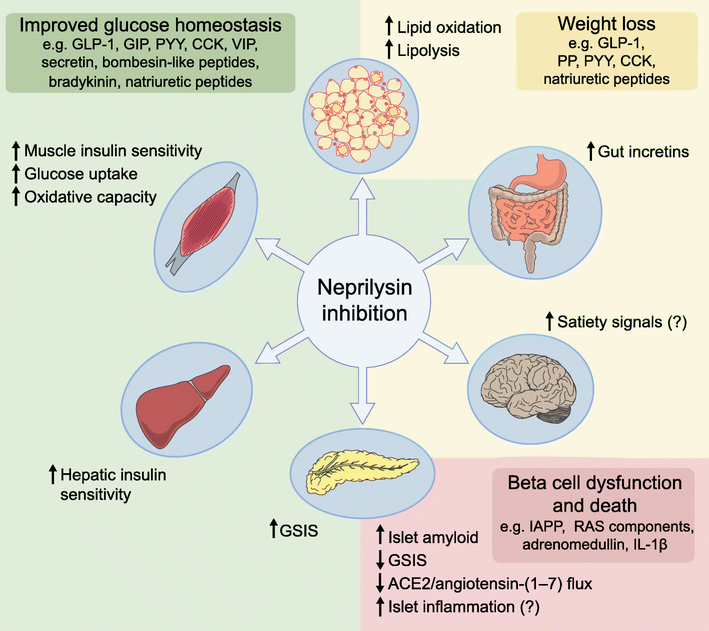
Neprilysin is a widely expressed peptidase with broad substrate specificity that preferentially hydrolyses oligopeptide substrates, many of which regulate the cardiovascular, nervous and immune systems. Emerging evidence suggests that neprilysin also hydrolyses peptides that play an important role in glucose metabolism. In recent studies in humans, a dual angiotensin receptor-neprilysin inhibitor (ARNi) improved glycaemic control and insulin sensitivity in individuals with type 2 diabetes and/or obesity. Moreover, preclinical studies have also reported that neprilysin inhibition, alone or in combination with renin-angiotensin system blockers, elicits beneficial effects on glucose homeostasis. Since neprilysin inhibitors have been approved for the treatment of heart failure, their repurposing for treating type 2 diabetes would provide a novel therapeutic strategy. In this review, we evaluate existing evidence from preclinical and clinical studies in which neprilysin is deleted/inhibited, we highlight potential mechanisms underlying the beneficial glycaemic effects of neprilysin inhibition, and discuss possible deleterious effects that may limit the efficacy and safety of neprilysin inhibitors in the clinic. We also review the favourable impact neprilysin inhibition can have on diabetic complications, in addition to glucose control. Finally, we conclude that neprilysin inhibitors may be a useful therapeutic option for treating type 2 diabetes; however, their combination with angiotensin II receptor blockers is needed to circumvent deleterious consequences of neprilysin inhibition alone.
Keywords: GLP-1; Insulin resistance; Insulin secretion; Neprilysin; Obesity; Review; Type 2 diabetes.
Figures
References
-
- Roques BP, Noble F, Daugé V, et al. (1993) Neutral endopeptidase 24.11: structure, inhibition, and experimental and clinical pharmacology. Pharmacol Rev 45:87–146 - PubMed
-
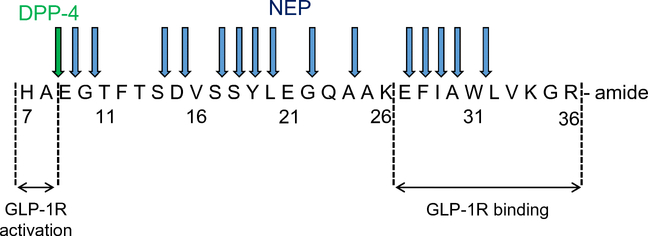
- Hupe-Sodmann K, McGregor GP, Bridenbaugh R, et al. (1995) Characterisation of the processing by human neutral endopeptidase 24.11 of GLP-1(7–36) amide and comparison of the substrate specificity of the enzyme for other glucagon-like peptides. Regul Pept 58:149–156 - PubMed
-
- Plamboeck A, Holst JJ, Carr RD, Deacon CF (2005) Neutral endopeptidase 24.11 and dipeptidyl peptidase IV are both mediators of the degradation of glucagon-like peptide 1 in the anaesthetised pig. Diabetologia 48:1882–1890 - PubMed
-
- González W, Soleilhac JM, Fournié-Zaluski MC, et al. (1998) Characterization of neutral endopeptidase in vascular cells, modulation of vasoactive peptide levels. Eur J Pharmacol 345:323–331 - PubMed
Publication types
MeSH terms
Substances
Grants and funding
LinkOut - more resources
Full Text Sources
Medical
