. 2019 Jun;49(6):425-436.
doi: 10.2519/jospt.2019.8825. Epub 2019 May 15.

Can Biomechanics Research Lead to More Effective Treatment of Low Back Pain? A Point-Counterpoint Debate

Can Biomechanics Research Lead to More Effective Treatment of Low Back Pain? A Point-Counterpoint Debate

Jacek Cholewicki et al. J Orthop Sports Phys Ther. 2019 Jun.

Abstract

Although biomechanics plays a role in the development and perhaps the persistent or recurrent nature of low back pain (LBP), whether biomechanics alone can provide the basis for intervention is debated. Biomechanics, which refers to the mechanics of the body, including its neuromuscular control, has been studied extensively in LBP. But, can gains be made in understanding LBP by research focused on this component of biology in the multifactorial biopsychosocial problem of LBP? This commentary considers whether biomechanics research has the potential to advance treatment of LBP, and how likely it is that this research will lead to better treatment strategies. A point-counterpoint format is taken to present both sides of the argument. First, the challenges faced by an approach that considers biomechanics in isolation are presented. Next, we describe 3 models that place substantial emphasis on biomechanical factors. Finally, reactions to each point are presented as a foundation for further research and clinical practice to progress understanding of the place for biomechanics in guiding treatment of LBP. J Orthop Sports Phys Ther 2019;49(6):425-436. Epub 15 May 2019. doi:10.2519/jospt.2019.8825.

Keywords: biomechanics; low back pain; lumbar spine.


Conflict of interest statement

The authors certify that they have no affiliations with or financial involvement in any organization or entity with a direct financial interest in the subject matter or materials discussed in the article.

Figures
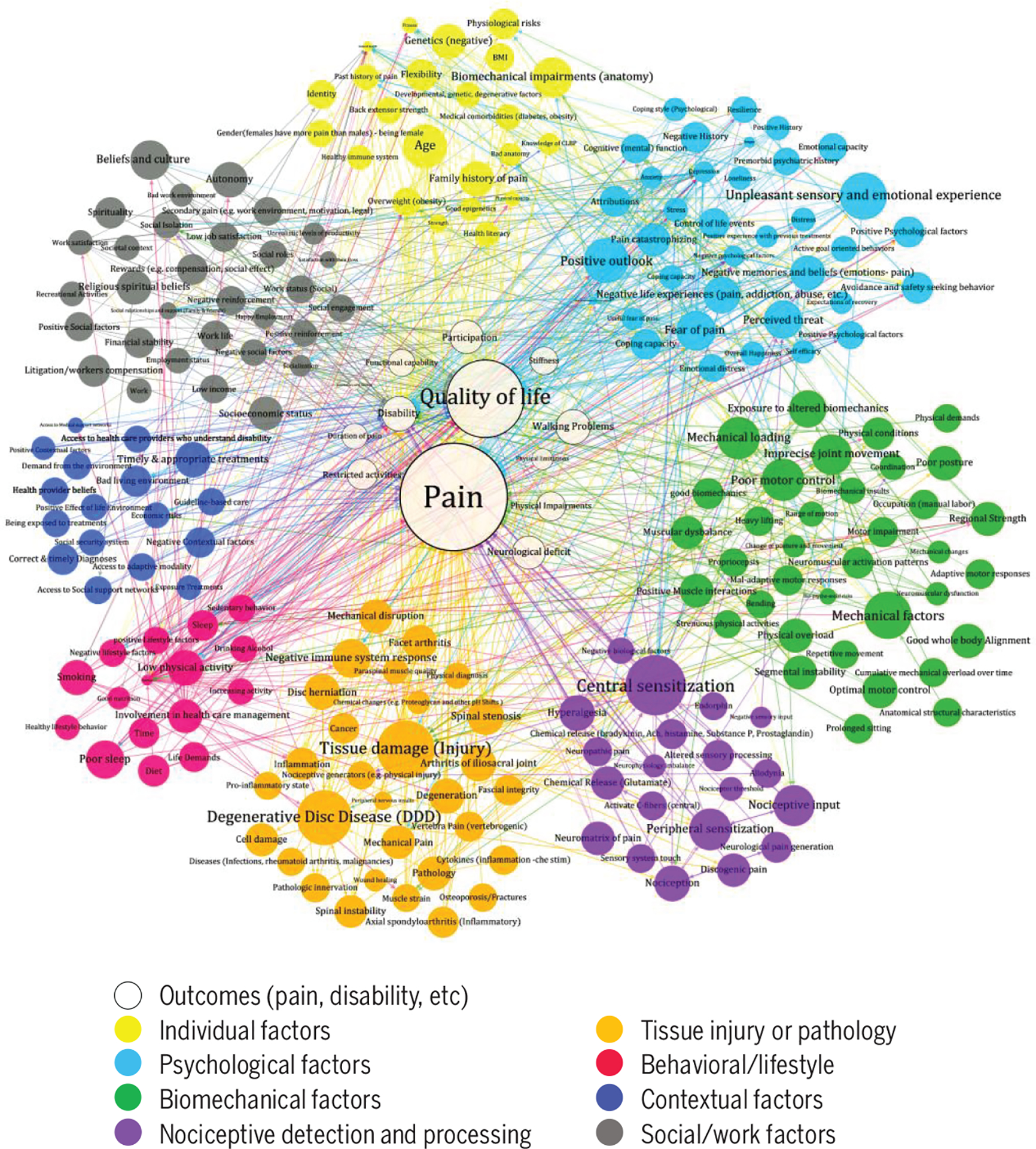
FIGURE 1.
FIGURE 1.
A metamodel illustrating factors (colored circles) contributing to low back pain, disability, quality of life, and other outcomes (white circles) and their interactions (colored lines). This metamodel was constructed with input from the multidisciplinary panel of 27 experts in preparation for the symposium at the 26th Annual Meeting of the North American Spine Society (2017). Diameters of the circles are proportional to the number of experts identifying these factors and the number and strength of connections with other factors.
FIGURE 2.
FIGURE 2.
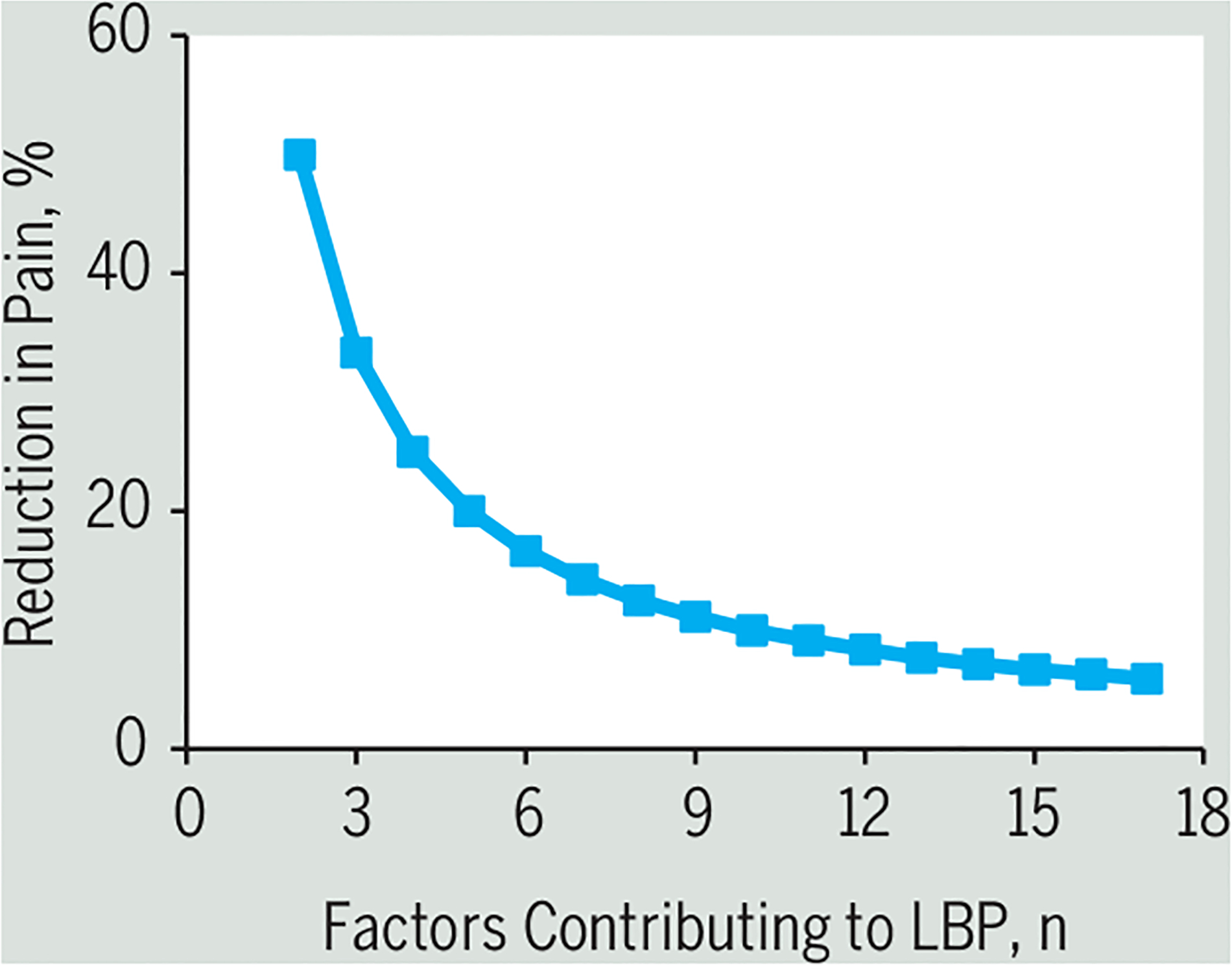
Mathematical simulation of the predicted reduction in pain when the number of factors contributing to LBP that must be addressed with treatment is considered. On the vertical axis is the predicted success when a single factor that contributes the most to LBP is addressed with treatment. As the number of factors contributing to LBP increases, the effectiveness of such an intervention decreases. Abbreviation: LBP, low back pain.
FIGURE 3.
FIGURE 3.
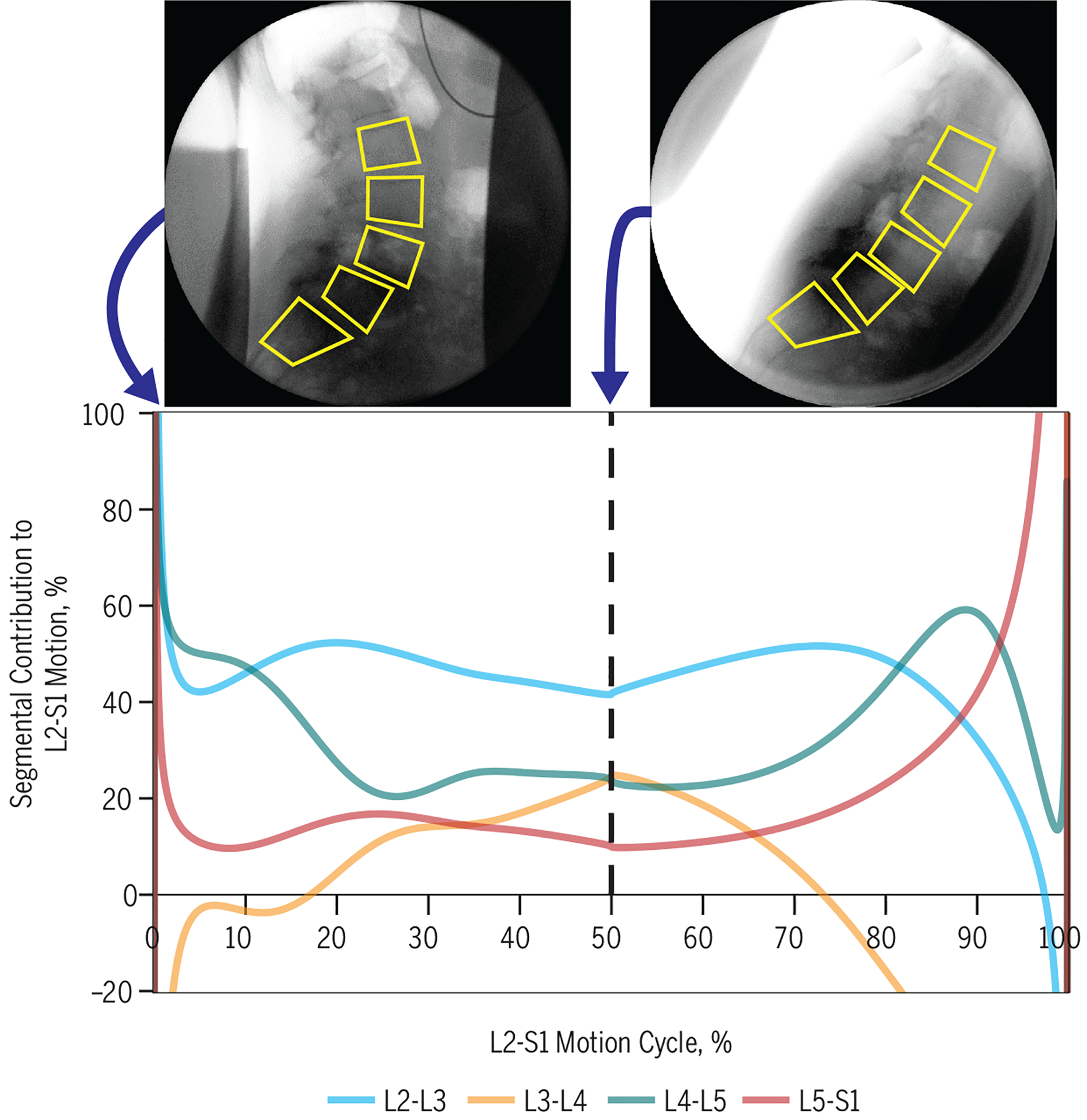
Continuous proportional weight-bearing flexion intervertebral motion in a 63-year-old female patient with spondylolisthesis. Note that the segmental contributions to the total L2-S1 motion change continuously. On average, L2-L3 makes a higher contribution than the upper reference range of a control population, and the L4-L5 average share is in the normal range.
FIGURE 4.
FIGURE 4.
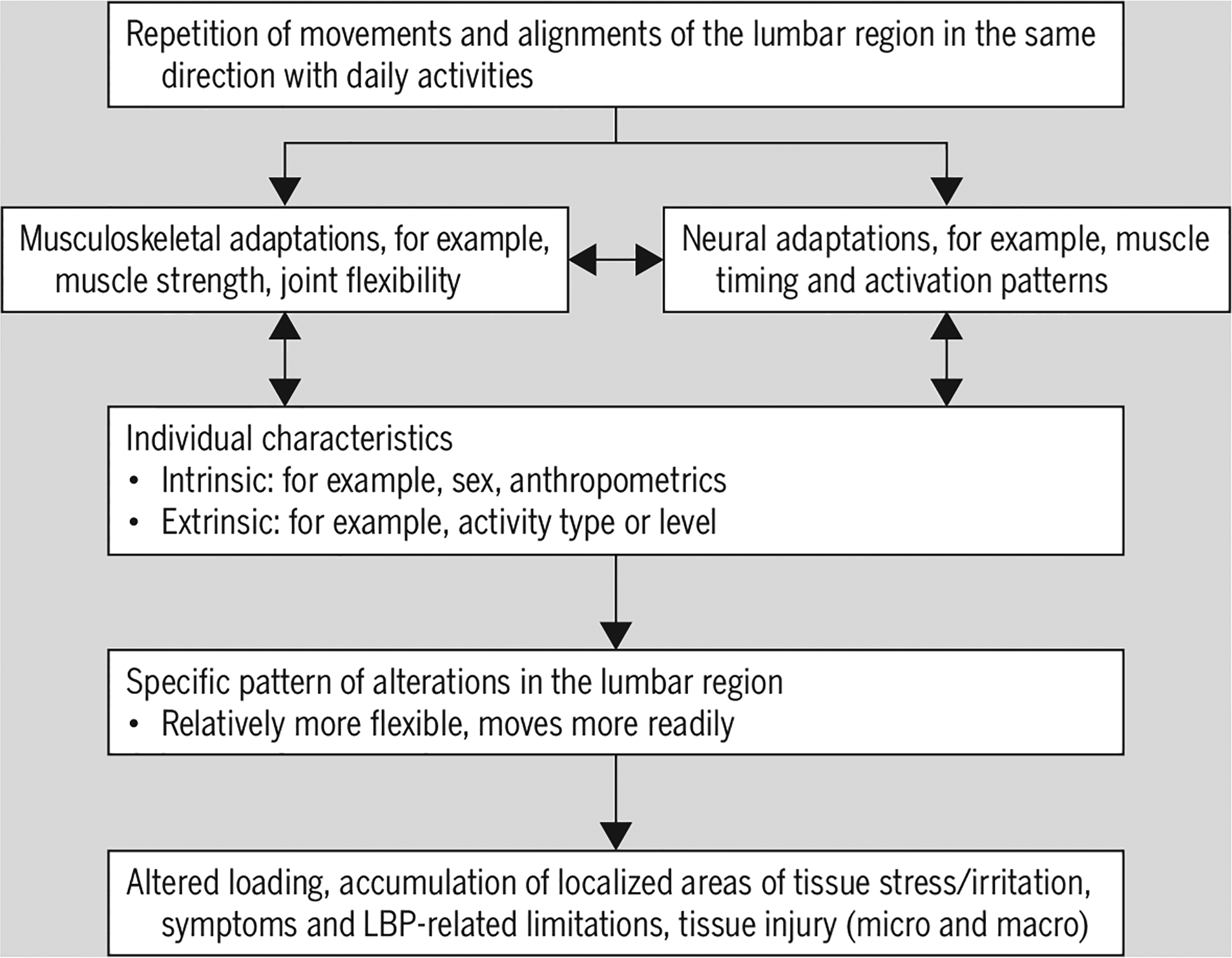
Illustration of the mechanically related processes proposed to contribute to the development and course of LBP based on the kinesiopathologic model. Abbreviation: LBP, low back pain.
FIGURE 5.
FIGURE 5.
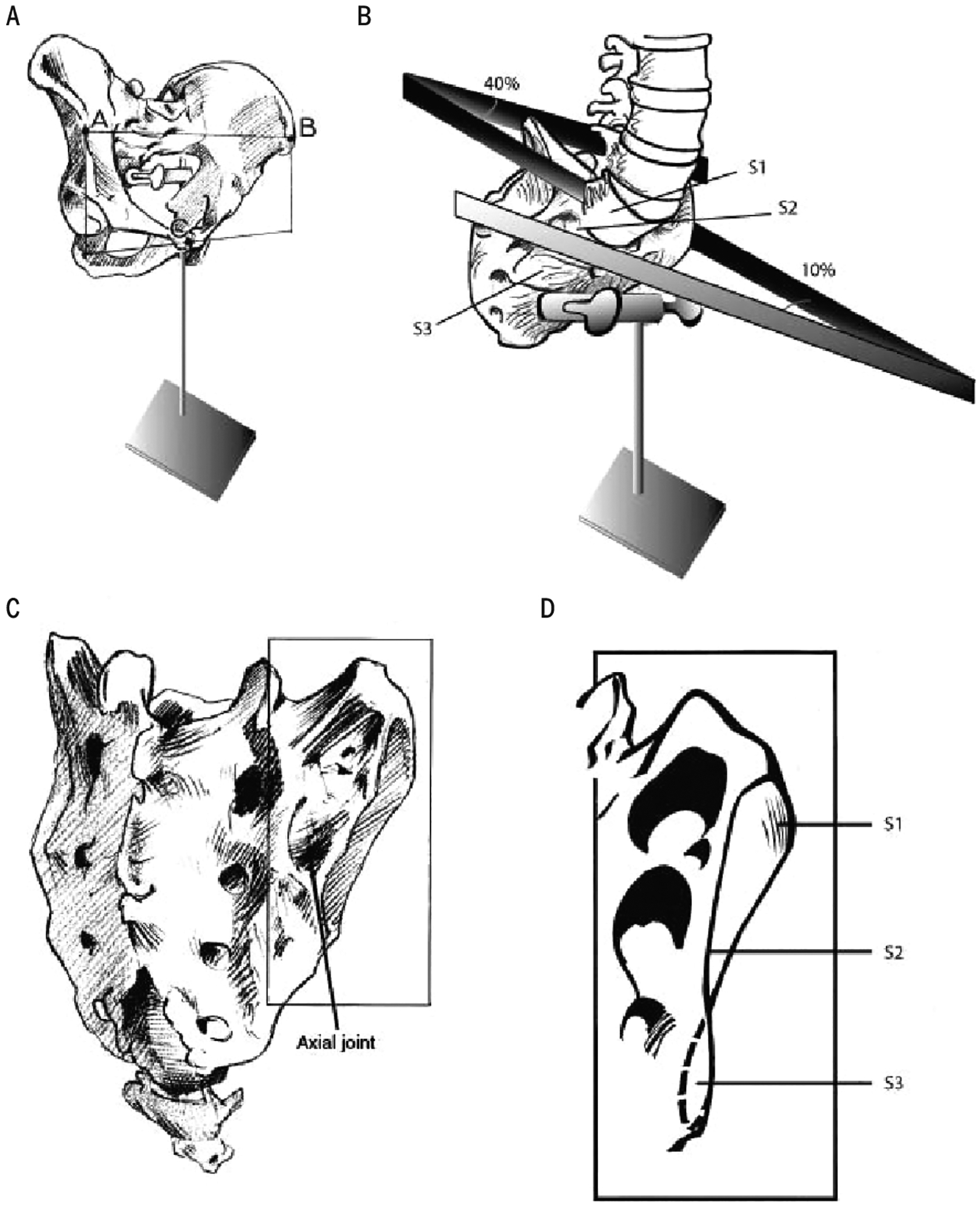
(A) The pelvis in erect posture. (B) View of the sacrum from the ventrolateral side, showing the different angles between left and right sacral articular surfaces. (C) Dorsolateral view of the sacrum. The pointer indicates a cavity in the sacrum, in which an iliac tubercle fits, called the “axial” sacroiliac joint. (D) Sacral articular surface at the right side. The different angles reflect the propeller-like shape of an adult sacroiliac joint.

References

    1. Abbott JH, Fritz JM, McCane B, et al. Lumbar segmental mobility disorders: comparison of two methods of defining abnormal displacement kinematics in a cohort of patients with non-specific mechanical low back pain. BMC Musculoskelet Disord. 2006;7:45 10.1186/1471-2474-7-45 - DOI - PMC - PubMed
    1. Ahn AC, Tewari M, Poon CS, Phillips RS. The limits of reductionism in medicine: could systems biology offer an alternative? PLoS Med 2006;3:e208 10.1371/journal.pmed.0030208 - DOI - PMC - PubMed
    1. Barz T, Melloh M, Lord SJ, Kasch R, Merk HR, Staub LP. A conceptual model of compensation/ decompensation in lumbar segmental instability. Med Hypotheses. 2014;83:312–316. 10.1016/j.mehy.2014.06.003 - DOI - PubMed
    1. Beales DJ, O’Sullivan PB, Briffa NK. The effects of manual pelvic compression on trunk motor control during an active straight leg raise in chronic pelvic girdle pain subjects. Man Ther. 2010;15:190–199. 10.1016/j.math.2009.10.008 - DOI - PubMed
    1. Beales DJ, O’Sullivan PB, Briffa NK. Motor control patterns during an active straight leg raise in chronic pelvic girdle pain subjects. Spine (Phila Pa 1976). 2009;34:861–870. 10.1097/BRS.0b013e318198d212 - DOI - PubMed