Biochemical mechanisms of vertebrate hedgehog signaling
- PMID: 31092502
- PMCID: PMC6550017
- DOI: 10.1242/dev.166892
Biochemical mechanisms of vertebrate hedgehog signaling
Abstract
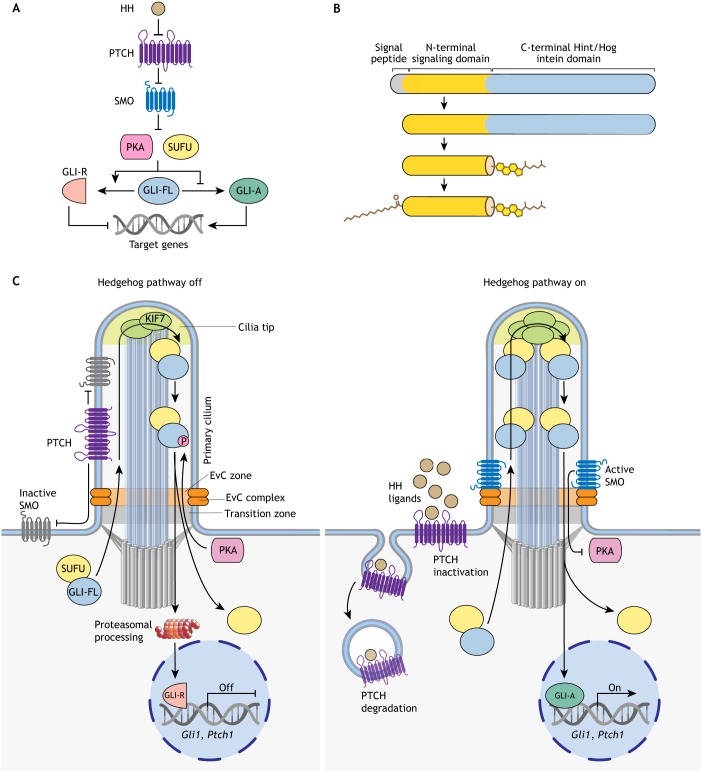
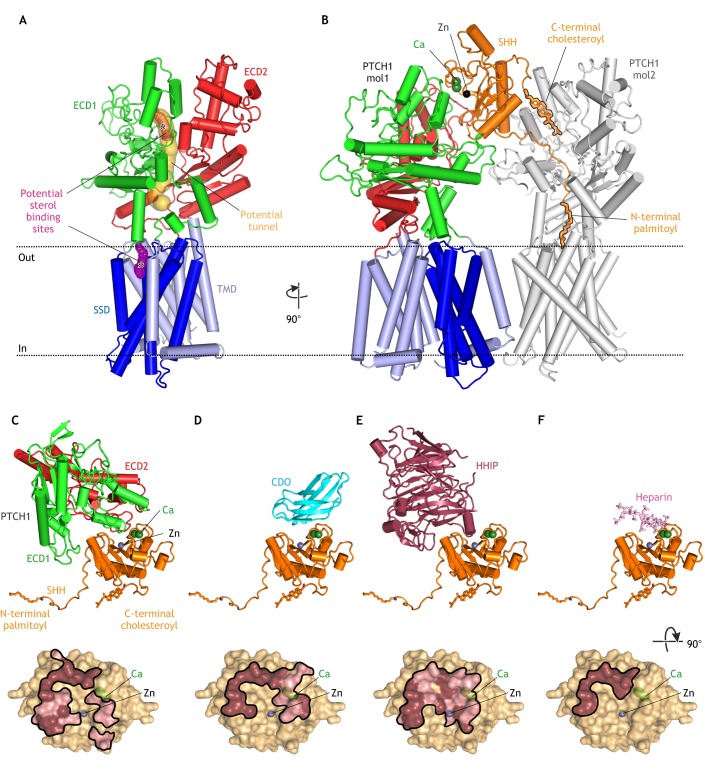
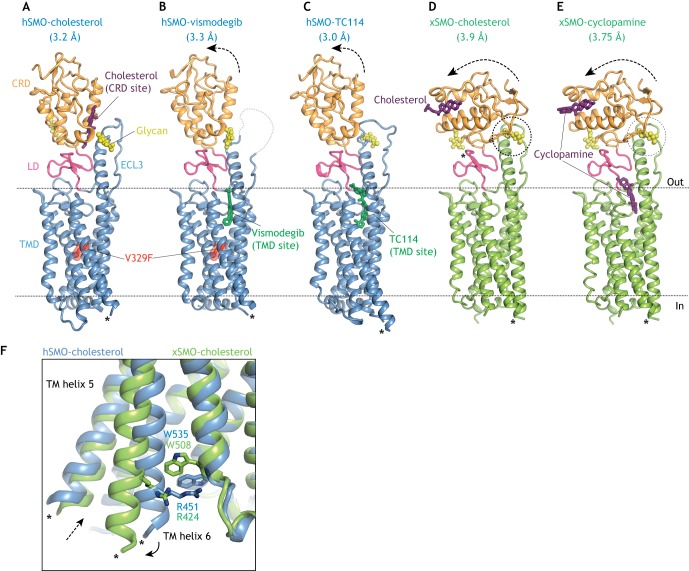
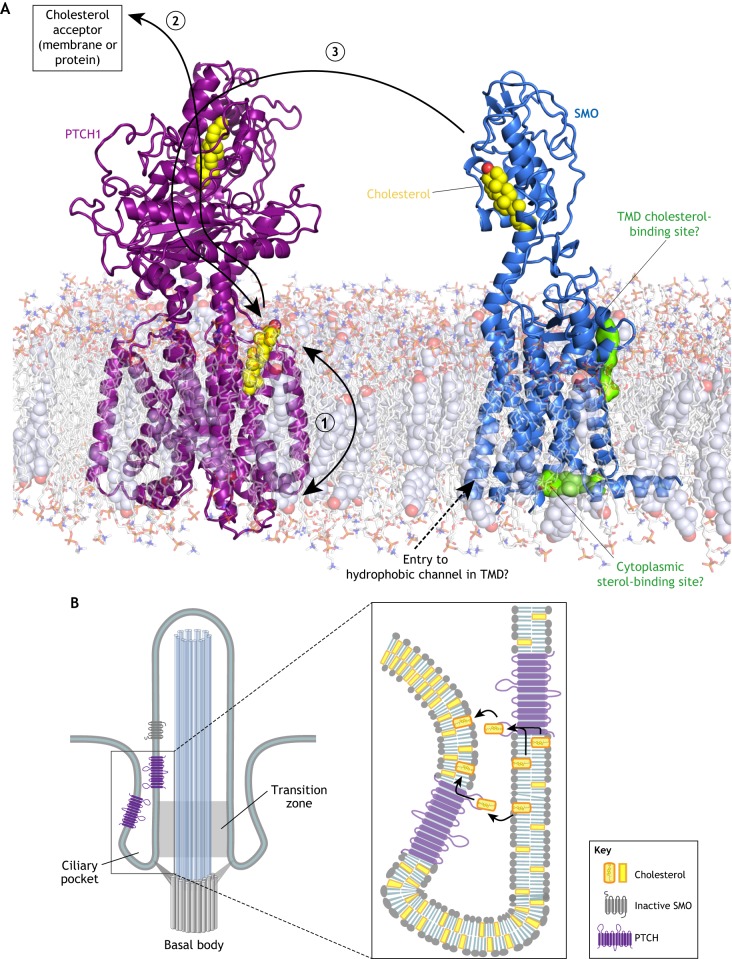
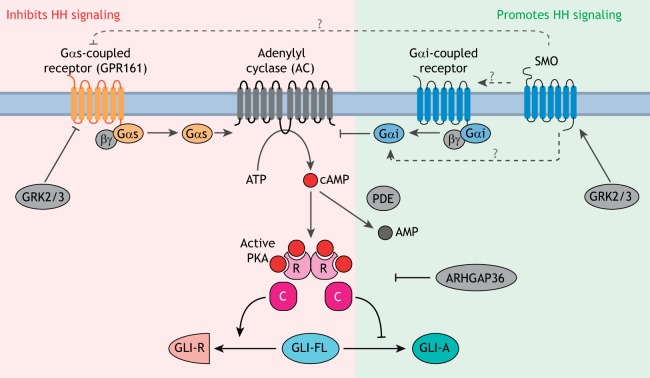
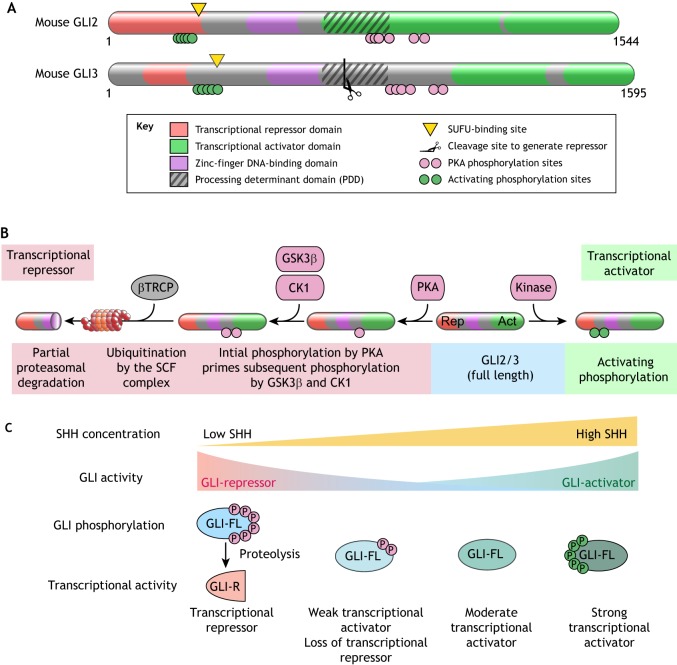
Signaling pathways that mediate cell-cell communication are essential for collective cell behaviors in multicellular systems. The hedgehog (HH) pathway, first discovered and elucidated in Drosophila, is one of these iconic signaling systems that plays many roles during embryogenesis and in adults; abnormal HH signaling can lead to birth defects and cancer. We review recent structural and biochemical studies that have advanced our understanding of the vertebrate HH pathway, focusing on the mechanisms by which the HH signal is received by patched on target cells, transduced across the cell membrane by smoothened, and transmitted to the nucleus by GLI proteins to influence gene-expression programs.
Keywords: Cholesterol; Hedgehog signaling; Morphogen; Patched; Primary cilium; Smoothened.
© 2019. Published by The Company of Biologists Ltd.
Conflict of interest statement
Competing interestsThe authors declare no competing or financial interests.
Figures
References
Publication types
MeSH terms
Substances
Grants and funding
LinkOut - more resources
Full Text Sources