


International Cancer Microbiome Consortium consensus statement on the role of the human microbiome in carcinogenesis
- PMID: 31092590
- PMCID: PMC6709773
- DOI: 10.1136/gutjnl-2019-318556
International Cancer Microbiome Consortium consensus statement on the role of the human microbiome in carcinogenesis
Abstract
Objective: In this consensus statement, an international panel of experts deliver their opinions on key questions regarding the contribution of the human microbiome to carcinogenesis.
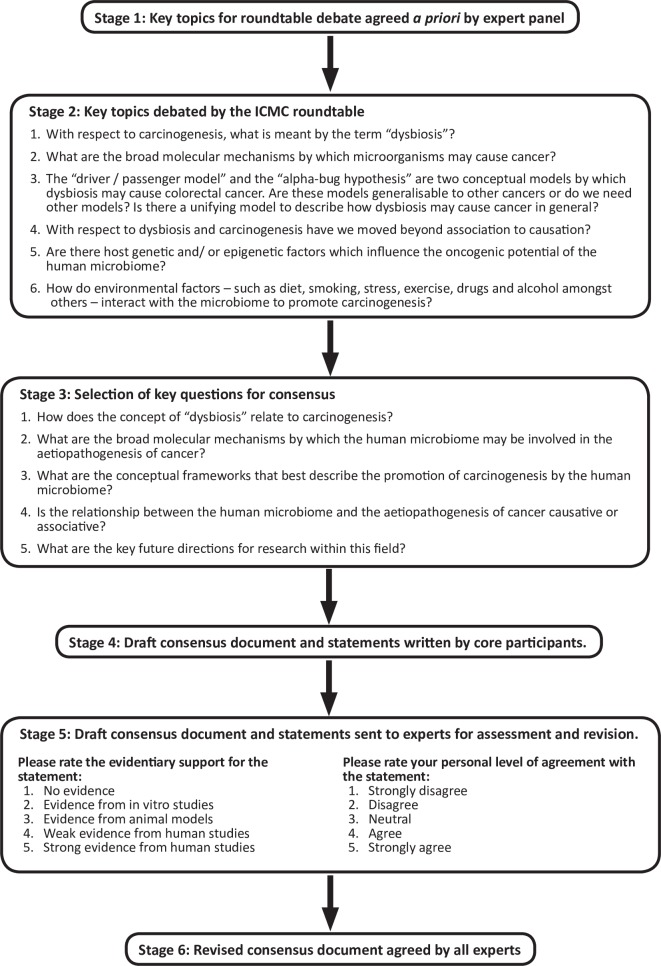
Design: International experts in oncology and/or microbiome research were approached by personal communication to form a panel. A structured, iterative, methodology based around a 1-day roundtable discussion was employed to derive expert consensus on key questions in microbiome-oncology research.
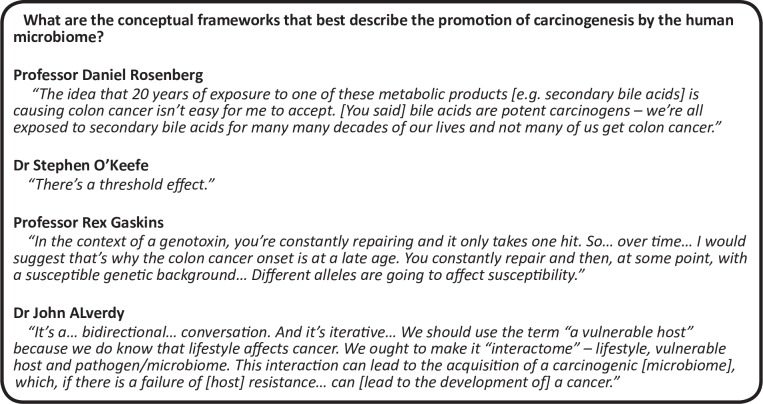
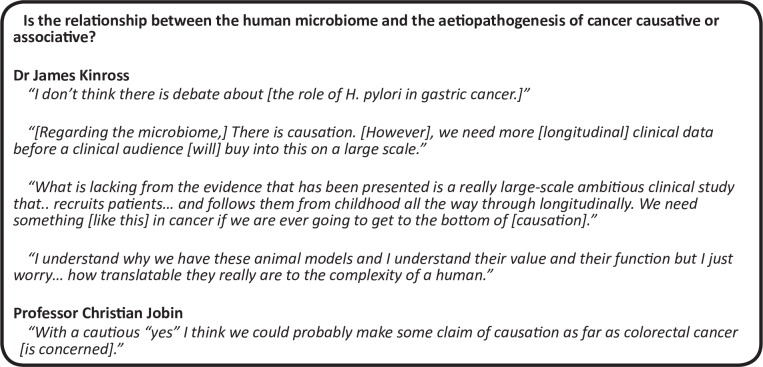
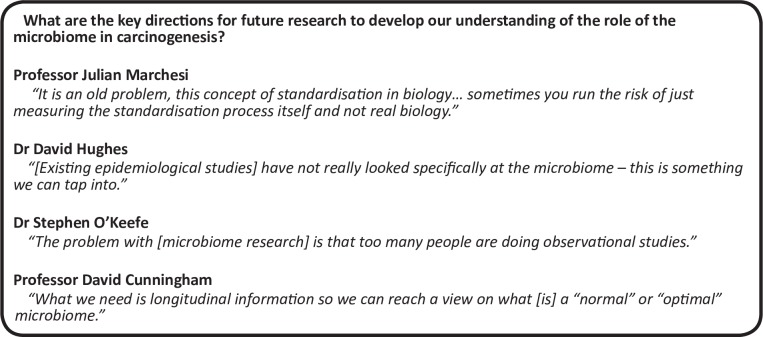
Results: Some 18 experts convened for the roundtable discussion and five key questions were identified regarding: (1) the relevance of dysbiosis/an altered gut microbiome to carcinogenesis; (2) potential mechanisms of microbiota-induced carcinogenesis; (3) conceptual frameworks describing how the human microbiome may drive carcinogenesis; (4) causation versus association; and (5) future directions for research in the field.The panel considered that, despite mechanistic and supporting evidence from animal and human studies, there is currently no direct evidence that the human commensal microbiome is a key determinant in the aetiopathogenesis of cancer. The panel cited the lack of large longitudinal, cohort studies as a principal deciding factor and agreed that this should be a future research priority. However, while acknowledging gaps in the evidence, expert opinion was that the microbiome, alongside environmental factors and an epigenetically/genetically vulnerable host, represents one apex of a tripartite, multidirectional interactome that drives carcinogenesis.
Conclusion: Data from longitudinal cohort studies are needed to confirm the role of the human microbiome as a key driver in the aetiopathogenesis of cancer.
Keywords: microbiome, cancer, colorectal, oncology, consensus.
© Author(s) (or their employer(s)) 2019. Re-use permitted under CC BY-NC. No commercial re-use. See rights and permissions. Published by BMJ.
Conflict of interest statement
Competing interests: None declared.
Figures



References
Publication types
MeSH terms
Grants and funding
LinkOut - more resources
Full Text Sources
Miscellaneous
