


Acute and long-term clinical, neuropsychological and return-to-work sequelae following electrical injury: a retrospective cohort study
- PMID: 31092649
- PMCID: PMC6530314
- DOI: 10.1136/bmjopen-2018-025990
Acute and long-term clinical, neuropsychological and return-to-work sequelae following electrical injury: a retrospective cohort study
Abstract
Objective: To determine acute and long-term clinical, neuropsychological, and return-to-work (RTW) effects of electrical injuries (EIs). This study aims to further contrast sequelae between low-voltage and high-voltage injuries (LVIs and HVIs). We hypothesise that all EIs will result in substantial adverse effects during both phases of management, with HVIs contributing to greater rates of sequelae.
Design: Retrospective cohort study evaluating EI admissions between 1998 and 2015.
Setting: Provincial burn centre and rehabilitation hospital specialising in EI management.
Participants: All EI admissions were reviewed for acute clinical outcomes (n=207). For long-term outcomes, rehabilitation patients, who were referred from the burn centre (n=63) or other burn units across the province (n=65), were screened for inclusion. Six patients were excluded due to pre-existing psychiatric conditions. This cohort (n=122) was assessed for long-term outcomes. Median time to first and last follow-up were 201 (68-766) and 980 (391-1409) days, respectively.
Outcome measures: Acute and long-term clinical, neuropsychological and RTW sequelae.
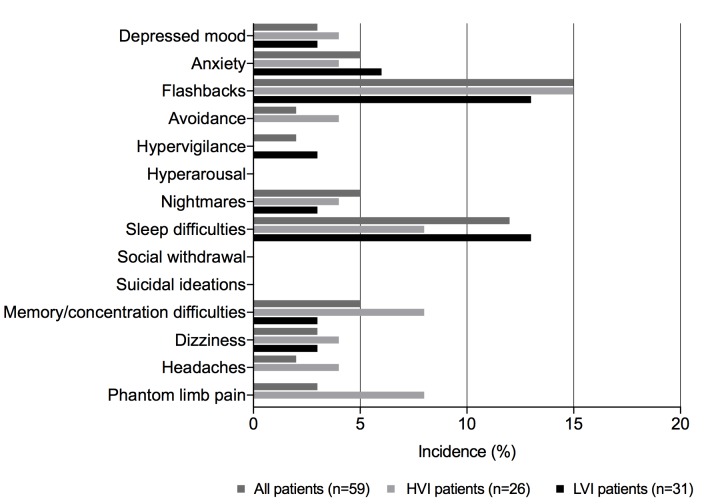
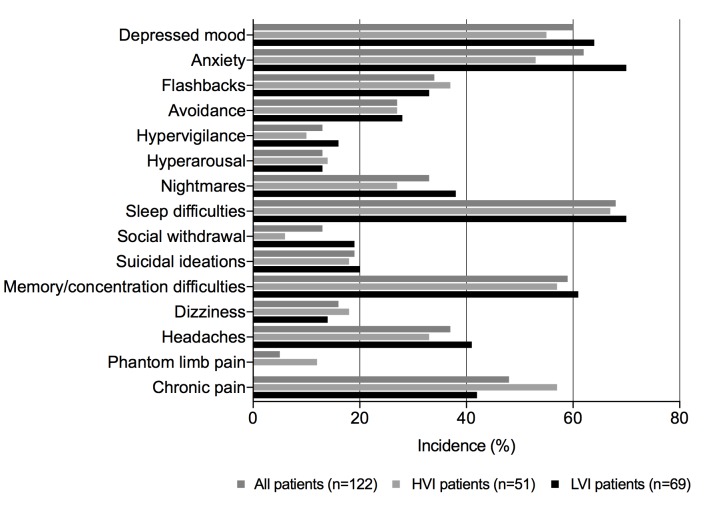
Results: Acute clinical complications included infections (14%) and amputations (13%). HVIs resulted in greater rates of these complications, including compartment syndrome (16% vs 4%, p=0.007) and rhabdomyolysis (12% vs 0%, p<0.001). Rates of acute neuropsychological sequelae were similar between voltage groups. Long-term outcomes were dominated by insomnia (68%), anxiety (62%), post-traumatic stress disorder (33%) and major depressive disorder (25%). Sleep difficulties (67%) were common following HVIs, while the LVI group most frequently experienced sleep difficulties (70%) and anxiety (70%). Ninety work-related EIs were available for RTW analysis. Sixty-one per cent returned to their preinjury employment and 19% were unable to return to any form of work. RTW rates were similar when compared between voltage groups.
Conclusions: This is the first investigation to determine acute and long-term patient outcomes post-EI as a continuum. Findings highlight substantial rates of neuropsychological and social sequelae, regardless of voltage. Specialised and individualised early interventions, including screening for mental health concerns, are imperative to improvingoutcomes of EI patients.
Keywords: burns; electrical injuries; rehabilitation.
© Author(s) (or their employer(s)) 2019. Re-use permitted under CC BY-NC. No commercial re-use. See rights and permissions. Published by BMJ.
Conflict of interest statement
Competing interests: None declared.
Figures
References
-
- American Burn Association. National burn repository: 2016 report. 2016. http://ameriburn.org/education/publications/ (Accessed Jun 2017).
-
- Inancsi W, Guidotti TL. Occupation-related burns: five-year experience of an urban burn center. J Occup Med 1987;29:730–3. - PubMed
Publication types
MeSH terms
Grants and funding
LinkOut - more resources
Full Text Sources
Medical
