


Efficiently Capturing Mitochondria-Targeted Constituents with Hepatoprotective Activity from Medicinal Herbs
- PMID: 31093314
- PMCID: PMC6481013
- DOI: 10.1155/2019/4353791
Efficiently Capturing Mitochondria-Targeted Constituents with Hepatoprotective Activity from Medicinal Herbs
Abstract
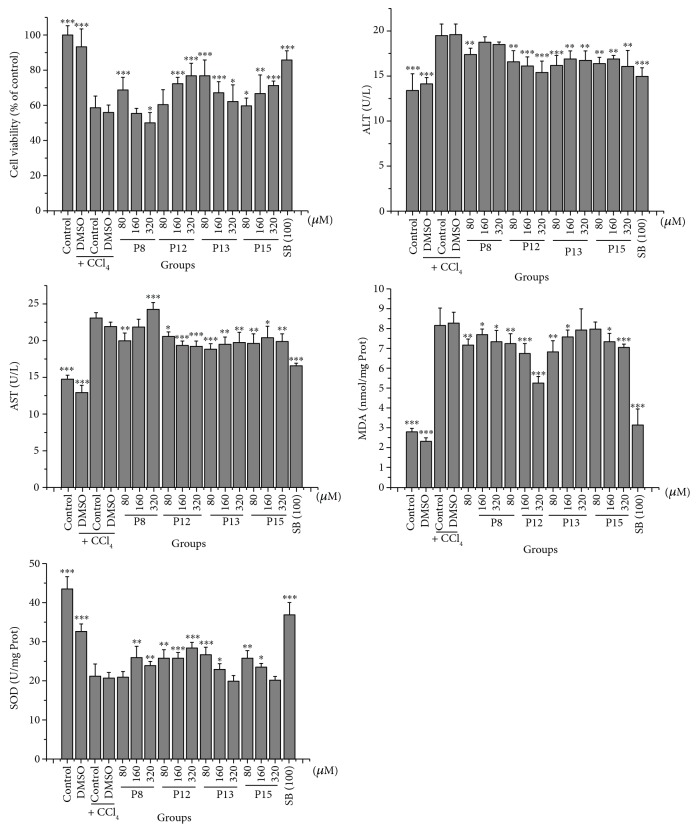
Targeting mitochondria as a hepatic-protective strategy has gained attention, because of their important roles in energy production, adjustment of apoptosis, and generation of reactive oxygen species. To promote the discovery of natural mitochondria-targeted hepatic-protectants, we established a hepatocellular mitochondria-based capturing method by coupling affinity ultrafiltration with liquid chromatography/mass spectrometry (LC/MS), which is suitable for identifying mitochondrial ligands from medicinal herbs (MHs). After evaluating the feasibility of the method, it was applied for capturing mitochondria-targeting constituents from Peucedani Radix extract. A total of 10 active compounds were identified by LC/MS, all of which were newly identified mitochondrial ligands. The mitochondria-remedying activity of 4 of the 10 hits was confirmed by pharmacological tests in vitro. Additionally, the hepatic-protective abilities of 4 hits were verified in both carbon tetrachloride-damaged liver L02 cells and mice. These results indicated that the method could be used for identifying hepatic mitochondria-targeting constituents in MHs, which might be beneficial for hepatic-protective development.
Figures




References
-
- McGill M.-R., Sharpe M.-R., Williams C.-D., Taha M., Curry S.-C., Jaeschke H. The mechanism underlying acetaminophen -induced hepatotoxicity in humans and mice involves mitochondrial damage and nuclear DNA fragmentation. Journal of Clinical Investigation. 2012;122(4):1574–1583. doi: 10.1172/JCI59755. - DOI - PMC - PubMed
MeSH terms
Substances
LinkOut - more resources
Full Text Sources
