


Dynamic models to predict health outcomes: current status and methodological challenges
- PMID: 31093570
- PMCID: PMC6460710
- DOI: 10.1186/s41512-018-0045-2
Dynamic models to predict health outcomes: current status and methodological challenges
Abstract
Background: Disease populations, clinical practice, and healthcare systems are constantly evolving. This can result in clinical prediction models quickly becoming outdated and less accurate over time. A potential solution is to develop 'dynamic' prediction models capable of retaining accuracy by evolving over time in response to observed changes. Our aim was to review the literature in this area to understand the current state-of-the-art in dynamic prediction modelling and identify unresolved methodological challenges.
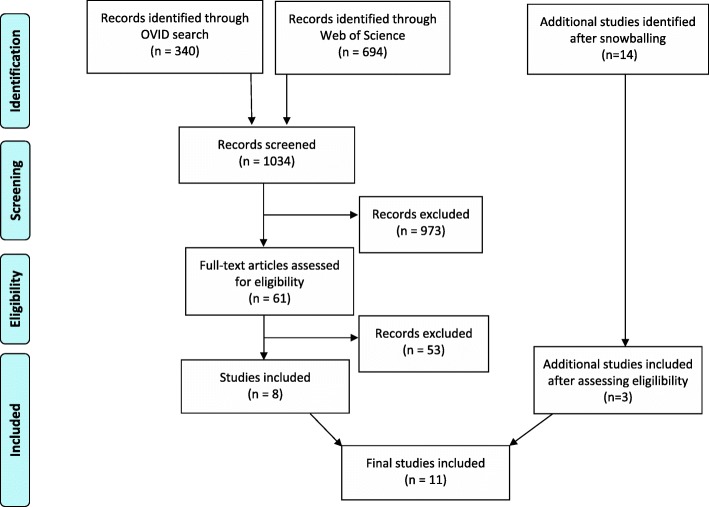
Methods: MEDLINE, Embase and Web of Science were searched for papers which used or developed dynamic clinical prediction models. Information was extracted on methods for model updating, choice of update windows and decay factors and validation of models. We also extracted reported limitations of methods and recommendations for future research.
Results: We identified eleven papers that discussed seven dynamic clinical prediction modelling methods which split into three categories. The first category uses frequentist methods to update models in discrete steps, the second uses Bayesian methods for continuous updating and the third, based on varying coefficients, explicitly describes the relationship between predictors and outcome variable as a function of calendar time. These methods have been applied to a limited number of healthcare problems, and few empirical comparisons between them have been made.
Conclusion: Dynamic prediction models are not well established but they overcome one of the major issues with static clinical prediction models, calibration drift. However, there are challenges in choosing decay factors and in dealing with sudden changes. The validation of dynamic prediction models is still largely unexplored terrain.
Keywords: Calibration; Dynamic models; Prediction models; Validation.
Conflict of interest statement
Not applicable.Not applicable.The authors declare that they have no competing interests.Springer Nature remains neutral with regard to jurisdictional claims in published maps and institutional affiliations.
Figures
References
-
- Five Year Forward View. (2014).
Publication types
LinkOut - more resources
Full Text Sources
Other Literature Sources