


Muscle radiodensity loss during cancer therapy is predictive for poor survival in advanced endometrial cancer
- PMID: 31094101
- PMCID: PMC6711455
- DOI: 10.1002/jcsm.12440
Muscle radiodensity loss during cancer therapy is predictive for poor survival in advanced endometrial cancer
Abstract
Background: Treatment-related toxicities and decreased levels of patient performance during cancer therapy might contribute to body composition changes and thereby impact outcomes. However, the effect of longitudinal body composition changes on outcomes in patients with advanced endometrial cancer is unknown. This study investigated the association between body composition changes during staging surgery and adjuvant chemoradiotherapy and outcomes in patients with stage III endometrial cancer.
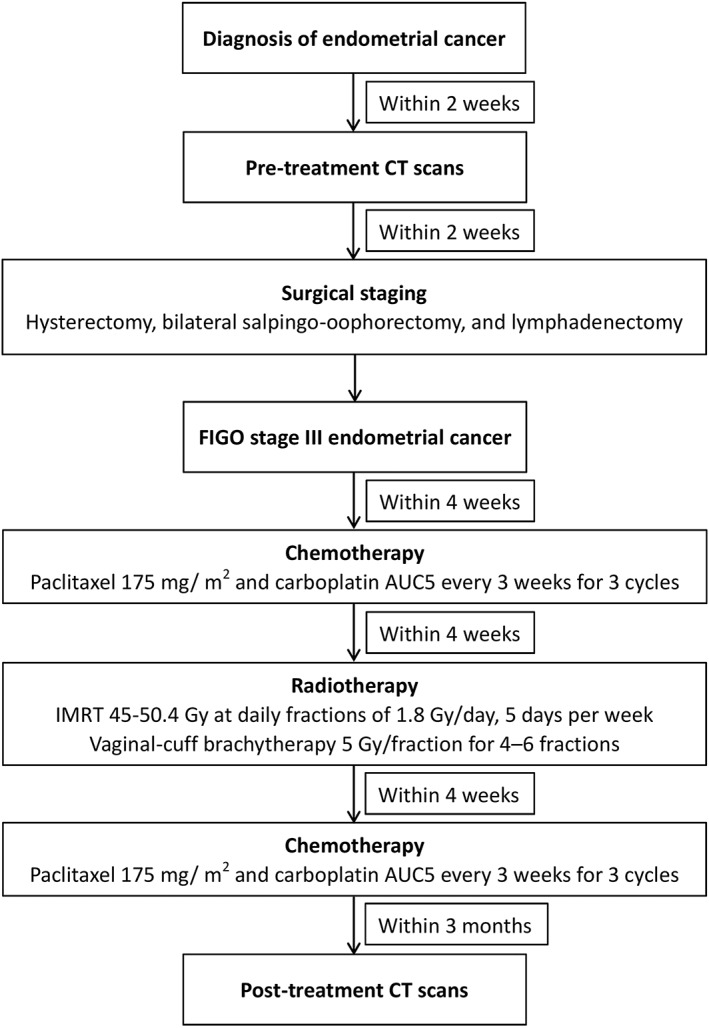
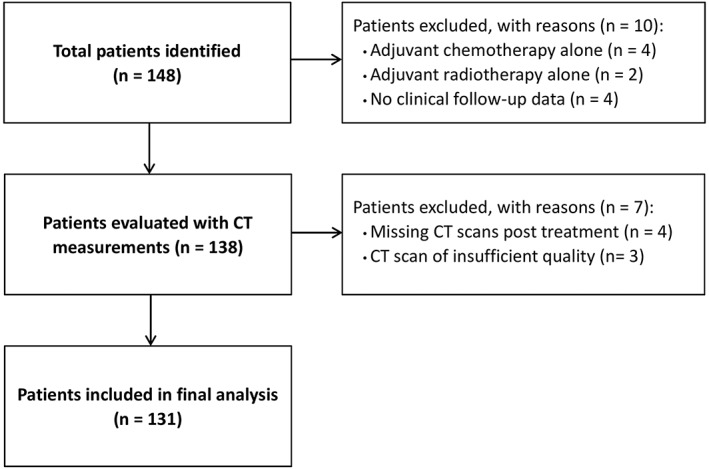
Methods: Pretreatment and post-treatment computed tomography (CT) images of 131 patients with stage III endometrial cancer who were treated between 2008 and 2016 were analysed. All CT images were contrast enhanced and acquired according to the standardized protocol. The skeletal muscle index (SMI), skeletal muscle radiodensity (SMD), and total adipose tissue index were measured from two sets of CT images obtained at the level of the third lumbar vertebra. The skeletal muscle gauge was calculated by multiplying SMI by SMD (SMI × SMD). Predictors of overall survival and progression-free survival were identified using Cox regression models.
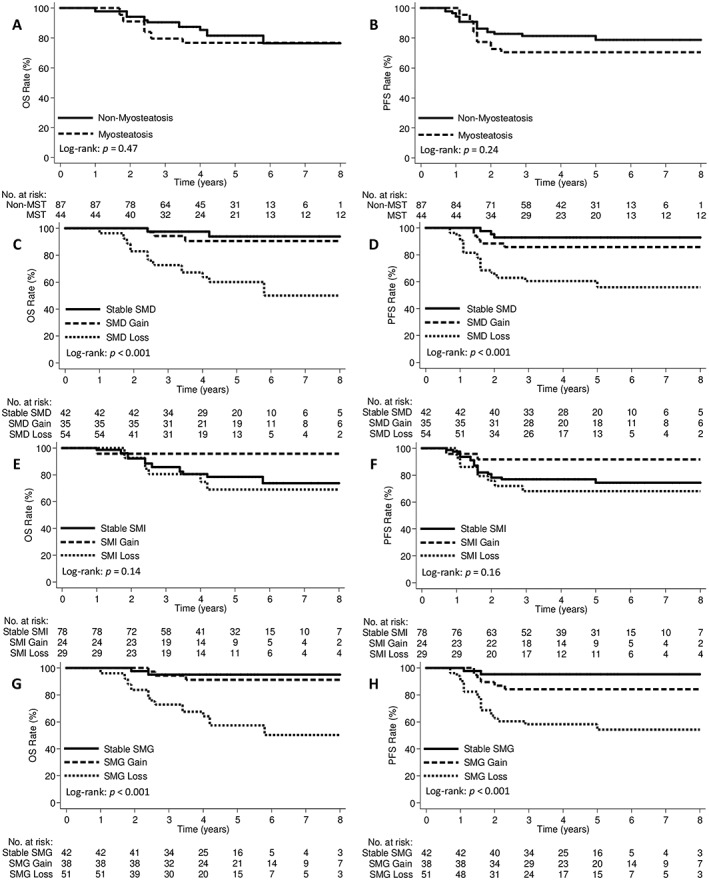
Results: The median follow-up was 50.6 (range 12.1-117.0) months. Overall, body mass index (BMI) changes during treatment were 0.4% per 210 days (95% confidence interval: -0.6 to 1.4; P = 0.41), and patients experienced an average SMD loss of 2.1% per 210 days (95% confidence interval: -4.0 to -0.2; P = 0.03). Weight loss and SMD loss ≥5% were observed in 23 (17.6%) and 54 (41.2%) patients, respectively. The changes in SMD did not correlate with those in BMI (Spearman's ρ for SMD, -0.13; P = 0.13). SMD change (per 1 Hounsfield unit/210 days decrease) was independently associated with poorer overall survival (hazard ratio: 1.32, 95% confidence interval: 1.14-1.52; P < 0.001) and progression-free survival (hazard ratio: 1.28, 95% confidence interval: 1.12-1.43; P < 0.001). Our results did not show association between survival and pretreatment myosteatosis and sarcopenia or changes in SMI and total adipose tissue index during treatment. The pretreatment skeletal muscle gauge was associated with treatment modifications such as delays, dose reductions, and discontinuation of chemotherapy.
Conclusions: Skeletal muscle radiodensity decreased significantly during treatment and was independently associated with poorer survival in patients with stage III endometrial cancer who underwent staging surgery and adjuvant chemoradiotherapy. SMD loss was occult and occurred independently of BMI change.
Keywords: Chemoradiotherapy; Endometrial cancer; Myosteatosis; Sarcopenia.
© 2019 The Authors. Journal of Cachexia, Sarcopenia and Muscle published by John Wiley & Sons Ltd on behalf of the Society on Sarcopenia, Cachexia and Wasting Disorders.
Conflict of interest statement
None declared.
Figures
References
-
- Siegel RL, Miller KD, Jemal A. Cancer statistics, 2018. CA Cancer J Clin. 2018;68:7–30. - PubMed
-
- Shepherd JH. Revised FIGO staging for gynaecological cancer. Br J Obstet Gynaecol. 1989;96:889–892. - PubMed
-
- Greven KM, Lanciano RM, Corn B, Case D, Randall ME. Pathologic stage III endometrial carcinoma. Prognostic factors and patterns of recurrence. Cancer. 1993;71:3697–3702. - PubMed
-
- Morice P, Leary A, Creutzberg C, Abu‐Rustum N, Darai E. Endometrial cancer. Lancet. 2016;387:1094–1108. - PubMed
MeSH terms
LinkOut - more resources
Full Text Sources
