


Finding inhabited settlements and tracking vaccination progress: the application of satellite imagery analysis to guide the immunization response to confirmation of previously-undetected, ongoing endemic wild poliovirus transmission in Borno State, Nigeria
- PMID: 31096971
- PMCID: PMC6524248
- DOI: 10.1186/s12942-019-0175-y
Finding inhabited settlements and tracking vaccination progress: the application of satellite imagery analysis to guide the immunization response to confirmation of previously-undetected, ongoing endemic wild poliovirus transmission in Borno State, Nigeria
Abstract
Background: Four wild polio-virus cases were reported in Borno State, Nigeria 2016, 1 year after Nigeria had been removed from the list of polio endemic countries by the World Health Organization. Resulting from Nigeria's decade long conflict with Boko Haram, health officials had been unable to access as much as 60% of the settlements in Borno, hindering vaccination and surveillance efforts. This lack of accessibility made it difficult for the government to assess the current population distribution within Borno. This study aimed to use high resolution, visible band satellite imagery to assess the habitation of inaccessible villages in Borno State.
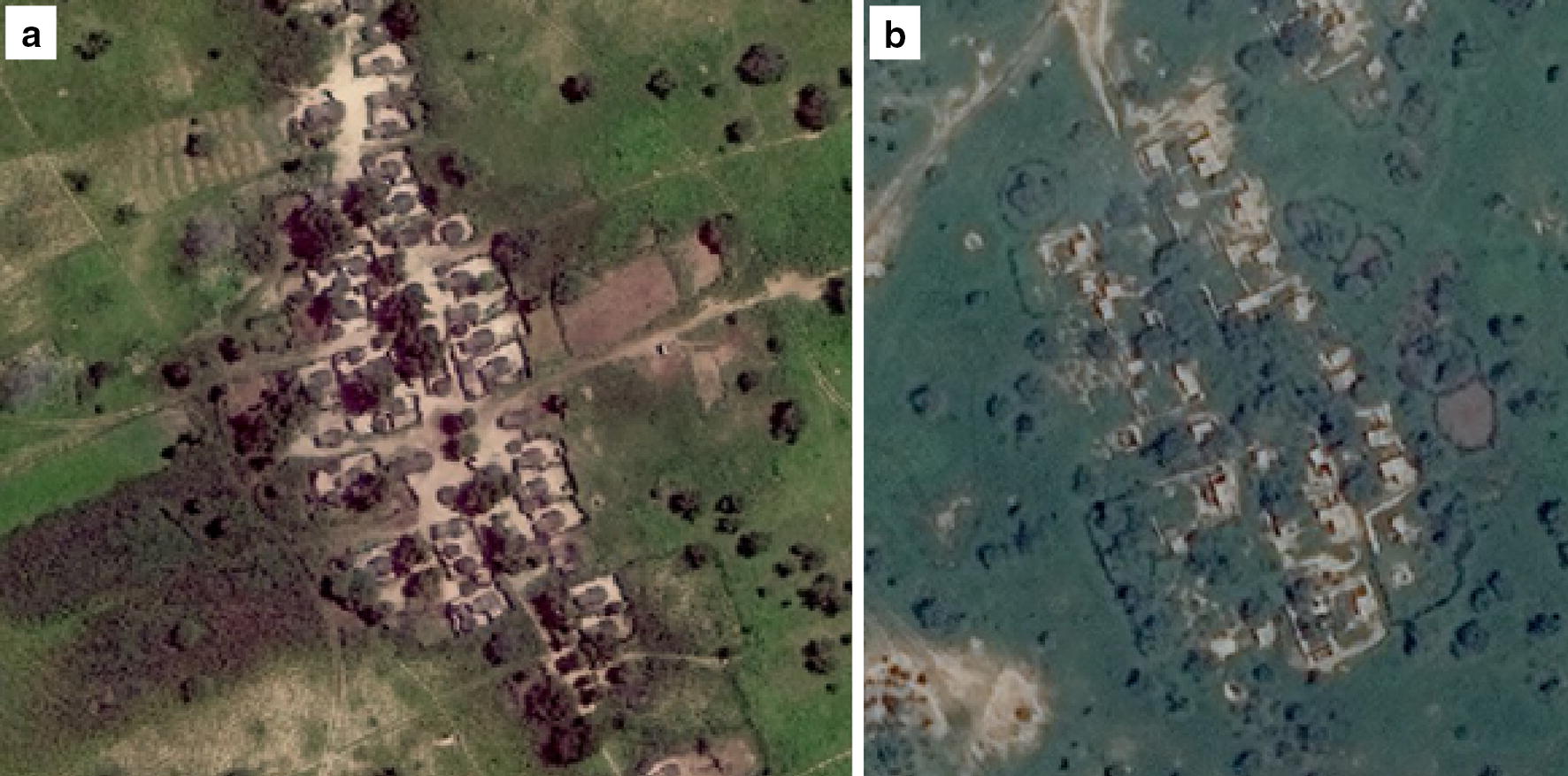
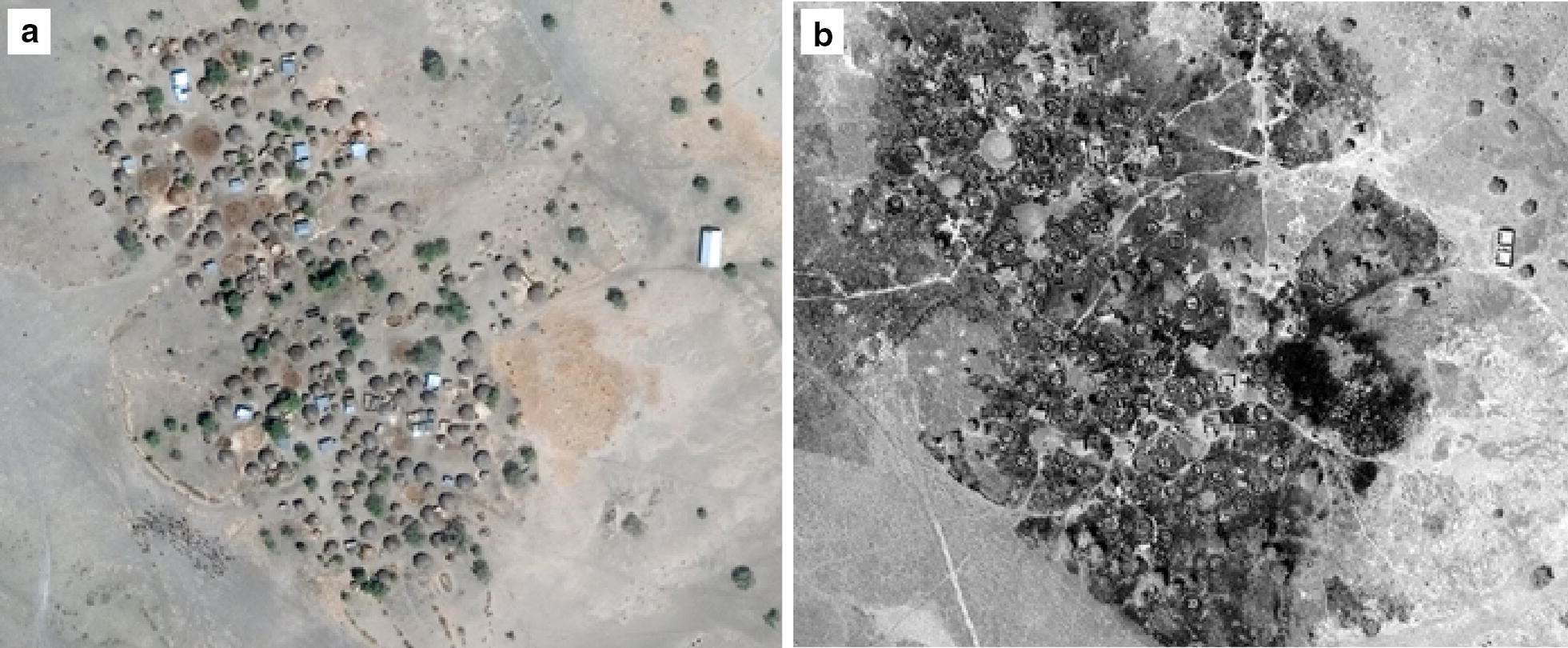
Methods: Using high resolution (31-50 cm) imagery from DigitalGlobe, analysts evaluated the habitation status of settlements in Borno State identified by Nigeria's Vaccination Tracking System. The analysts looked at imagery of each settlement and, using vegetation (overgrowth vs. cleared) as a proxy for human habitation, classified settlements into three categories: inhabited, partially abandoned, and abandoned. Analysts also classified the intact percentage of each settlement starting at 0% (totally destroyed since last assessment) and increasing in 25% intervals through 100% (completely intact but not expanded) up to 200+% (more than doubled in size) by looking for destroyed buildings. These assessments were then used to adjust previously established population estimates for each settlement. These new population distributions were compared to vaccination efforts to determine the number of children under 5 unreached by vaccination teams.
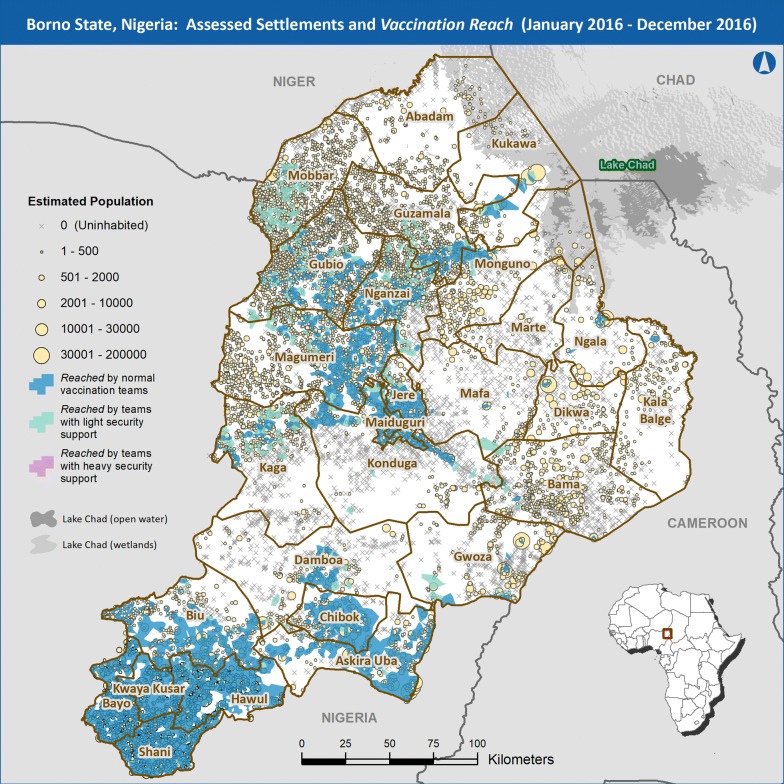
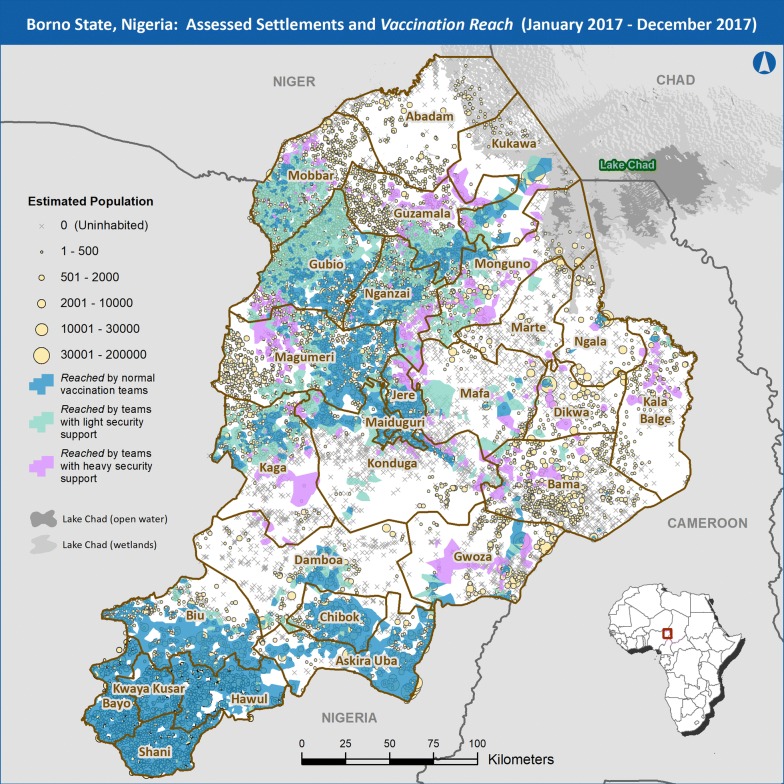
Results: Of the 11,927 settlements assessed 3203 were assessed as abandoned (1892 of those completely destroyed), 662 as partially abandoned, and 8062 as fully inhabited as of December of 2017. Comparing the derived population estimates from the new assessments to previous assessment and the activities of vaccination teams shows that an estimated 180,155 of the 337,411 under five children who were unreached in 2016 were reached in 2017 (70.5% through vaccination efforts in previously inaccessible areas, 29.5% through displacement to accessible areas).
Conclusions: This study's methodology provides important planning and situation awareness information to health workers in Borno, Nigeria, and may serve as a model for future data gathering efforts in inaccessible regions.
Conflict of interest statement
The authors declare that they have not competing interests.
Figures
References
-
- Centers for Disease Control and Prevention. Progress toward global poliomyelitis eradication, 2000. MMWR Morb Mortal Wkly Rep. 2001;50(16):320–2. - PubMed
-
- Centers for Disease Control and Prevention Progress toward poliomyelitis eradication—India, January 2005–June 2006. MMWR Morb Mortal Wkly Rep. 2006;55(28):772–776. - PubMed
-
- Centers for Disease Control and Prevention Progress toward Global Polio Eradication—Africa, 2011. MMWR Morb Mortal Wkly Rep. 2012;61(11):190–194. - PubMed
Publication types
MeSH terms
Substances
Grants and funding
LinkOut - more resources
Full Text Sources
Medical
