


Transposon insertion causes cadherin mis-splicing and confers resistance to Bt cotton in pink bollworm from China
- PMID: 31097777
- PMCID: PMC6522560
- DOI: 10.1038/s41598-019-43889-x
Transposon insertion causes cadherin mis-splicing and confers resistance to Bt cotton in pink bollworm from China
Abstract
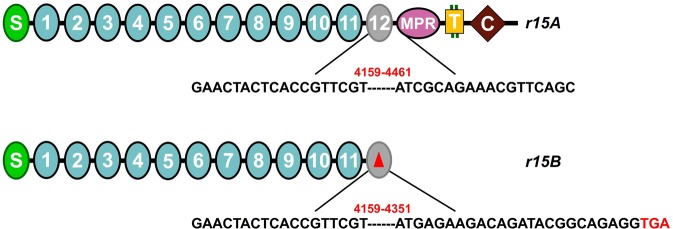
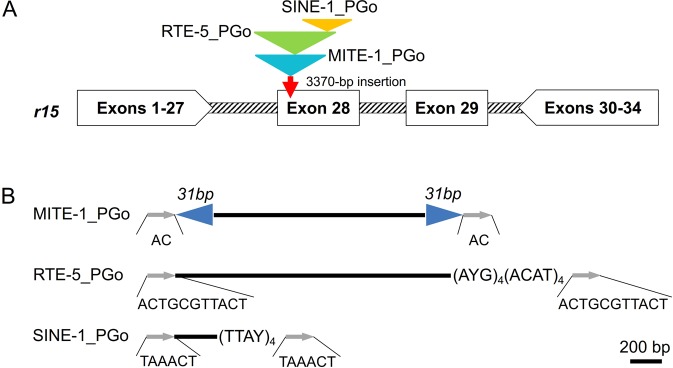
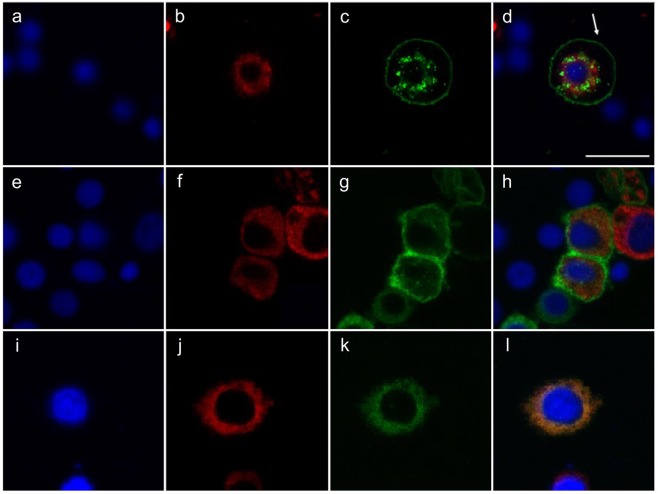
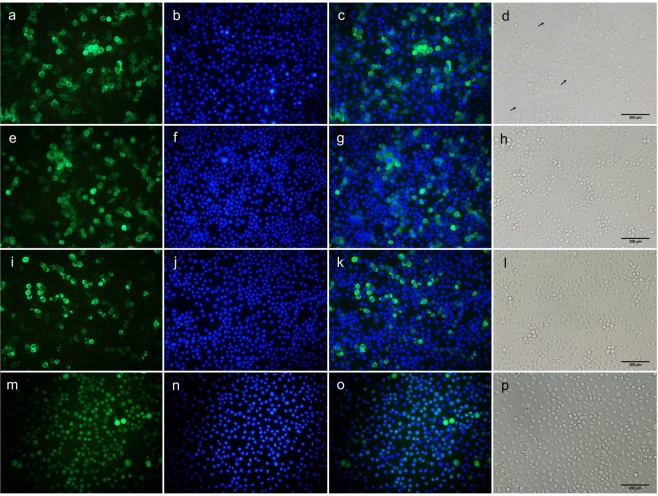
Transgenic crops producing insecticidal proteins from Bacillus thuringiensis (Bt) are cultivated extensively, but rapid evolution of resistance by pests reduces their efficacy. We report a 3,370-bp insertion in a cadherin gene associated with resistance to Bt toxin Cry1Ac in the pink bollworm (Pectinophora gossypiella), a devastating global cotton pest. We found the allele (r15) harboring this insertion in a field population from China. The insertion is a miniature inverted repeat transposable element (MITE) that contains two additional transposons and produces two mis-spliced transcript variants (r15A and r15B). A strain homozygous for r15 had 290-fold resistance to Cry1Ac, little or no cross-resistance to Cry2Ab, and completed its life cycle on Bt cotton producing Cry1Ac. Inheritance of resistance was recessive and tightly linked with r15. For transformed insect cells, susceptibility to Cry1Ac was greater for cells producing the wild-type cadherin than for cells producing the r15 mutant proteins. Recombinant cadherin protein occurred on the cell surface in cells transformed with the wild-type or r15A sequences, but not in cells transformed with the r15B sequence. The similar resistance of pink bollworm to Cry1Ac in laboratory- and field-selected insects from China, India and the U.S. provides a basis for developing international resistance management practices.
Conflict of interest statement
B.E.T. is co-author of a patent on modified Bt toxins, ‘Suppression of Resistance in Insects to Bacillus thuringiensis Cry Toxins, Using Toxins that do not Require the Cadherin Receptor’ (patent numbers: CA2690188A1, CN101730712A, EP2184293A2,EP2184293A4, EP2184293B1, WO2008150150A2, WO2008150150A3). DuPont Pioneer, Dow AgroSciences, Monsanto, Bayer CropScience, and Syngenta did not provide funding to support this work, but may be affected financially by publication of this paper and have funded other work by B.E.T. Bayer, DuPont, Syngenta and Gowan did not provide funding to support this work, but may be affected financially by publication of this paper and have funded other work by X. Li. J.A.F. is coauthor of a patent “Cadherin Receptor Peptide for Potentiating Bt Biopesticides” (patent numbers: US20090175974A1, US8354371, WO2009067487A2, WO2009067487A3). DuPont Pioneer and Bayer CropScience did not provide funding to support this work, but may be affected financially by publication of this paper and have funded other work by J.A.F.
Figures
References
-
- James, C. Global Status of Commercialized Biotech/GM Crops in 2017: Biotech crop adoption surges as economic benefits accumulate in 22 years. ISAAA Brief No. 53 (ISAAA, Ithaca, NY) (2017).
-
- Gould, F. et al. National Academies of Sciences, Engineering, and Medicine. Genetically Engineered Crops: Experiences and Prospects. (The National Academies Press, Washington, DC) (2016). - PubMed
Publication types
MeSH terms
Substances
LinkOut - more resources
Full Text Sources
