


Advances in the Management of HPV-Related Oropharyngeal Cancer
- PMID: 31097964
- PMCID: PMC6487078
- DOI: 10.1155/2019/9173729
Advances in the Management of HPV-Related Oropharyngeal Cancer
Abstract
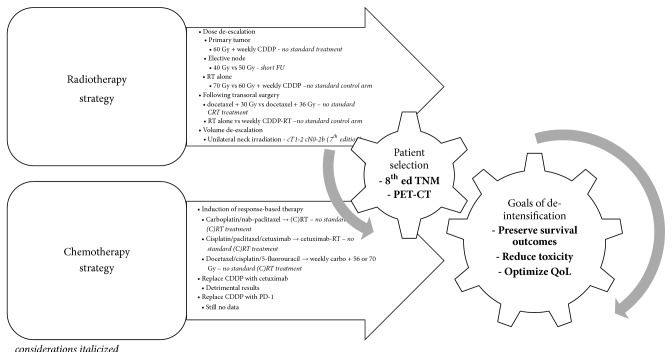
Patients with human papillomavirus- (HPV-) related oropharyngeal squamous cell carcinoma (OPSCC) have a better prognosis than HPV-negative OPSCC when treated with standard high-dose cisplatin-based chemoradiotherapy. Consistent with this assertion and due to younger age at diagnosis, novel approaches to minimize treatment sequelae while preserving survival outcomes become of paramount importance. Here, we critically reviewed the evidence-based literature supporting the deintensification strategies in HPV-related OPSCC management, including radiotherapy dose and/or volume reduction, replacement of cisplatin radiosensitising chemotherapy, and the use of transoral surgery. Undoubtedly, further researches are needed before changing the standard of care in this setting of patients.
Figures
References
-
- National Comprehensive Cancer Network (NCCN). Guidelines Head and Neck Cancers, Version 2.2018. http://www.nccn.org.
-
- Kamangar F., Dores G. M., Anderson W. F. Patterns of cancer incidence, mortality, and prevalence across five continents: defining priorities to reduce cancer disparities in different geographic regions of the world. Journal of Clinical Oncology. 2006;24(14):2137–2150. doi: 10.1200/JCO.2005.05.2308. - DOI - PubMed
Publication types
LinkOut - more resources
Full Text Sources
